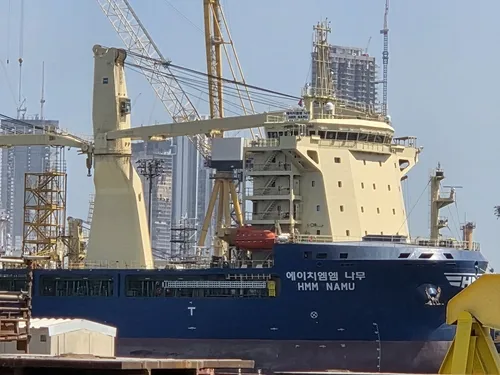
South Korea FM urges Iran to clarify stance on HMM Namu attack in Hormuz

Synopsis
A South Korean cargo ship operated by HMM Co. was struck by two unidentified flying objects in the Strait of Hormuz on 4 May, sparking a diplomatic push from Seoul. With debris now in South Korea for analysis and officials indicating a non-Iranian actor is unlikely, the investigation is narrowing — and the next forensic finding could force a direct diplomatic reckoning between Seoul and Tehran.
Key Takeaways
South Korean Foreign Minister Cho Hyun held talks with Iranian FM Abbas Araghchi on 17 May , urging Tehran to clarify its stance on the HMM Namu attack.
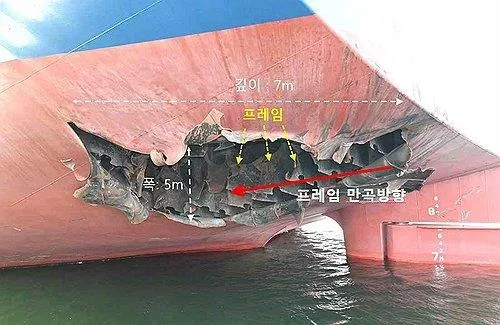
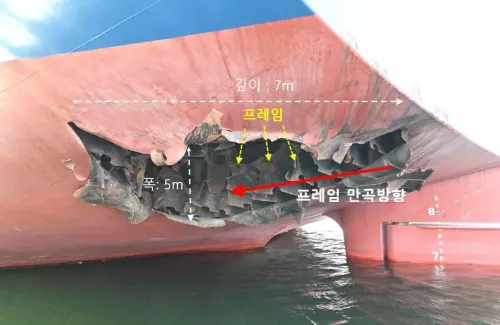
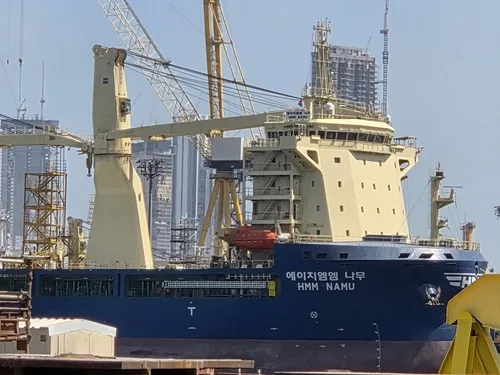
The HMM Namu , a Panama-flagged vessel operated by HMM Co. , was struck by two unidentified flying objects in the Strait of Hormuz on 4 May , causing an explosion and fire.
Debris from the airborne objects arrived in South Korea on Friday for forensic analysis after a technical team was sent to Dubai .
A senior South Korean official said the possibility of a non-Iranian actor being responsible 'appears low,' though the investigation is ongoing.
Both sides agreed to maintain close communication to ensure the safety of South Korean vessels and crew in the strait.
South Korean Foreign Minister Cho Hyun held phone talks with Iranian counterpart Abbas Araghchi on Sunday, 17 May, pressing Tehran to clarify its position on the 17 May attack involving the HMM Namu, a Panama-flagged cargo vessel operated by South Korean shipping firm HMM Co., in the Strait of Hormuz. The call, confirmed by Seoul's Foreign Ministry, comes as South Korea conducts an additional investigation into the incident that has strained diplomatic channels between the two countries.
What Cho Demanded of Tehran
During the call, Cho informed Araghchi that Seoul is pursuing a deeper investigation into the 4 May attack on the HMM Namu and formally requested that Iran state its position on the facts surrounding the incident. Cho also underscored the importance of guaranteeing the safety and freedom of navigation for all vessels — including South Korean ships — transiting the conflict-affected strait.
Iran's Response
In reply, Araghchi outlined Iran's broader assessment of the current situation in the Middle East and agreed on the necessity of restoring safe passage through the strategically vital waterway. He also called for a swift resolution to the ongoing standoff. Both sides agreed to maintain close diplomatic communication to protect the safety of South Korean vessels and crew members operating in the region.
What the Investigation Has Found So Far
A South Korean government investigation team has concluded that two unidentified flying objects struck the HMM Namu on 4 May, triggering an explosion and fire aboard the vessel. Debris recovered from the airborne objects arrived in South Korea on Friday for forensic analysis. Seoul had earlier dispatched a technical analysis team to Dubai to examine evidence at the scene.
A senior South Korean government official said on Thursday that the likelihood of a non-Iranian actor being responsible for the attack 'appears low,' while stressing that the investigation remains ongoing. The official noted that authorities are focused on gathering evidence to substantiate that assessment. The presidential office has separately stated it is working to definitively identify those behind the strike.
Why the Strait of Hormuz Matters
The Strait of Hormuz is one of the world's most critical maritime chokepoints, through which a significant share of global oil and gas shipments passes daily. Attacks on commercial vessels in the strait have escalated in recent years amid regional tensions, placing shipping firms and their flag states in an increasingly precarious position. This incident marks one of the most direct confrontations involving a South Korean-operated vessel in the waterway, raising the diplomatic stakes for Seoul as it seeks accountability without triggering a wider standoff.
As forensic analysis of the recovered debris proceeds, the findings are expected to shape Seoul's next diplomatic and possibly legal steps against those found responsible.
Point of View
Seoul will face a harder choice between economic ties with Tehran and alliance optics with Washington. South Korea has historically prioritised trade insulation over confrontation in the Gulf, but a confirmed state-linked attack on a commercial vessel would be difficult to absorb quietly. The real question is not whether Seoul knows who did it — officials have already signalled the answer — but how much proof it needs before it says so publicly.
NationPress
21 Sept 2026
Frequently Asked Questions
What happened to the HMM Namu in the Strait of Hormuz?
The HMM Namu, a Panama-flagged cargo ship operated by South Korean firm HMM Co., was struck by two unidentified flying objects on 4 May in the Strait of Hormuz, causing an explosion and fire aboard the vessel. A South Korean government investigation team confirmed the strike, and debris from the objects has since been transported to South Korea for forensic analysis.
Why did South Korea's foreign minister call Iran?
Foreign Minister Cho Hyun called Iranian counterpart Abbas Araghchi on 17 May to urge Tehran to formally clarify its position on the 4 May attack on the HMM Namu. Seoul is conducting an additional investigation and sought Iran's cooperation in establishing the facts surrounding the incident.
Does South Korea suspect Iran was behind the HMM Namu attack?
A senior South Korean government official said on Thursday that the possibility of a non-Iranian actor being responsible 'appears low,' though the investigation is still ongoing. The government is focused on gathering evidence to support that assessment before making any formal attribution.
What did Iran say in response to South Korea's concerns?
Iranian Foreign Minister Abbas Araghchi shared Iran's position on the broader Middle East situation and agreed on the need to restore safe passage through the Strait of Hormuz. He called for a swift resolution to the ongoing standoff, and both sides agreed to maintain close communication on vessel safety.
What is the significance of the Strait of Hormuz in this incident?
The Strait of Hormuz is a critical global maritime chokepoint through which a large share of the world's oil and gas shipments transit daily. Attacks on commercial vessels there have increased amid regional tensions, and the HMM Namu incident represents one of the most direct confrontations involving a South Korean-operated vessel in the waterway.