Seychelles delegation visits CMFRI Kochi to forge blue economy ties
Synopsis
Seychelles has turned to India's premier marine fisheries institute for scientific know-how on managing its ocean resources — from tuna stock assessment to digital data tools. With an MoU already signed with ICAR and high-level meetings completed in New Delhi and Hyderabad, the Kochi visit suggests this partnership is moving from diplomacy to operational collaboration.
Key Takeaways
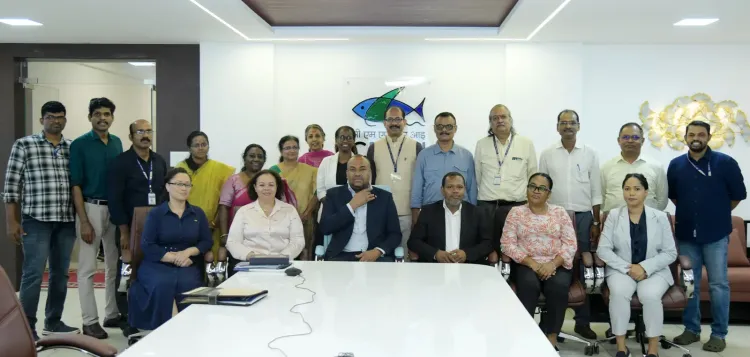
Seychelles Fisheries Minister Wallace Cosgrow led an eight-member delegation to CMFRI, Kochi on 27 August .
Discussions covered tuna fisheries , mariculture , stock assessment , climate-change impacts , and digital fisheries technologies .
Seychelles has signed an MoU with the Indian government and ICAR for bilateral cooperation in agriculture and fisheries.
CMFRI 's National Marine Fisheries Data Management Centre — which uses mobile technology and modern analytics — drew particular interest from the delegation.
The visit follows earlier high-level meetings in New Delhi and Hyderabad , indicating a structured bilateral engagement on the blue economy.
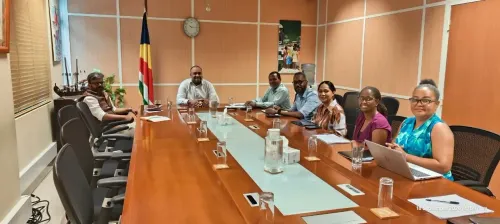
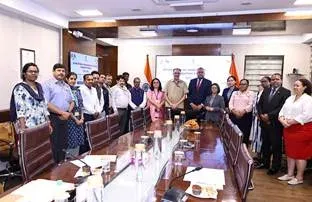
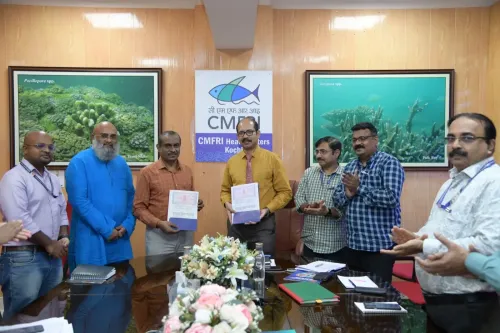
An eight-member delegation from Seychelles, led by Fisheries, Agriculture, and Blue Economy Minister Wallace Cosgrow, visited the ICAR-Central Marine Fisheries Research Institute (CMFRI) in Kochi on 27 August to explore research and technology partnerships aimed at strengthening sustainable management of the island nation's ocean resources. The visit signals a deepening of India-Seychelles cooperation on fisheries science and the blue economy.
Key Areas of Discussion
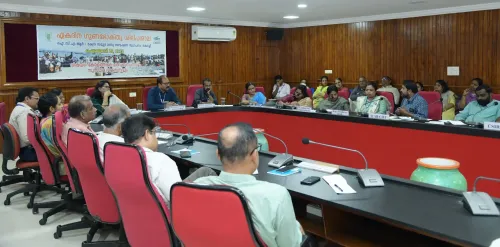
Senior Seychelles fisheries officials held detailed discussions with CMFRI scientists covering a broad range of themes: fisheries stock assessment, sustainable fisheries management, tuna fisheries, mariculture, climate-change impact assessment, seaweed-based value addition, ornamental fish breeding, and marine bioprospecting. The delegation expressed particular interest in CMFRI's long-term fisheries datasets, which could serve as a scientific foundation for collaborative research and capacity building.
What India Brings to the Table
CMFRI Director Dr Grinson George presented the institute's advances across fisheries resource assessment, biodiversity and ecosystem health, climate change adaptation, sustainable mariculture, marine biotechnology, fish health and nutrition, and socioeconomic studies of fishing communities. The delegation was also briefed on CMFRI's National Marine Fisheries Data Management Centre, which collects field-level fisheries data through mobile technologies and processes it using modern analytical tools — a model Seychelles is reportedly keen to adapt.
The MoU Framework
Minister Cosgrow noted that Seychelles has signed a Memorandum of Understanding (MoU) with the Indian government and the Indian Council of Agricultural Research (ICAR) for bilateral cooperation in agriculture and fisheries. The Kochi visit follows high-level meetings already held in New Delhi and Hyderabad as part of Seychelles' broader engagement with India on agriculture and the blue economy.
Balancing Conservation and Livelihoods
A central theme of the discussions was how to reconcile fisheries conservation with the economic needs of small-scale fishing communities. CMFRI scientists outlined their scientific and socioeconomic approach to seasonal fishing regulations, stressing that conservation policies must be both scientifically robust and socially acceptable to coastal fishing communities — a principle that resonates strongly with Seychelles' own policy priorities.
Potential Areas for Joint Collaboration
The discussions identified several potential areas for joint work, including fisheries assessment and management, tuna fisheries research, mariculture development, climate-change impact studies, and digital fisheries technologies. The proposed cooperation, if formalised, could help Seychelles build a stronger scientific basis for managing its marine resources while expanding its blue economy and protecting the livelihoods of coastal communities. Scientists and division heads from across CMFRI's research units participated in the interaction.
Point of View
And its interest in CMFRI's long-term datasets and digital monitoring tools is not merely academic — it is about building a defensible scientific basis for resource governance. For India, embedding its research institutions into Seychelles' fisheries management framework extends soft power into a region where China has been active. The MoU with ICAR is a useful instrument, but the real test will be whether joint research translates into durable capacity on the Seychelles side, or remains a series of high-profile visits.
NationPress
12 Oct 2026
Frequently Asked Questions
Why did Seychelles visit CMFRI in Kochi?
Seychelles sent an eight-member delegation to CMFRI in Kochi on 27 August to explore research and technology partnerships for sustainable management of its marine resources. The visit covered topics including tuna fisheries, mariculture, stock assessment, and digital fisheries data tools.
What is the MoU between Seychelles and ICAR about?
Seychelles has signed a Memorandum of Understanding with the Indian government and the Indian Council of Agricultural Research (ICAR) for bilateral cooperation in agriculture and fisheries. The agreement provides the formal framework for joint research, knowledge exchange, and capacity building between the two countries.
What is CMFRI's National Marine Fisheries Data Management Centre?
It is a facility at CMFRI that collects field-level fisheries data through mobile technologies and processes it using modern analytical tools. The Seychelles delegation expressed strong interest in this model as a potential template for their own fisheries data infrastructure.
How does this visit fit into the broader India-Seychelles relationship?
The Kochi visit is part of a structured bilateral engagement that already included high-level meetings in New Delhi and Hyderabad. Seychelles is engaging India on both agriculture and the blue economy, with the CMFRI visit representing the technical and scientific dimension of that partnership.
What are the key areas identified for future collaboration?
The two sides identified fisheries assessment and management, tuna fisheries research, mariculture, climate-change impact studies, and digital fisheries technologies as priority areas for joint work. The proposed cooperation aims to strengthen Seychelles' scientific governance of its marine resources while supporting coastal fishing livelihoods.