Amit Shah: No Kashmiri youth in terrorism after Article 370 abrogation
Synopsis
Home Minister Amit Shah declared on 21 November that not a single local Kashmiri youth remains active in terrorism — a claim backed by the recent elimination of the last known local Lashkar-e-Taiba militant in Pulwama. Shah called it a 35-year milestone and directly attributed the ideological shift to the 2019 abrogation of Article 370, drawing a pointed contrast with the opposition's response at the time.
Key Takeaways
Home Minister Amit Shah stated on 21 November 2026 that no local Kashmiri youth is currently involved in terrorism in the Kashmir Valley .
Kashmir Police recently eliminated the last known active local terrorist — a Lashkar-e-Taiba member — in an encounter in Pulwama .
All remaining militants in the Valley are reportedly foreign nationals, according to Shah.
Shah credited the abrogation of Article 370 on 5 August 2019 with ending separatist sentiment among Kashmiri youth.
He called the milestone the result of 35 years of sacrifice by security forces and intelligence agencies.
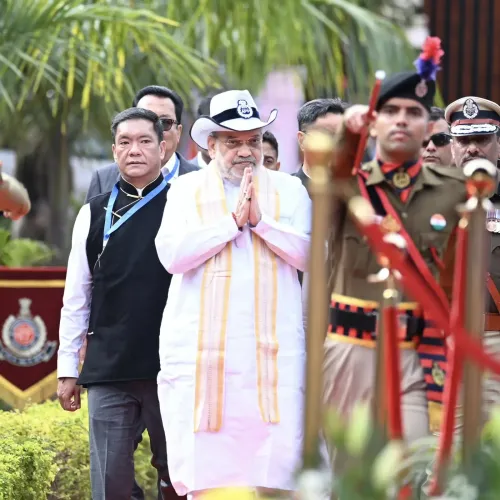
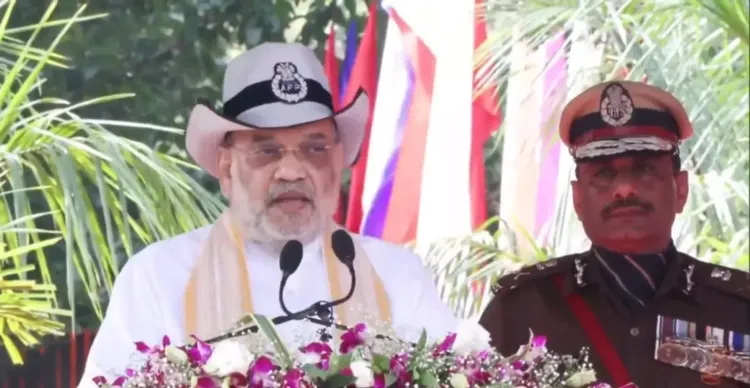
The remarks were made at the Police Training Academy, Banderdewa , near Itanagar , during the President's Police Colour presentation to Arunachal Pradesh Police .
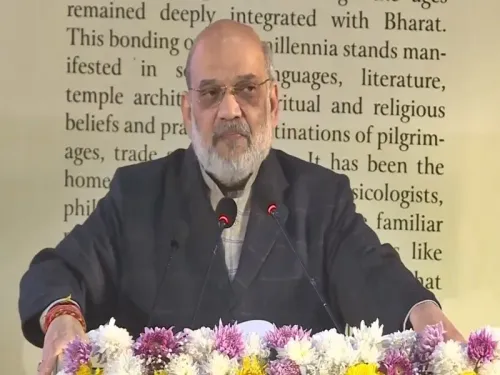
Union Home Minister Amit Shah on Saturday, 21 November 2026 declared that sustained efforts by the Union government have delivered a historic milestone — not a single local Kashmiri youth is currently involved in terrorism in the Kashmir Valley. Shah made the remarks while addressing a gathering at the Police Training Academy in Banderdewa, near Itanagar, after presenting the President's Police Colour to the Arunachal Pradesh Police.
Last Local Terrorist Eliminated
Shah said that in a recent encounter in Pulwama, the Kashmir Police eliminated the last known active local terrorist belonging to the Lashkar-e-Taiba terror outfit. He stated that not a single local terrorist now remains in the Valley — all remaining militants are described as foreign nationals. According to Shah, this marks a 35-year turning point achieved through the sustained sacrifice of security forces and intelligence agencies.
Article 370 and the Shift in Valley's Sentiment
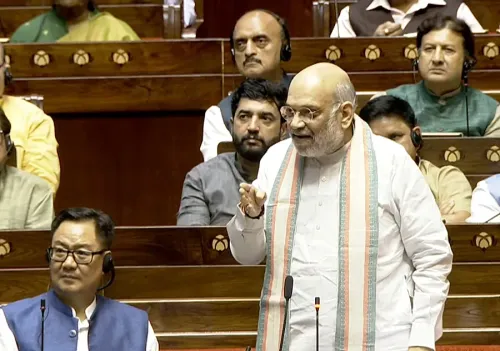
The Home Minister directly linked the security turnaround to the abrogation of Article 370 on 5 August 2019, which revoked Jammu and Kashmir's special constitutional status. He recalled that the opposition had uniformly opposed the move at the time, questioning its relevance to terrorism. Shah quoted himself from that debate: "When Article 370 was abrogated in 2019, the entire Opposition had united to question what Article 370 had to do with terrorism. Today, it is a matter of pride that following the abrogation of Article 370, the sense of separatism among the youth of Kashmir has come to an end," he said.
Shah argued that the elimination of the last local terrorist represents not merely the end of one individual's militant career, but the beginning of the end of separatist ideology in the region. This comes amid a broader government narrative that developmental outreach, combined with security operations, has reshaped youth aspirations in the Union Territory.
Historical Context: From the 1990s to Today
Addressing the gathering, Shah drew a sharp contrast with the peak of militancy in the 1990s, when, he said, there were widespread concerns about how long Kashmir could remain integrated with the country. "At that time, the valour of our security forces kept Kashmir integrated with the country," he noted. The Home Minister credited successive generations of security personnel for holding the line across three and a half decades before the ideological shift he described became possible.
Notably, Shah credited the developmental momentum that he said began in the Kashmir Valley under Prime Minister Narendra Modi's leadership from 2014 onwards as a parallel enabler of the changed ground reality.
Security Forces Lauded
Speaking in the context of the President's Police Colour award — one of the highest honours for a police force — Shah praised the armed forces, Arunachal Pradesh Police, and all security agencies for their role in containing terrorism in Jammu and Kashmir. He expressed confidence that the coming period would be very promising for the Valley, suggesting the government views current gains as durable rather than temporary.
The government's claims regarding the complete absence of local terrorists will likely face scrutiny from independent security analysts and opposition parties, though no immediate rebuttal was recorded at the time of the address.
Point of View
Particularly when radicalisation pipelines and foreign infiltration routes remain active. The government's framing conflates the absence of active local cadres with the end of separatist ideology — two distinct conditions. The more durable test will come not from encounters in Pulwama but from whether Kashmiri youth political grievances are addressed through representative institutions, something that the region's continuing political transition has yet to fully enable.
NationPress
21 Nov 2026
Frequently Asked Questions
What did Amit Shah say about Kashmiri youth and terrorism?
Home Minister Amit Shah said on 21 November 2026 that no local Kashmiri youth is currently involved in terrorism in the Kashmir Valley, calling it a historic milestone achieved after 35 years of sustained effort by security forces. He made the remarks at the Police Training Academy in Banderdewa, near Itanagar.
Who was the last local Kashmiri terrorist eliminated?
According to Shah, Kashmir Police recently eliminated the last known active local terrorist in an encounter in Pulwama — a member of the Lashkar-e-Taiba terror outfit. Shah stated that all militants now remaining in the Valley are foreign nationals.
How is the abrogation of Article 370 linked to the security improvement?
Shah directly attributed the turnaround to the abrogation of Article 370 on 5 August 2019, arguing it extinguished the sense of separatism among Kashmiri youth. He recalled that the opposition had questioned the link between Article 370 and terrorism at the time of abrogation, contrasting that with what he described as the present ground reality.
Where did Amit Shah make these remarks?
Shah made the remarks at the Police Training Academy in Banderdewa, near Itanagar in Arunachal Pradesh, on Saturday, 21 November 2026, during a ceremony where the President's Police Colour was presented to the Arunachal Pradesh Police.
What was the security situation in Kashmir during the 1990s?
Shah described the 1990s as the peak of militancy in Kashmir, when there were widespread concerns about whether the region could remain integrated with India. He credited the valour of security forces during that period for holding the line before the current ideological shift he described became possible.