Siddaramaiah Supports Stalin's Initiative for Federal Dialogue
Synopsis
Karnataka's Chief Minister Siddaramaiah has endorsed Tamil Nadu's M. K. Stalin's call for a national dialogue aimed at recalibrating Union-State relations in India. This initiative seeks to restore the constitutional balance of federalism, emphasizing collaboration over unilateral action.
Key Takeaways
Siddaramaiah endorses a national dialogue for federal balance.
Concerns over gradual centralization of power.
Calls for a renewed focus on cooperative federalism .
Emphasis on states' constitutional autonomy .
Urges the Union government to provide a platform for discussion.
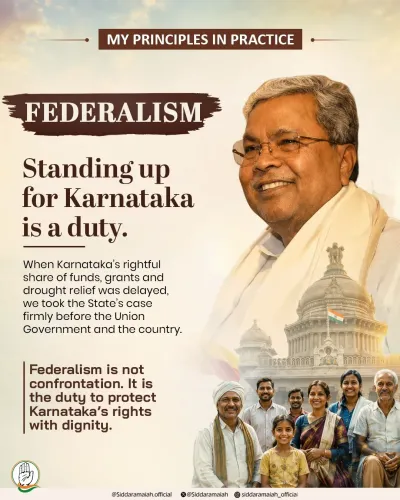
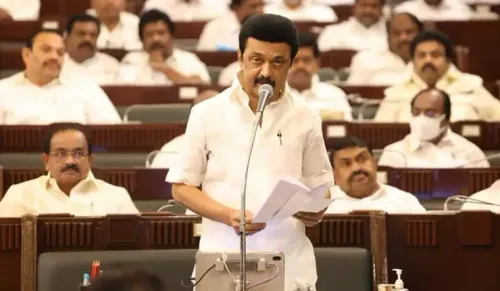
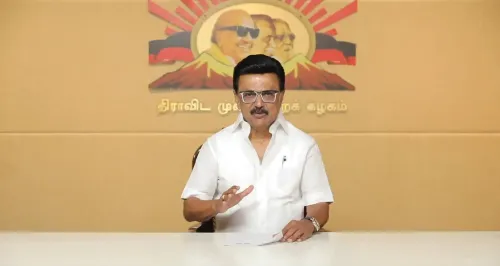
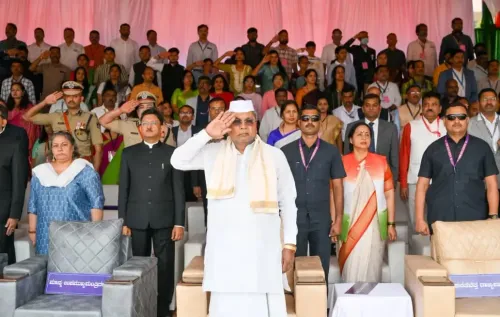
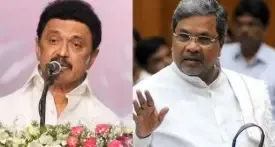
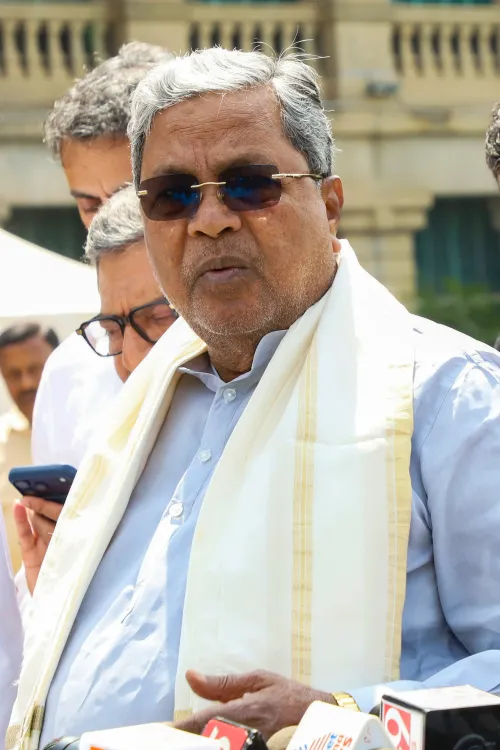
Bengaluru, March 3 (NationPress) Karnataka Chief Minister Siddaramaiah has publicly supported the initiative proposed by his Tamil Nadu counterpart, M. K. Stalin, for a national discussion aimed at recalibrating the relationship between the Union and States, with the goal of restoring the constitutional balance inherent in Indian federalism.
Emphasizing Karnataka's willingness to collaborate with Tamil Nadu and other states, Siddaramaiah stated that the strength of a diverse nation like India should be founded on constitutional trust and cooperative partnerships, rather than unilateral actions.
In a letter dated March 2, he acknowledged receiving Stalin's letter from February 20, which included Part I of the High-Level Committee's Report on Union-State Relations initiated by the Tamil Nadu government. He praised this endeavor as a commendable effort towards constitutional correction and renewal.
Reflecting on the Constitution's creation in the context of Partition and national integration, the Chief Minister pointed out that the Constituent Assembly intentionally structured a Union with unitary characteristics due to extraordinary historical circumstances.
However, he underscored that India was designed as a 'Union of States', not merely a unitary state in disguise, with federalism serving as a protective mechanism against the concentration of power.
Siddaramaiah expressed his worries about what he termed the gradual centralization over recent decades. He cited broad interpretations of the Concurrent List, conditional fiscal transfers, centrally imposed schemes with diminished flexibility for states, and delays in gubernatorial approval of state legislation.
He noted that what was meant to be cooperative federalism has increasingly felt like coercive federalism.
Emphasizing certain constitutional provisions, he indicated that the essence of Article 246, along with the Seventh Schedule, and the framework outlined in Articles 245 to 254, necessitates principled recalibration.
Regarding fiscal federalism, he asserted that Articles 268 to 281, along with the Finance Commission's role under Article 280 and the GST framework under Article 279A, should not be implemented in ways that undermine the fiscal sovereignty of states.
He also referenced the Supreme Court's ruling in S.R. Bommai v. Union of India, which affirmed that federalism is integral to the basic structure of the Constitution.
The Chief Minister affirmed that Karnataka shares many concerns raised in the Tamil Nadu committee's report, consistently advocating for the constitutional autonomy of states in areas such as language policy, education, public health, fiscal devolution, and legislative independence.
He characterized these as constitutional claims rooted in pluralism, diversity, and democratic accountability.
Calling for united efforts, Siddaramaiah emphasized that the push for federal renewal should not be limited to one or two states but should represent a broader national consensus that transcends political differences.
He clarified that the aim is not to weaken the Union but to adjust it appropriately so the Centre can concentrate on truly national priorities while empowering states with their constitutionally designated roles.
He urged the Union government to establish an institutional platform for structured discussions, proposing options such as a renewed Inter-State Council under Article 263, a special assembly of Chief Ministers, or a formal constitutional review dialogue.
He mentioned that the lack of such engagement has contributed to the perception that cooperative federalism has diminished in practice.
Point of View
Siddaramaiah's endorsement of Stalin's initiative reflects a growing concern among states about the centralization of power. This dialogue could be a significant step towards restoring the balance of federalism in India, allowing states to reclaim their constitutional space.
NationPress
20 Sept 2026
Frequently Asked Questions
What did Siddaramaiah support?
Siddaramaiah supported M. K. Stalin's call for a national dialogue on recalibrating Union-State relations.
Why is this dialogue important?
The dialogue aims to restore the constitutional balance of federalism in India, emphasizing cooperation among states.