Sinhasth Kumbh Mela to draw 12 crore pilgrims, ₹35,000 crore infra: Dy CM Shinde
Synopsis
President Droupadi Murmu made history by hoisting the sacred flag at both Ramtirtha in Nashik and Kushavarta Tirtha in Trimbakeshwar — a first for the Sinhasth Kumbh Mela. With 12 crore pilgrims expected and ₹35,000 crore in regional infrastructure underway, Maharashtra is positioning the festival as both a civilisational statement and an economic engine for the Nashik-Trimbakeshwar region.
Key Takeaways
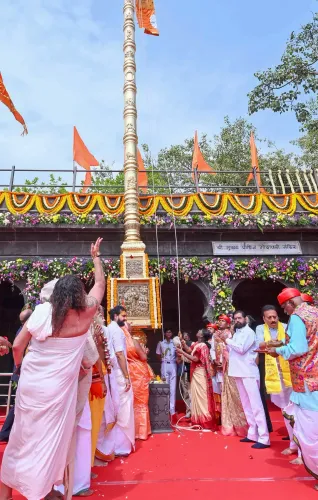
President Droupadi Murmu hoisted the sacred flag simultaneously at Ramtirtha, Nashik and Kushavarta Tirtha, Trimbakeshwar — a historic first for the Sinhasth Kumbh Mela .
Approximately 12 crore devotees and pilgrims from around the world are expected at Nashik-Trimbakeshwar during the festival.
Development works worth approximately ₹35,000 crore are underway in the region, with benefits extending beyond the Kumbh Mela period.
Deputy Chief Minister Eknath Shinde linked the festival to PM Modi's 'Ek Bharat, Shreshtha Bharat' vision, calling it a global showcase of India's cultural heritage.
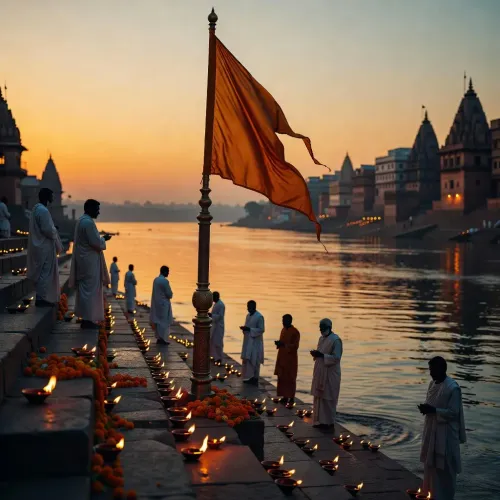
Collective conch-blowing on the banks of the Godavari on Kojagari Purnima has been entered in the Guinness Book of World Records .
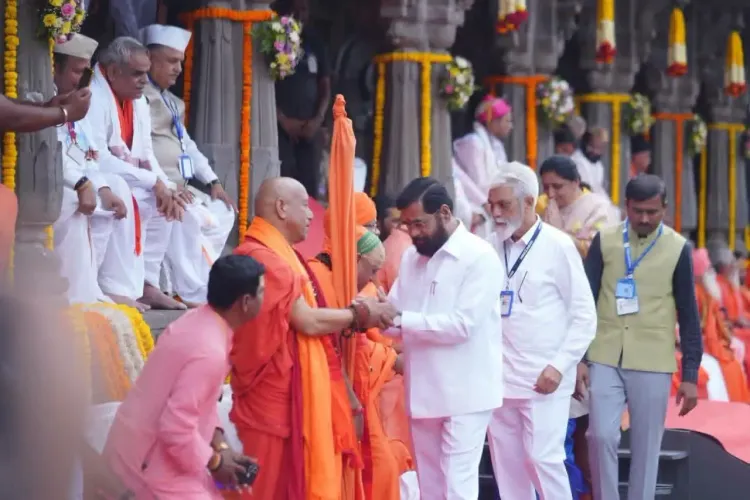
Maharashtra Deputy Chief Minister Eknath Shinde on Saturday, 31 October 2026, declared the Sinhasth Kumbh Mela a global showcase of Maharashtra's cultural heritage, describing it as 'the life force of our rich cultural tradition and the unbroken strength of social unity.' Speaking at Ramtirtha in Nashik during the Goda Maha Aarti ceremony, Shinde said the festival will carry the message of India's civilisational heritage to the entire world.
President Murmu Hoists the Sacred Flag
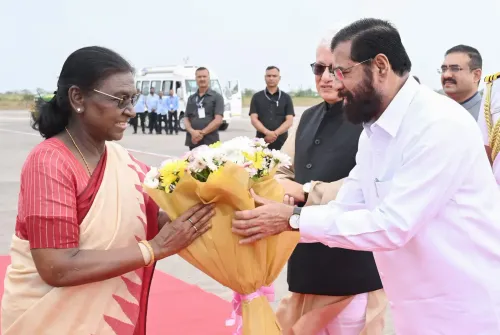
President Droupadi Murmu performed the flag-hoisting and flag-worship ceremonies at Ramtirtha in Nashik and Kushavarta Tirtha in Trimbakeshwar — a first in the Kumbh Mela's centuries-old history. Shinde called the moment 'a golden event in the history of the Sinhasth Kumbh Mela,' describing it as the highest honour to the Aadishakti (primal power) of the Sanatana tradition and to women across India. 'In a centuries-old tradition, a new history has been created today,' he said, delivering the welcome address in the presence of the President.
Scale and Infrastructure
Approximately 12 crore devotees, saints, and pilgrims from across the world are expected to visit Nashik-Trimbakeshwar during the festival period. The Maharashtra Government has committed development works worth approximately ₹35,000 crore to the region — investments Shinde stressed would outlast the Kumbh Mela itself and serve as a foundation for the long-term development of Nashik and Trimbakeshwar citizens.
Cultural and Economic Significance
Shinde invoked Prime Minister Narendra Modi's vision of 'Ek Bharat, Shreshtha Bharat,' saying the Sinhasth Kumbh Mela brings that concept to life by projecting unity in diversity to a global audience. He also highlighted an economic dimension, arguing that the festival must generate employment for ordinary residents and boost the local economy — making it, in his words, 'an economic festival that provides work to the common man' alongside its spiritual purpose.
A Record-Setting Moment
Shinde noted that the collective blowing of conch shells on the banks of the Godavari on Kojagari Purnima has been recognised in the Guinness Book of World Records — a milestone he said would amplify Nashik's global identity. He expressed hope that the festival would set a benchmark for cleanliness, environmental conservation, and social integration, and conveyed confidence that the event would be a 'resounding success' with the blessings of Lord Shri Ram and Mother Godavari.
What to Watch
With ₹35,000 crore in infrastructure works underway and an expected footfall of 12 crore, logistics and crowd management will be closely watched by state authorities. The success of this edition is widely seen as a template for how large-scale religious gatherings in India can double as drivers of regional economic development.
Point of View
Not just faith tourism. The ₹35,000 crore infrastructure commitment is eye-catching, but the real test will be whether those investments are delivered on schedule and benefit residents beyond the festival fortnight. President Murmu's flag-hoisting is symbolically significant as a women's-empowerment narrative grafted onto a centuries-old ritual, but the more durable story is whether Nashik's infrastructure upgrades actually materialise at the scale promised.
NationPress
31 Oct 2026
Frequently Asked Questions
What is the Sinhasth Kumbh Mela and where is it held?
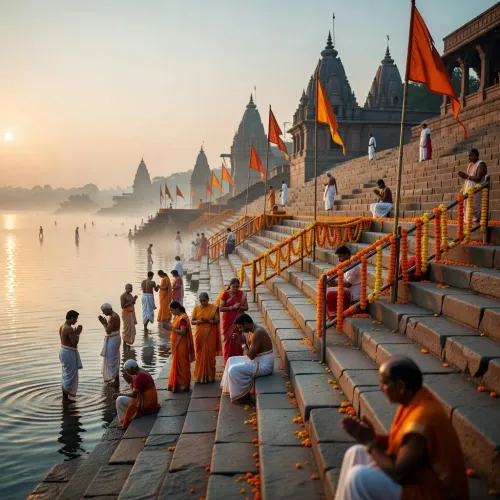
The Sinhasth Kumbh Mela is a major Hindu pilgrimage and festival held in Nashik and Trimbakeshwar in Maharashtra, on the banks of the Godavari river. It is one of the four rotational Kumbh Mela sites in India and draws tens of millions of pilgrims each cycle.
Why is President Droupadi Murmu's role at the Sinhasth Kumbh Mela 2026 historically significant?
President Droupadi Murmu performed the flag-hoisting and flag-worship ceremonies at both Ramtirtha in Nashik and Kushavarta Tirtha in Trimbakeshwar — a first in the festival's centuries-old history. Deputy Chief Minister Eknath Shinde described it as the highest honour to women's power and the Sanatana tradition.
How many pilgrims are expected at the Sinhasth Kumbh Mela 2026?
Approximately 12 crore devotees, saints, and pilgrims from across India and the world are expected to visit Nashik-Trimbakeshwar during the Sinhasth Kumbh Mela. The Maharashtra Government says it is fully prepared to welcome and serve this vast gathering.
What infrastructure investment is the Maharashtra government making for the Kumbh Mela?
Development works worth approximately ₹35,000 crore are underway in the Nashik-Trimbakeshwar region. Deputy CM Shinde clarified that these works will extend beyond the festival and serve as the foundation for long-term development of citizens in both cities.
What Guinness World Record is associated with the Sinhasth Kumbh Mela in Nashik?
The collective blowing of conch shells on the banks of the Godavari on Kojagari Purnima has been entered in the Guinness Book of World Records. Deputy CM Shinde cited this milestone as a sign of Nashik's growing global identity.