Manjinder Sirsa compares Mamata govt to Bangladesh regime during Bengal visit

Synopsis
BJP's Delhi Minister Manjinder Singh Sirsa went further than most in attacking Mamata Banerjee's former government — comparing it outright to Bangladesh's administration. Combined with Bengal Minister Dilip Ghosh’s claim that 12,500 people fraudulently received ₹1,20,000 each under the Awas Yojana, the BJP is mounting a full-spectrum assault on TMC’s governance record as it consolidates its hold on West Bengal.
Key Takeaways
Delhi Minister Manjinder Singh Sirsa compared the previous Mamata Banerjee -led government in West Bengal to ‘the government of Bangladesh’ on 15 November 2026 .
Sirsa alleged the previous regime was marked by ‘appeasement, dynastic politics and looting.’ He claimed Chhath Puja celebrations had been effectively banned under the TMC administration.
Bengal Minister Dilip Ghosh alleged around 12,500 ineligible beneficiaries each received ₹1,20,000 under the Awas Yojana (‘Banglar Bari’) scheme.
Ghosh warned of legal action if funds are not returned, and dismissed TMC MP Abhishek Banerjee’s accusations against the police.
Chief Minister Suvendu Adhikari visited a hospital to meet police personnel who had sustained gunshot injuries.
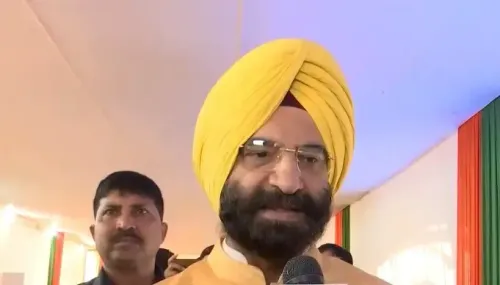
Delhi Minister Manjinder Singh Sirsa, currently on a visit to West Bengal, on Sunday, 15 November 2026, launched a sharp attack on the previous Trinamool Congress (TMC) government led by Mamata Banerjee, alleging it functioned “more like the government of Bangladesh.” Sirsa accused the former dispensation of appeasement, dynastic politics, and large-scale corruption.
Sirsa's Charges Against the Previous TMC Regime
Speaking to reporters in Kolkata, Sirsa alleged, “The previous government under Mamata Banerjee was more like the government of Bangladesh. It was marked by appeasement, dynastic politics and looting. One family looted Bengal with both hands. That is why the people here brought about a change.”
Sirsa further claimed that the current Bharatiya Janata Party (BJP) government in the state has begun reversing what he described as years of misrule. “Those involved in extortion are being sent to jail, and no one is being spared. The biggest thing is that the dignity of the people of Bengal has been restored,” he asserted.
Chhath Puja and Religious Freedom Claims
Sirsa also alleged that the celebration of Chhath Puja had been effectively criminalised under the previous administration. “Today, everyone can celebrate their religious occasions freely. Currently, so many people, mothers and sisters, are celebrating the Chhath Puja here, which had become a crime under the regime of the previous Mamata government,” he said. The remarks are likely to reignite debate over the state’s handling of religious observances during the TMC tenure — a charge the party has consistently denied.
Bengal Minister Dilip Ghosh Targets Awas Yojana Irregularities
Bengal Minister Dilip Ghosh separately alleged that widespread corruption had taken place across several Central government schemes during the previous Trinamool Congress regime. He claimed around 12,500 beneficiaries who each received ₹1,20,000 under the Awas Yojana scheme — locally branded ‘Banglar Bari’ — were found to be ineligible. “We have issued letters seeking the recovery of the funds. If they fail to return the money, legal action will be taken,” Ghosh warned.
TMC’s Abhishek Banerjee Row and Police Conduct
Ghosh also responded to allegations by TMC MP Abhishek Banerjee — widely seen as a close aide and relative of Mamata Banerjee — who accused police of filing fresh FIRs against him at the ruling party’s behest. “At that time (previous regime), the police used to work on their orders. They encroached upon and occupied the road. Now, as the police are taking action against it, they are accusing the force of working on the BJP’s orders,” Ghosh countered.
Ghosh also addressed Chief Minister Suvendu Adhikari’s hospital visit to meet police personnel injured in a shooting incident, saying the morale of the force had suffered for years under the previous government. “If the police do not remain safe, do not get respect, and do not have the authority to work, then how will the administration function properly? Our government has given a free hand to the police. Those still attempting to intimidate the police won’t be spared,” he stated.
Broader Political Context
The remarks come amid a continuing political battle between the BJP and TMC over governance of West Bengal. The BJP, which wrested power from TMC in the state, has used its early months in office to highlight what it describes as the institutional decay left behind by the Banerjee administration. TMC leaders have yet to formally respond to the latest round of allegations. The BJP’s language — drawing a comparison with Bangladesh — is unusually sharp and signals an attempt to frame the narrative around minority appeasement ahead of potential by-elections. How the electorate responds to these claims, and whether independent investigations corroborate the financial irregularities cited by Ghosh, will determine the staying power of this political offensive.
Point of View
And that is precisely the point. The BJP is not merely cataloguing past misgovernance — it is crafting a minority-appeasement narrative designed to consolidate Hindu votes ahead of West Bengal’s next electoral cycle. The Awas Yojana fraud allegation, if independently verified, would be damaging to TMC; but the absence of a central investigation agency’s name in Ghosh’s statement raises questions about evidentiary weight. The comparison with Bangladesh also risks a diplomatic dimension that the Centre has thus far managed carefully. Mainstream coverage tends to treat these remarks as routine political point-scoring; the sharper story is whether the BJP’s Bengal experiment — wielding state machinery against an entrenched opposition — will produce accountability or simply a new power hierarchy.
NationPress
15 Nov 2026
Frequently Asked Questions
What did Manjinder Sirsa say about Mamata Banerjee’s government in West Bengal?
Delhi Minister Manjinder Singh Sirsa, speaking in Kolkata on 15 November 2026, alleged that the previous Mamata Banerjee-led government functioned ‘more like the government of Bangladesh,’ citing what he called appeasement, dynastic politics, and corruption. He claimed the BJP government that replaced it has restored dignity to the people of Bengal.
What is the Awas Yojana fraud allegation in West Bengal?
Bengal Minister Dilip Ghosh alleged that around 12,500 ineligible beneficiaries each received ₹1,20,000 under the Centre’s Awas Yojana scheme, locally known as ‘Banglar Bari,’ during the previous TMC regime. The state government has reportedly issued recovery notices and warned of legal action against those who fail to return the funds.
Why did Sirsa mention Chhath Puja in his remarks?
Sirsa claimed that Chhath Puja celebrations had effectively been criminalised under the previous Mamata Banerjee government, and contrasted that with what he described as the freedom to celebrate religious occasions freely under the current BJP administration. TMC has consistently denied suppressing Hindu festivals during its tenure.
What did Dilip Ghosh say about Abhishek Banerjee’s accusations against the police?
Ghosh dismissed TMC MP Abhishek Banerjee’s claim that police were filing FIRs at the BJP’s behest, arguing that under the previous TMC regime the police acted on the ruling party’s orders. He stated that if Banerjee had a complaint, he was free to file one through proper legal channels.
Who is Suvendu Adhikari and why did he visit a hospital?
Suvendu Adhikari is the Chief Minister of West Bengal under the BJP government. He visited a hospital to meet police personnel who had sustained gunshot injuries, a visit Ghosh used to highlight what he called the low morale of the police force during the previous administration and the current government’s commitment to their safety and authority.