South Africa targets 15 million tourists by 2030 with air access, visa reforms
Synopsis
South Africa's tourism minister has put air access and visa reform at the heart of an ambitious plan to draw 15 million international visitors annually by 2030 — but the real test, she says, will be whether that growth translates into jobs, rural uplift, and inclusive enterprise, not just arrivals data.
Key Takeaways
Minister Patricia de Lille called for urgent improvements to South Africa's international air connectivity and visa processing at the TBCSA Tourism Leadership Conference on 28 October 2026 .
The government's Tourism Growth Partnership Plan targets expanded air routes, simplified visas, and broader participation for marginalised communities.
South Africa aims to attract 15 million international visitors annually by 2030 .
TBCSA Chairperson Jerry Mabena flagged rural tourism enterprises' need for market access, financing, and basic infrastructure.
WTTC Executive Vice President Najib Balala urged South Africa to modernise regional transport links and visa policies to remain globally competitive.
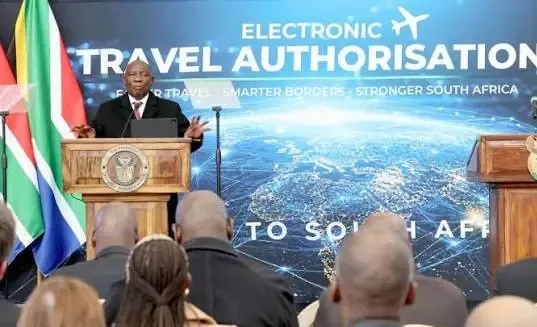
South Africa's Minister of Tourism Patricia de Lille on Wednesday, 28 October 2026, called for urgent improvements to the country's international air connectivity and visa processing systems to fully unlock the economic potential of its tourism sector. De Lille made the remarks in a keynote address at the Tourism Business Council of South Africa (TBCSA) Tourism Leadership Conference, held at the Sun City Resort in the North West Province.
The Tourism Growth Partnership Plan
De Lille outlined the framework of the government's flagship Tourism Growth Partnership Plan, a public-private initiative designed to expand direct air routes, simplify visa regulations, amplify global destination marketing, diversify localised tourism offerings, and broaden participation for historically marginalised communities. She emphasised that dismantling long-standing structural bottlenecks would require sustained collaboration between government and the private sector.
The 2030 Target and What It Really Measures
South Africa has set an ambitious goal of attracting 15 million international visitor arrivals annually by 2030. However, de Lille stressed that aggregate visitor numbers alone would not serve as the definitive measure of success. The true benchmark, she noted, would be determined by job creation, growth of small, medium, and micro-enterprises (SMMEs), economic spillover into rural areas, and the overall inclusivity of the national tourism ecosystem. This signals a shift in policy philosophy — from volume-led to impact-led tourism metrics.
Industry and Global Voices Back the Push
TBCSA Chairperson Jerry Mabena urged policymakers to cultivate an investment-friendly environment alongside physical infrastructure upgrades. Mabena stressed that rural tourism enterprises urgently require broader market access, tailored financing models, and dependable basic utilities — including well-maintained road networks, reliable water supply, and stable power grids — to participate meaningfully in sector growth.
Adding an international dimension, Najib Balala, Executive Vice President of the World Travel and Tourism Council (WTTC), called on South African authorities to optimise regional transport links across air, rail, and road networks while modernising visa policies to sharpen the country's competitiveness on the global stage.
Why This Matters Beyond the Tourism Sector
Tourism is one of South Africa's most significant foreign-exchange earners and a critical lever for employment in a country grappling with structural unemployment. Historically, restrictive visa regimes and limited direct air routes — particularly from high-value source markets in Asia and the Americas — have been cited as key barriers to growth. This conference marks a notable moment of alignment between government policy and private sector priorities, with both sides pointing to infrastructure and access as the twin prerequisites for hitting the 2030 target.
Whether the Tourism Growth Partnership Plan translates into concrete regulatory and infrastructural action will be watched closely by investors and operators in the months ahead.
Point of View
SMMEs and rural spillover is a welcome policy maturity, but it also raises accountability questions: who tracks these metrics, and with what enforcement mechanism? The WTTC's endorsement adds international credibility, yet the gap between conference consensus and regulatory action in South Africa has been wide before. The 2030 deadline is just four years away, and the structural fixes required — bilateral air access agreements, visa category overhauls, rural infrastructure — are not quick wins.
NationPress
29 Oct 2026
Frequently Asked Questions
What is South Africa's Tourism Growth Partnership Plan?
The Tourism Growth Partnership Plan is a public-private initiative outlined by Tourism Minister Patricia de Lille to expand direct air routes, simplify visa regulations, boost global marketing, diversify tourism offerings, and increase participation by historically marginalised communities. It serves as the government's primary framework for reaching the 15 million annual visitor target by 2030.
What is South Africa's international tourist arrival target for 2030?
South Africa has set a goal of attracting 15 million international visitor arrivals annually by 2030. Minister de Lille stressed that success will be judged not just on visitor numbers but on job creation, SMME growth, rural economic spillover, and overall inclusivity.
Why are air connectivity and visa reform critical for South Africa's tourism sector?
Limited direct air routes and complex visa procedures have historically restricted tourist flows from key markets in Asia and the Americas. Improving both is seen as a prerequisite for competitively positioning South Africa and unlocking the sector's full economic potential.
What did the TBCSA Chairperson highlight at the conference?
TBCSA Chairperson Jerry Mabena urged the creation of an investment-friendly environment and physical infrastructure upgrades, specifically stressing that rural tourism enterprises need broader market access, tailored financing, and reliable road, water, and power infrastructure to grow.
What role did the WTTC play at the TBCSA Tourism Leadership Conference?
Najib Balala, Executive Vice President of the World Travel and Tourism Council (WTTC), addressed delegates and called on South African authorities to optimise regional transport links across air, rail, and road, while modernising visa policies to strengthen the country's international competitiveness.