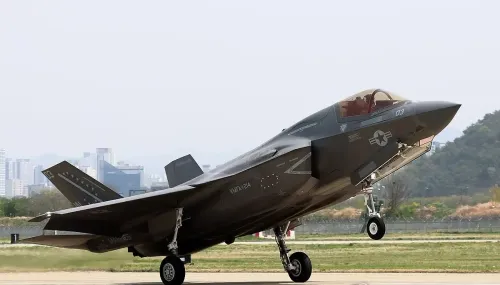
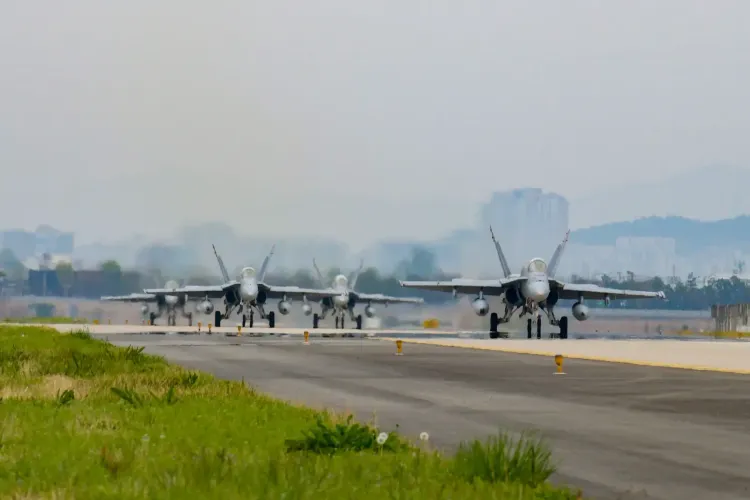
South Korea, US launch Freedom Flag air drills at Kunsan Base
Synopsis
South Korea and the US have launched the two-week Freedom Flag air exercise at Kunsan Air Base, deploying an array of stealth fighters, surveillance drones and early warning aircraft. Embedded in the drills is an evaluation of South Korea-led combined operations — a direct step toward Seoul reclaiming wartime command authority from Washington by 2030.
Key Takeaways
The Freedom Flag combined air exercise began on 26 October 2026 at Kunsan Air Base , Gunsan, and runs for two weeks .
South Korean assets include the F-15K , KF-16 , F-35A , KC-330 tanker, and E-737 Peace Eye early warning aircraft.
US assets include the F-16 , RC-135 , MH-60S Seahawk , F-35B , and MQ-9 Reaper drone.
Drills focus on defensive counter-air and air interdiction missions, including day and nighttime mission planning cells.
The exercise evaluates South Korea-led combined operations as part of Seoul's drive to retake wartime OPCON from the US by 2030 .
Freedom Flag was launched in 2024 to replace the earlier Korea Flying Training and Vigilant Defence exercises.
South Korea and the United States launched their semiannual Freedom Flag combined air exercise on Monday, 26 October 2026, at Kunsan Air Base in Gunsan, approximately 180 kilometres southwest of Seoul. The two-week drills focus on counter-air and air interdiction missions aimed at strengthening wartime joint operational capabilities, the South Korean Air Force confirmed.
Key Assets Deployed
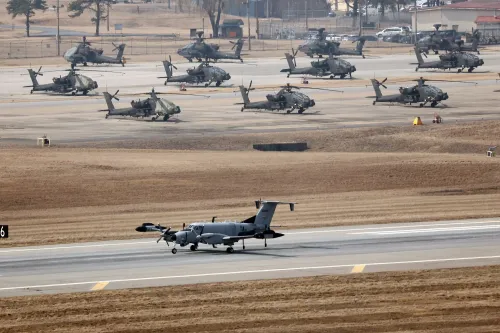
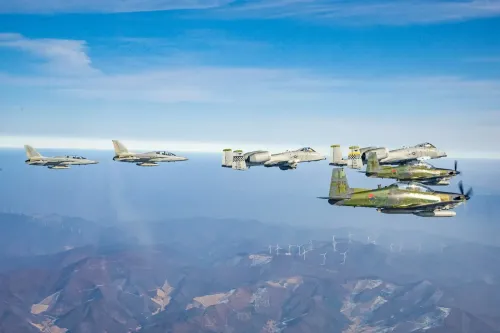
The exercise brings together a significant array of aerial assets from both allies. The South Korean Air Force is fielding its F-15K, KF-16, and F-35A fighter jets, alongside the KC-330 tanker-transport aircraft and the E-737 Peace Eye airborne early warning and control aircraft.
On the American side, the US Air Force has deployed the F-16 Fighting Falcon and RC-135 reconnaissance aircraft, while the US Navy is contributing the MH-60S Seahawk helicopter. The US Marine Corps is also participating with the F-35B stealth fighter and the MQ-9 Reaper unmanned surveillance drone.
Training Objectives and Structure
The two air forces will operate day and nighttime 'mission planning cells' to exchange tactics and operational expertise, while refining wartime mission execution procedures, the South Korean Air Force said in a release. The drills are designed to build interoperability across defensive counter-air and air interdiction scenarios, reflecting the realities of modern warfare.
Notably, the exercise will also evaluate South Korea-led combined operations, in direct alignment with Seoul's ongoing push to retake wartime operational control (OPCON) from Washington. South Korea aims to reclaim OPCON by 2030, or earlier, contingent on verifying its capability to independently lead combined forces.
Background: Freedom Flag Replaces Earlier Exercises
The semiannual Freedom Flag drills were established in 2024 to consolidate and replace two earlier large-scale bilateral air exercises — the Korea Flying Training, held in the first half of the year, and Vigilant Defence, conducted in the second half. The format change signals a broader structural upgrade in how the two allies coordinate aerial training.
This comes amid continued concerns over North Korea's military activities on the Korean Peninsula, which have consistently informed the scale and frequency of US-South Korea joint exercises. The Pentagon and Seoul's Ministry of National Defence have both emphasised that such drills are defensive in nature.
What Comes Next
The Freedom Flag exercise is scheduled to run for two weeks from Monday. Outcomes of the OPCON evaluation component are expected to feed into the broader bilateral defence review process, as both nations work toward the transition of wartime command authority to South Korean leadership.
Point of View
And each exercise that tests Seoul-led combined operations is, in effect, an audition. The inclusion of the MQ-9 Reaper and F-35B alongside South Korean F-35As also signals that the alliance is quietly integrating fifth-generation and unmanned capabilities into its joint doctrine — something Pyongyang, and increasingly Beijing, will be watching closely.
NationPress
26 Oct 2026
Frequently Asked Questions
What is the Freedom Flag exercise between South Korea and the US?
Freedom Flag is a semiannual combined air exercise between the South Korean and US militaries, launched in 2024 to replace two earlier large-scale drills. It focuses on counter-air and air interdiction missions and is designed to sharpen wartime joint operational capabilities.
Where and when is the Freedom Flag 2026 exercise taking place?
The exercise began on 26 October 2026 at Kunsan Air Base in Gunsan, approximately 180 kilometres southwest of Seoul, and is scheduled to run for two weeks.
What aircraft are participating in Freedom Flag 2026?
South Korea is deploying the F-15K, KF-16, F-35A, KC-330 tanker, and E-737 Peace Eye early warning aircraft. The US Air Force is contributing the F-16 and RC-135, the US Navy the MH-60S Seahawk helicopter, and the US Marine Corps the F-35B and MQ-9 Reaper drone.
What is wartime OPCON and why does it matter for these drills?
Wartime Operational Control (OPCON) refers to the authority to command combined South Korean and US forces during a conflict on the Korean Peninsula, currently held by the US. South Korea aims to retake OPCON by 2030, and Freedom Flag drills include evaluations of South Korea-led combined exercises as part of that transition process.
Why did South Korea and the US replace Korea Flying Training and Vigilant Defence with Freedom Flag?
Freedom Flag was established in 2024 to consolidate and upgrade the two earlier semiannual air exercises — Korea Flying Training and Vigilant Defence — into a single, more comprehensive format better suited to modern combined operations and OPCON transition requirements.