Is South Korea's Economy at a Crossroads One Year After the Martial Law Attempt?
Synopsis
A year after a controversial martial law attempt, South Korea's economy finds itself at a pivotal point. While signs of recovery are evident, experts warn of lingering uncertainties and structural challenges that could impact future growth. Discover how fiscal measures and global market dynamics are shaping the future of this resilient economy.
Key Takeaways
South Korea's economy is recovering from the martial law turmoil.
Consumer sentiment is gradually improving.
Government spending initiatives are boosting GDP growth .
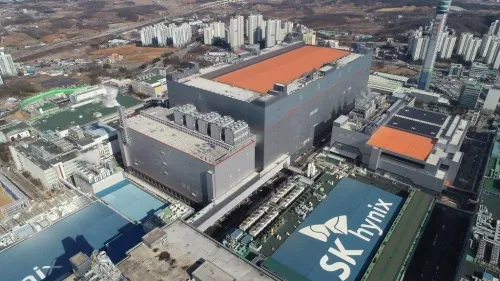
Strong demand for semiconductors is driving exports.
The KOSPI has rebounded significantly this year.
Seoul, Nov 30 (NationPress) South Korea finds itself at a crucial economic crossroads one year following an unexpected martial law attempt that has cast a shadow over Asia's fourth-largest economy, a structure built over decades. Experts pointed out on Sunday that the emergency measures enacted to address the subsequent crisis, coupled with shifts in the global trade landscape, may soon begin to exert pressure.
In the aftermath of months of political instability stemming from former President Yoon Suk Yeol's brief martial law declaration last December, and his eventual ousting in April, signs of recovery are beginning to emerge. Nevertheless, experts warn that the economic scars left by the turmoil linger amidst ongoing uncertainties and structural challenges.
The martial law decree issued on December 3, 2024, triggered immediate turmoil in the financial and foreign exchange markets, as reported by Yonhap news agency.
The Korean won experienced a significant drop, reaching multiyear lows against the U.S. dollar, while the benchmark Korea Composite Stock Price Index (KOSPI) fell to around 2,300 points.
Consumer sentiment plummeted, with private consumption declining by 0.1% in the first quarter, largely due to decreased demand in sectors such as entertainment and hospitality.
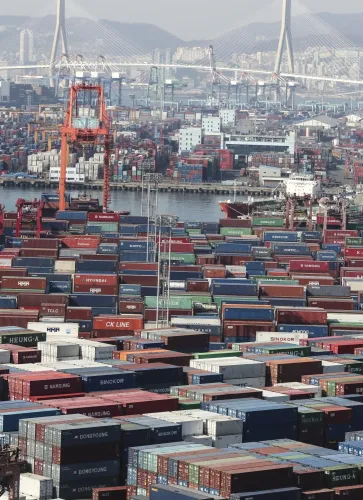
Additionally, sweeping tariff measures introduced by U.S. President Donald Trump further complicated South Korea's export-driven economy.
Real gross domestic product (GDP), a crucial indicator of economic health, contracted by 0.2% in the first quarter, marking the first negative growth in nine months.
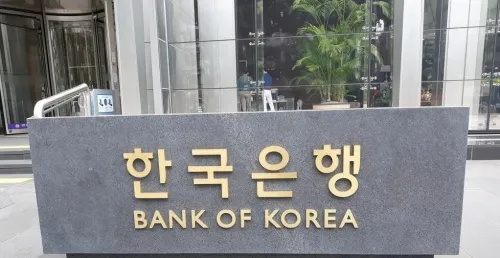
This downturn prompted major financial institutions, including the International Monetary Fund (IMF) and the Bank of Korea (BOK), to significantly reduce their 2025 growth forecasts to approximately 0.8%, attributing it to weakening consumption and ongoing uncertainty concerning U.S. trade policy.
Despite these challenges, financial authorities have consistently reassured investors that the crisis's impact would be contained and that South Korea's external credibility would remain intact.
However, the fallout from the upheaval has been unavoidable, leaving lingering uncertainty that continues to affect the economy, as experts pointed out.
The government's fiscal measures, along with the country's robust export strength, have reignited growth momentum following President Lee Jae Myung's inauguration in June.
The new administration quickly implemented a secondary supplementary budget, increased public spending, and introduced extensive measures to boost consumption.
As a result of these aggressive fiscal policies, GDP increased by 1.2% in the third quarter compared to the previous quarter, marking the fastest growth in about a year and a half.
Private consumption rose by 1.3% during the July–September period, representing the most substantial increase since late 2022.
Experts credit much of the rebound to the government's “consumption coupon” program, which distributed direct cash handouts—150,000 won (US$102) to all citizens in July, followed by 100,000 won to nearly 90% of the population in September.
Exports increased by 1.5% in the third quarter, driven by robust global demand for semiconductors and automobiles.
Notably, semiconductor exports surged due to heightened demand for artificial intelligence (AI)-related chips, helping to restore investor confidence.
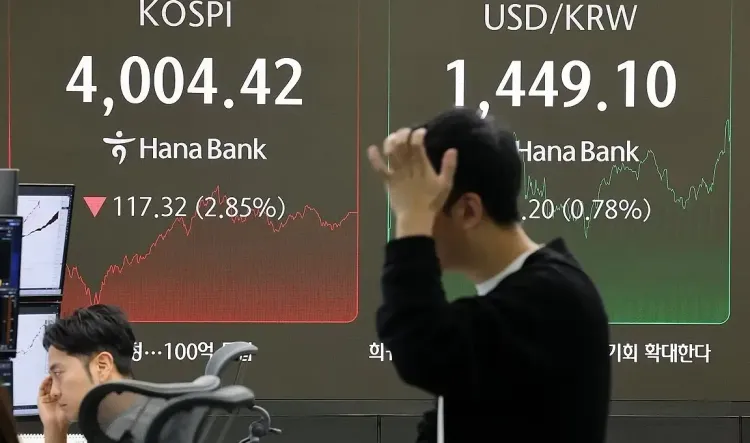
Financial markets also saw a rebound, with the KOSPI rising approximately 70% this year, bolstered by government-led market reforms and optimism surrounding the AI boom.
Investor sentiment received an additional boost after Seoul and Washington finalized the details of South Korea's $350 billion investment package in the U.S., part of a broader trade agreement.
Point of View
I believe that the resilience shown by South Korea's economy, despite facing significant challenges, reflects the strength of its fundamentals. The government's proactive measures and the global demand for technology should provide a pathway for recovery, but caution remains essential in navigating the uncertainties ahead.
NationPress
16 Oct 2026
Frequently Asked Questions
What triggered the martial law attempt in South Korea?
The martial law attempt was initiated by former President Yoon Suk Yeol in December 2024 amid political unrest.
How did the martial law affect South Korea's economy?
The martial law declaration caused immediate shocks in financial markets, a drop in consumer sentiment, and a contraction in GDP.
What measures has the government taken to boost the economy?
The government implemented a supplementary budget, increased public spending, and introduced cash handouts to stimulate consumption.
What is the current state of South Korea's GDP?
As of the third quarter, GDP grew by 1.2%, indicating signs of recovery after previous contractions.
What are the main drivers of South Korea's recent economic growth?
Key drivers include strong global demand for semiconductors and a rebound in private consumption.