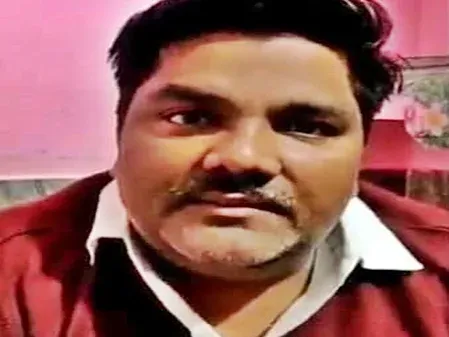
Tahir Hussain gets life term in Ankit Sharma murder: Delhi minister calls it 'beginning of justice'
Synopsis
More than five years after IB officer Ankit Sharma was stabbed 51 times and dumped in a drain during the 2020 Delhi riots, a court has handed life sentences to Tahir Hussain and four co-accused. The trial court called the crime 'rarest of rare' — but stopped short of the death penalty, setting up a likely High Court battle where that question could be revisited.
Key Takeaways
Delhi's Karkardooma Court sentenced former AAP councillor Tahir Hussain and four others to life imprisonment for the murder of IB officer Ankit Sharma .
The court described the crime as one of 'utmost brutality' and said it 'tilts towards the rarest of rare' .
Sharma, 26 , was found with 51 knife wounds ; his body was recovered from a drain after his parents filed a missing report.
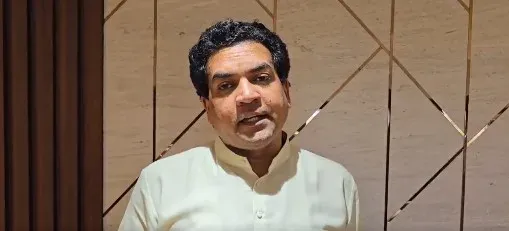
Delhi Minister Kapil Mishra welcomed the verdict on X , calling it 'the beginning of justice' and urging the higher court to convert it to a death sentence.
Hussain is reportedly likely to challenge the conviction before the Delhi High Court .
Delhi's Karkardooma Court sentenced former Aam Aadmi Party (AAP) councillor Tahir Hussain to life imprisonment for the murder of Intelligence Bureau (IB) security assistant Ankit Sharma, killed during the North-East Delhi riots in February 2020. The verdict, which also convicted four others — Javed, Anas, Nazim, and Kasim — has drawn sharp political reaction, with Delhi Minister Kapil Mishra calling the sentence 'the beginning of justice' and pressing for the death penalty.
What the Court Said
The Karkardooma Court made pointed observations while pronouncing the life sentence, describing the nature of the crime in unambiguous terms. 'The manner of the crime was of utmost brutality,' the court stated. It further noted that 'the crime tilts towards the rarest of rare' and that 'the monstrosity of the crime also outweighs the mitigating circumstances' — language that stops just short of awarding capital punishment but leaves the door open for higher courts to do so.
Hussain and the four co-accused were found guilty of offences including murder, kidnapping, rioting, and promoting enmity between different groups.
The Killing of Ankit Sharma
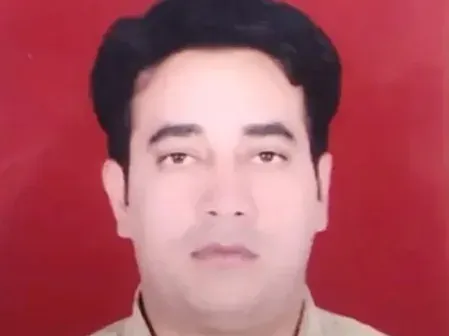
Ankit Sharma, 26, was a security assistant with the IB when he was caught in the communal violence that swept through North-East Delhi in February 2020. According to the chargesheet, he had gone to pacify two warring groups near Tahir Hussain's house when he was surrounded by a mob, dragged inside the building, and killed.
Investigators found that Sharma was attacked with rods and stones, stabbed repeatedly — including after losing consciousness — with as many as 51 knife wounds recorded on his body. His corpse was then dumped in a drain and was recovered by police only after his parents filed a missing report. The investigation concluded that the attack was carried out at the alleged directions of Hussain.
Political Reaction
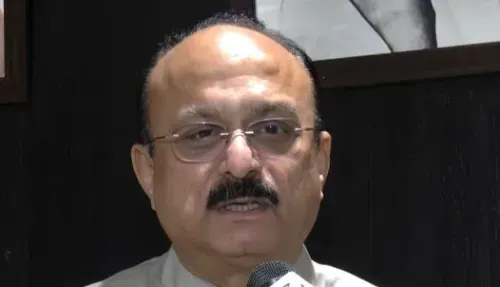
Delhi Minister Kapil Mishra took to his official account on X to welcome the verdict, hailing the life sentence as 'the beginning of justice.' Recalling the circumstances of Sharma's death, Mishra argued that the level of cruelty — including being stabbed after death and the body being thrown into a drain — qualified the case as 'rarest of the rare.' He expressed hope that the life term would be converted into a death sentence as the matter proceeds to a higher court.
What Happens Next
The convicted former councillor is reportedly likely to move the Delhi High Court to challenge his conviction and seek relief in the case. The 'rarest of rare' framing used by the Karkardooma Court is significant: it signals that the trial court considered capital punishment but stopped short, a determination that the High Court or the Supreme Court could revisit. This verdict comes more than five years after the riots, which claimed 53 lives and left hundreds injured across North-East Delhi.
Point of View
A reminder of how slowly the wheels of justice turn in mass-violence cases. The political pressure for a death sentence, while understandable given the brutality documented in the chargesheet, must be weighed against judicial independence. The higher court will decide on law and precedent, not public sentiment.
NationPress
15 Sept 2026
Frequently Asked Questions
What sentence did Tahir Hussain receive in the Ankit Sharma murder case?
Tahir Hussain was sentenced to life imprisonment by Delhi's Karkardooma Court for the murder of IB security assistant Ankit Sharma during the February 2020 Delhi riots. Four co-accused — Javed, Anas, Nazim, and Kasim — were also awarded life sentences.
Who was Ankit Sharma and how was he killed?
Ankit Sharma, 26, was a security assistant with the Intelligence Bureau who was killed during the North-East Delhi riots in February 2020. According to the chargesheet, he was dragged into a building near Tahir Hussain's residence, attacked with rods and stones, and stabbed at least 51 times; his body was later found in a drain.
Why did the court not award the death penalty?
The Karkardooma Court noted that the crime 'tilts towards the rarest of rare' and that its 'monstrosity outweighs mitigating circumstances,' but ultimately awarded life imprisonment. The 'rarest of rare' threshold for capital punishment, as established by the Supreme Court, requires additional consideration that the trial court chose to leave open for higher courts.
What did Delhi Minister Kapil Mishra say about the verdict?
Delhi Minister Kapil Mishra posted on X welcoming the life sentence, calling it 'the beginning of justice.' He argued the case met the 'rarest of rare' criteria and expressed hope that the life term would be converted to a death sentence by a higher court.
What is the likely next step in the Tahir Hussain case?
Tahir Hussain is reportedly likely to challenge his conviction before the Delhi High Court. The prosecution may also approach the higher court seeking enhancement of the sentence to death, given the trial court's own 'rarest of rare' observations.