Taiwan FM Lin Chia-lung Arrives in Eswatini as Special Envoy After President's Trip Blocked
Synopsis
Taiwan's Foreign Minister Lin Chia-lung landed in Eswatini as a special envoy after China allegedly pressured Seychelles, Mauritius, and Madagascar to revoke overflight clearances, blocking President Lai Ching-te's state visit. The incident marks a bold new escalation in Beijing's campaign to isolate Taiwan — and Taiwan's equally bold refusal to back down.
Key Takeaways
Taiwan's Foreign Minister Lin Chia-lung arrived in Eswatini on April 25, 2025 as the special envoy of President Lai Ching-te.
President Lai Ching-te's state visit was cancelled after Seychelles, Mauritius, and Madagascar revoked overflight clearances on April 21 , allegedly under Chinese pressure.
Taiwan's Presidential Office called the revocations "unprecedented" and directly blamed China's economic coercion .
The visit was meant to mark 58 years of Taiwan-Eswatini ties and King Mswati III's 40th coronation anniversary .
Eswatini is the only African nation that maintains formal diplomatic recognition of Taiwan over China.
Taiwan now has just 12 formal diplomatic allies globally, down from 22 in 2016, as Beijing's isolation campaign intensifies.
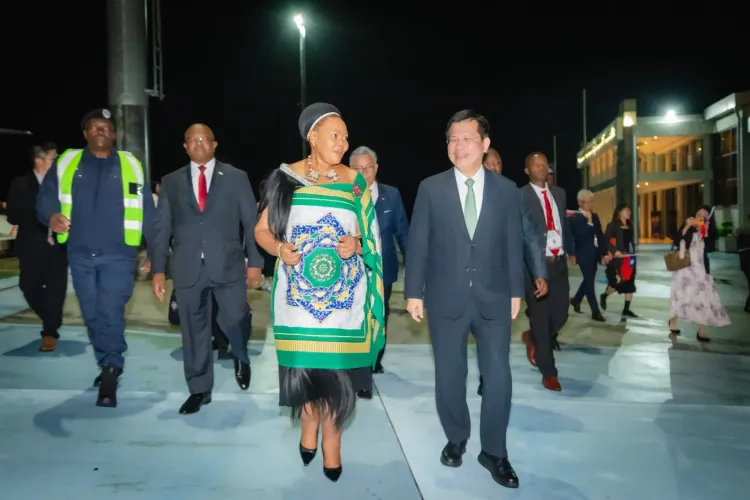
Taiwan's Foreign Minister Lin Chia-lung arrived in Eswatini on Saturday, April 25, representing the island nation as a special envoy after President Lai Ching-te's planned visit was abruptly cancelled when multiple countries revoked overflight clearances under alleged pressure from China. The minister's arrival signals Taipei's determination to maintain its only African diplomatic alliance despite escalating geopolitical interference.
Lin Chia-lung Lands in Mbabane as Taiwan's Presidential Envoy
Foreign Minister Lin Chia-lung confirmed his safe arrival in the Swazi capital Mbabane via social media, stating he was travelling as the personal special envoy of President Lai Ching-te. He expressed gratitude to Eswatini's Foreign Minister Pholile Shakantu and Minister Manqoba Khumalo for their warm reception.
Lin stated he looked forward to participating in the national celebrations and marking 58 years of Taiwan-Eswatini diplomatic ties — one of the longest-standing bilateral relationships Taiwan maintains globally. Eswatini remains the only African nation that officially recognises Taiwan over the People's Republic of China.
Why President Lai's Visit Was Cancelled
The original visit by President Lai Ching-te, scheduled from April 24 to 26, was cancelled after Seychelles, Mauritius, and Madagascar unexpectedly revoked overflight permissions for the presidential chartered aircraft on April 21. The cancellations left the flight route to Eswatini operationally unviable.
Presidential Office Secretary-General Pan Men-an described the move as "unprecedented" and directly attributed it to China's economic coercion. He stated the three island nations withdrew clearance "without justification," disrupting not just the president's travel but also his national security team and accompanying press corps.
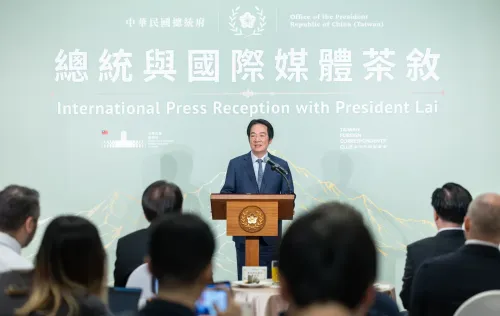
President Lai himself posted on X (formerly Twitter): "Ahead of my visit to Eswatini, several countries along our flight route abruptly revoked overflight clearance under pressure from China." He called China's actions a direct threat to the international order.
Taiwan Calls Out China's 'Unprecedented' Diplomatic Pressure
Lai, who also serves as Chairperson of the Democratic Progressive Party (DPP), was unequivocal in his response, stating that "no amount of threats or coercion" would diminish Taiwan's resolve to engage with the global community. He reaffirmed Taiwan's commitment to building partnerships with like-minded nations worldwide.
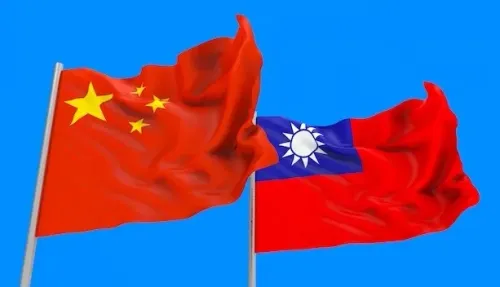
The incident marks a significant escalation in Beijing's campaign to isolate Taiwan diplomatically. Analysts note that pressuring small island nations — many of which are economically dependent on Chinese infrastructure investment and trade — to revoke routine aviation permissions represents a new and more aggressive tool in China's diplomatic arsenal.
This comes amid a broader pattern of Beijing systematically reducing Taiwan's formal allies from 22 nations in 2016 to just 12 today, with Eswatini being the lone holdout on the African continent.
Historic Celebrations and the King's Personal Invitation
President Lai's visit was timed to coincide with two landmark events: the 40th anniversary of King Mswati III's accession to the Swazi throne and the monarch's 58th birthday. According to Taiwan's Presidential Office, King Mswati III had sent a personally-signed letter cordially inviting Lai to attend the historic celebrations.
The royal connection between the two nations runs deep. King Mswati III had personally travelled to Taiwan in 2024 to attend the inauguration of President Lai Ching-te as the 16th-term president — a gesture that underscored the strength of bilateral ties. Foreign Minister Lin's presence at the celebrations is intended to honour that relationship and ensure the milestone is not overshadowed by the diplomatic disruption.
Broader Implications for Taiwan's Global Diplomacy
The episode exposes a critical vulnerability in Taiwan's diplomatic travel infrastructure: its reliance on overflight permissions from nations that are increasingly susceptible to Chinese economic leverage. Beijing's ability to quietly pressure small states into withdrawing routine clearances — without public announcement or stated rationale — creates a new form of soft-power blockade.
For India and other Indo-Pacific democracies watching closely, this incident illustrates the real-world cost of China's "one country" diplomatic pressure campaigns. It also raises questions about the resilience of Taiwan's remaining 12 formal allies and whether Beijing will intensify similar tactics ahead of future high-profile Taiwanese state visits.
As Foreign Minister Lin Chia-lung participates in Eswatini's national celebrations, all eyes will be on whether Taiwan and its allies can develop contingency frameworks to counter airspace-denial tactics — and whether the international community will formally condemn what Taipei has called an unprecedented act of coercion.
Point of View
Mauritius, and Madagascar speaks volumes about the chokehold Chinese infrastructure investment has created across vulnerable small-island economies. Taiwan's decision to send its Foreign Minister as a defiant substitute envoy is strategically sound, but it cannot mask the larger truth: with only 12 formal allies left, Taiwan's diplomatic lifelines are being severed one by one, and the international community's response remains dangerously muted.
NationPress
24 Sept 2026
Frequently Asked Questions
Why did Taiwan's President Lai Ching-te cancel his visit to Eswatini?
President Lai's visit was cancelled after Seychelles, Mauritius, and Madagascar revoked overflight permissions for his chartered aircraft on April 21, 2025, making the flight route to Eswatini unviable. Taiwan's Presidential Office attributed the sudden withdrawals to pressure from China and called the move 'unprecedented.'
Who is representing Taiwan in Eswatini after the president's visit was cancelled?
Taiwan's Foreign Minister Lin Chia-lung arrived in Eswatini on April 25, 2025, as the special envoy of President Lai Ching-te. He is attending national celebrations marking King Mswati III's 40th coronation anniversary and the 58th anniversary of Taiwan-Eswatini diplomatic ties.
Is Eswatini the only African country that recognises Taiwan?
Yes, Eswatini is currently the only African nation that maintains formal diplomatic relations with Taiwan rather than the People's Republic of China. This makes the bilateral relationship strategically significant for Taiwan's shrinking global diplomatic network.
How has China been isolating Taiwan diplomatically?
China has systematically pressured countries to switch diplomatic recognition from Taiwan to Beijing, reducing Taiwan's formal allies from 22 in 2016 to just 12 today. The latest tactic — pressuring nations to revoke overflight clearances — represents a new and more aggressive dimension of this campaign.
What was the purpose of President Lai's planned visit to Eswatini?
The visit was scheduled from April 24–26, 2025, to coincide with King Mswati III's 40th accession anniversary and his 58th birthday. King Mswati had personally invited President Lai via a signed letter and had previously attended Lai's inauguration in Taiwan in 2024.