Taliban slams Pakistan's 'failed policy' of blaming Afghanistan for its crises
Synopsis
The Taliban has gone on the offensive against Pakistan, calling Islamabad's habit of blaming Afghanistan for its own political, security, and economic failures a 'failed policy' — even as UNAMA confirms at least 10 civilians, mostly children, were killed in Pakistani airstrikes on Afghan territory on 1 October. The exchange marks one of the sharpest public ruptures between the two neighbours in recent months.
Key Takeaways
Taliban spokesperson Zabihullah Mujahid on 12 October accused Pakistan of sabotaging negotiations and called Islamabad's blame-shifting a 'failed policy.' Pakistan's Foreign Ministry spokesman Sajjad Haider Khan had, on 9 October , reiterated allegations that TTP , BLA , and other armed groups operate from Afghan soil.
The Taliban rejected Pakistan's accusations, urging Islamabad to instead take constructive steps to address its domestic political, security, and economic challenges.
UNAMA confirmed at least 10 civilians killed — most of them children — and 9 injured in Pakistani airstrikes on Kunar and Helmand provinces on 1 October 2026.
UNAMA has called for de-escalation, dialogue , and respect for international law amid continuing cross-border hostilities.
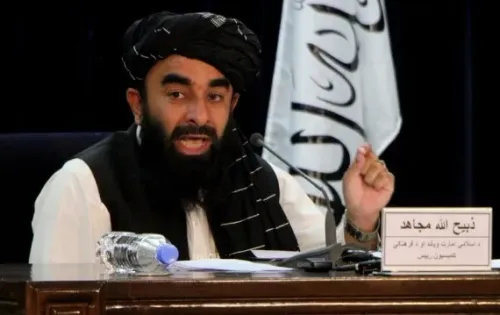
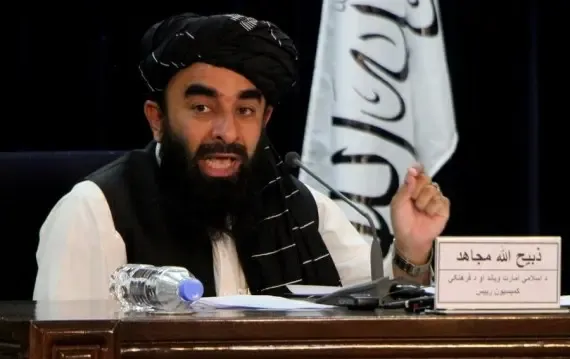
Taliban spokesperson Zabihullah Mujahid on Monday, 12 October launched a sharp rebuke against Pakistan, accusing Islamabad of attempting to sabotage negotiation processes and describing its senior officials as fixated on propaganda rather than constructive problem-solving. Mujahid called Pakistan's approach a 'failed policy', asserting that blaming Afghanistan for Islamabad's own domestic failures is 'no solution to any problem.'
Mujahid's Statement in Full
In a statement posted on X, Mujahid said: 'Blaming Afghanistan for its own failures by Pakistani officials is no solution to any problem. The political, security, social, and economic challenges facing Pakistan are a matter of serious concern and have negative implications for the entire region.'
He further stated that 'Pakistani authorities' baseless accusations, attempts to sabotage negotiation processes, and the excessive focus of senior officials on propaganda rather than finding solutions constitute a failed policy.' Mujahid urged Islamabad to take constructive steps to address its domestic challenges and to respect the views and rights of its own politicians and citizens.
What Triggered the Taliban's Response
The Taliban spokesperson's remarks came in direct response to statements made by Pakistan's Foreign Ministry spokesman Sajjad Haider Khan at a media briefing on 9 October. Khan reiterated Islamabad's longstanding allegations that the Tehreek-e-Taliban Pakistan (TTP), the Baloch Liberation Army (BLA), and other armed groups have established safe havens inside Afghanistan. According to reports citing Afghanistan-based Amu TV, Khan said Pakistan had shared specific information about militant locations with Taliban authorities and urged them to prevent cross-border attacks originating from Afghan soil.
Pakistan has repeatedly levelled such accusations against the Taliban government, a charge the Taliban has consistently rejected. This latest exchange marks a new escalation in the war of words between the two neighbours.
Cross-Border Tensions and Civilian Casualties
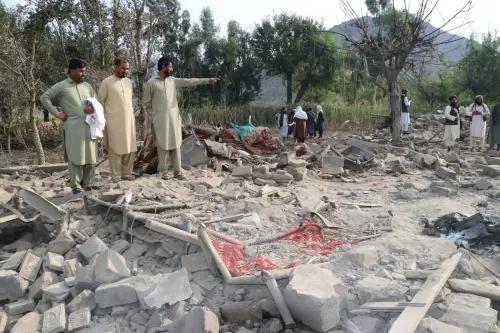
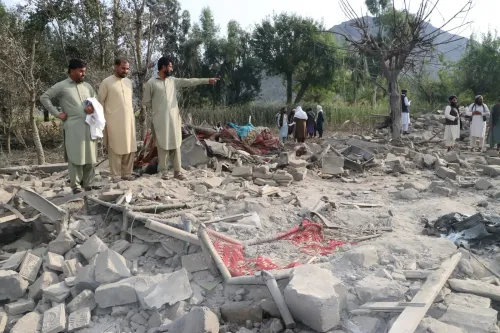
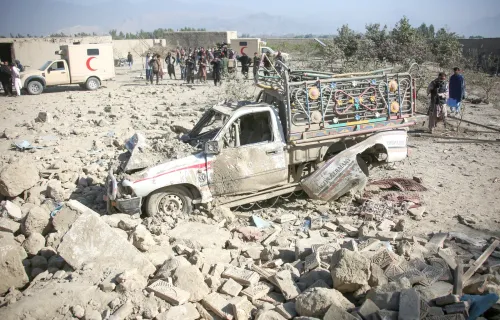
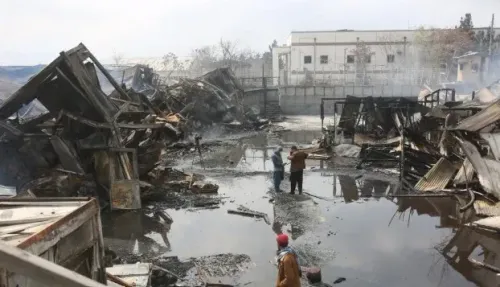
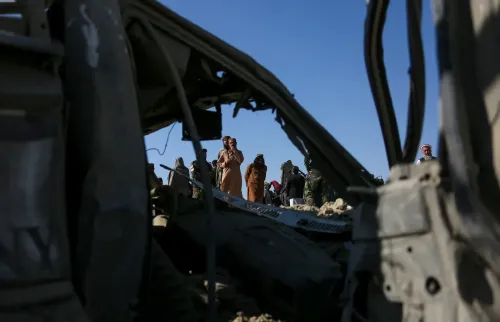
The diplomatic spat unfolds against a backdrop of deteriorating relations, including repeated exchanges of cross-border fire and deepening humanitarian concerns. The United Nations Assistance Mission in Afghanistan (UNAMA) confirmed that at least 10 people — most of them children — were killed and 9 others were injured in Pakistani airstrikes in Afghanistan's Kunar and Helmand provinces on 1 October.
In a post on X, UNAMA stated: 'UNAMA has confirmed that at least 10 civilians were killed, most of them children, and 9 people injured in airstrikes carried out in Afghanistan's Kunar and Helmand provinces earlier today.' The mission added: 'Civilians continue to be affected by cross-border hostilities. UNAMA reiterates its call for de-escalation, dialogue, respect for international law and prevention of further civilian harm.'
A Relationship in Freefall
Relations between Pakistan and Afghanistan have sharply deteriorated in recent months, with border skirmishes, mutual accusations over militant sanctuaries, and rising civilian tolls compounding the breakdown. Notably, the TTP — a separate organisation from the Afghan Taliban but sharing ideological roots — has intensified attacks inside Pakistan, and Islamabad holds Kabul responsible for providing the group operational cover, a charge that Taliban authorities have denied. This is the latest in a series of escalating diplomatic exchanges that analysts warn could destabilise an already fragile regional security architecture.
With UNAMA pressing for de-escalation and international law compliance, the coming weeks will test whether dialogue can be revived or whether the two countries slide further toward open confrontation.
Point of View
Hardening Taliban positions rather than producing cooperation. What mainstream coverage often misses is that Pakistan's own internal fragility — political turbulence, an IMF-dependent economy, and a deteriorating security environment — has eroded its leverage with the Taliban entirely. With UNAMA documenting civilian deaths from Pakistani airstrikes on Afghan soil, the international legitimacy argument is shifting against Islamabad, even as the TTP threat inside Pakistan remains real and growing.
NationPress
12 Oct 2026
Frequently Asked Questions
What did Taliban spokesperson Zabihullah Mujahid say about Pakistan?
Mujahid said that Pakistan blaming Afghanistan for its own failures is 'no solution to any problem,' and described Islamabad's approach — including baseless accusations and attempts to sabotage negotiations — as a 'failed policy.' He urged Pakistan to take constructive steps to address its domestic challenges and respect its own people's rights.
Why is Pakistan accusing Afghanistan and the Taliban?
Pakistan's Foreign Ministry spokesman Sajjad Haider Khan reiterated on 9 October that armed groups including TTP and the Baloch Liberation Army have safe havens in Afghanistan. Islamabad claims it has shared location information of militants with Taliban authorities and has urged them to prevent cross-border attacks inside Pakistan.
What civilian casualties have been reported in the Pakistan-Afghanistan cross-border conflict?
UNAMA confirmed at least 10 civilians were killed — most of them children — and 9 others were injured in Pakistani airstrikes on Afghanistan's Kunar and Helmand provinces on 1 October 2026. The UN mission has called for immediate de-escalation and adherence to international law.
What is the TTP and why is it at the centre of Pakistan-Afghanistan tensions?
The Tehreek-e-Taliban Pakistan (TTP) is an armed militant group that has carried out extensive attacks inside Pakistan. Islamabad accuses the Afghan Taliban of allowing TTP to operate from Afghan territory, a charge the Taliban denies. The TTP issue has become the primary flashpoint in the deteriorating bilateral relationship.
What has the United Nations called for amid Pakistan-Afghanistan tensions?
UNAMA has called for de-escalation, dialogue, and respect for international law, warning that civilians — including children — continue to bear the brunt of cross-border hostilities. The mission's call came after confirming the 1 October airstrike deaths in Kunar and Helmand provinces.