Tamil Nadu hikes DA from 60% to 63%, 16 lakh beneficiaries from July 1

Synopsis
Tamil Nadu has matched the Centre's DA hike exactly — same rate, same date — benefiting 16 lakh employees, teachers, and pensioners at a cost of ₹1,858 crore a year. The festive-season timing is no accident, but the arrear payment schedule remains unannounced, leaving the actual cash-in-hand moment uncertain.
Key Takeaways
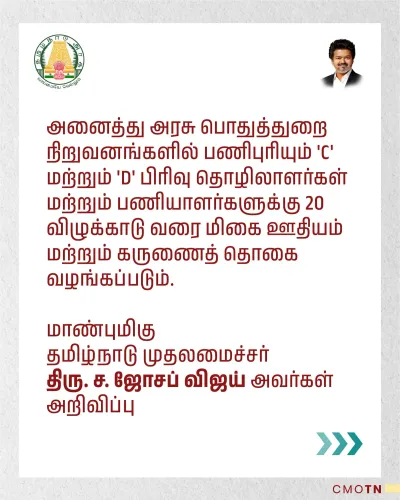
Joseph Vijay approved a DA hike from 60% to 63% for state government employees, teachers, pensioners, and family pensioners.
The revision takes retrospective effect from 1 July 2026 , announced ahead of Deepavali .
Approximately 16 lakh individuals across four beneficiary categories are covered.
The hike will cost the Tamil Nadu exchequer an additional ₹1,858 crore per year.
The state has mirrored the Union government's DA revision of the same quantum and effective date.
The notification does not specify when arrears from July onwards will be paid out.
Tamil Nadu Chief Minister C. Joseph Vijay has ordered a three-percentage-point increase in dearness allowance (DA) for state government employees and teachers, with pensioners and family pensioners also covered under the revision. The hike, raising DA from 60% to 63%, takes retrospective effect from 1 July 2026 and was announced ahead of Deepavali. Approximately 16 lakh employees, teachers, pensioners, and family pensioners stand to benefit, according to a state government notification.
Financial Impact on the State Exchequer
The revision will impose an additional recurring expenditure of ₹1,858 crore annually on the Tamil Nadu government. The state has committed to allocating the required funds as part of its stated commitment to the welfare of both serving and retired personnel. The notification confirmed the effective date, the revised rate, the estimated beneficiary count, and the annual fiscal burden the state will shoulder.
Notably, the notification does not specify when arrears — owed from 1 July 2026 — will be disbursed to beneficiaries, leaving that timeline open for a subsequent order.
Mirroring the Centre's Revision
The decision follows the Union government's own DA hike for central government employees — also from 60% to 63%, effective 1 July 2026. Tamil Nadu has adopted an identical revised rate and the same commencement date for its state workforce, aligning state pay policy with the central benchmark. This pattern of states tracking central DA revisions is well-established, though the speed and completeness of implementation vary across states.
Who Benefits and Why the Timing Matters
The four categories covered — government employees, teachers, pensioners, and family pensioners — collectively number around 16 lakh individuals across Tamil Nadu. The government's notification specifically acknowledged the contribution of officials and teachers to the planning and delivery of public welfare programmes, framing the DA revision as recognition of their role.
The festive-season timing is deliberate. The government stated that the increase would help beneficiaries celebrate Deepavali with greater financial ease — a framing that carries political resonance as much as administrative intent. This is consistent with a broader pattern of welfare announcements timed to major festivals across Indian states.
What Comes Next
While the revised DA rate and its effective date are confirmed, the government is yet to issue a separate order on arrear payments covering the period from July 2026 to the date of implementation. Employees' unions and pensioner associations are expected to press for clarity on the arrear disbursement schedule. The ₹1,858 crore annual outgo will also be factored into Tamil Nadu's revised budget estimates for the current financial year.
Point of View
Same date — is administratively tidy but politically calculated, landing just before Deepavali for maximum visibility. The more consequential detail buried in the notification is the silence on arrears: 16 lakh beneficiaries are owed payments from July, and no disbursement timeline has been set. States routinely announce DA hikes promptly but delay arrear payments, sometimes by months, diluting the real-world impact. The ₹1,858 crore annual outgo also raises questions about how Tamil Nadu — a state that has flagged fiscal stress in recent budget cycles — will absorb this within its current expenditure envelope without crowding out capital spending.
NationPress
31 Oct 2026
Frequently Asked Questions
What is the Tamil Nadu DA hike announced in October 2026?
Tamil Nadu Chief Minister C. Joseph Vijay ordered a three-percentage-point increase in dearness allowance, raising it from 60% to 63% for state government employees, teachers, pensioners, and family pensioners. The revision is effective retrospectively from 1 July 2026 and covers approximately 16 lakh beneficiaries.
How much will the Tamil Nadu DA hike cost the state government?
The revision will add ₹1,858 crore to Tamil Nadu's annual expenditure. The state government has committed to allocating these additional funds as part of its welfare commitments to serving and retired personnel.
When will Tamil Nadu government employees receive DA arrears?
The official notification has not specified an arrear payment date. While the revised DA is effective from 1 July 2026, the timeline for disbursing the accumulated arrears from July onwards remains unannounced and is expected to be addressed in a subsequent government order.
Why did Tamil Nadu raise the dearness allowance now?
The hike follows the Union government's own DA revision for central employees — also from 60% to 63%, effective 1 July 2026. Tamil Nadu adopted the same rate and date, and the announcement was timed ahead of Deepavali, with the government stating it would help beneficiaries celebrate the festival with greater financial ease.
Who are the beneficiaries of the Tamil Nadu DA revision?
The four categories covered are state government employees, teachers, pensioners, and family pensioners — totalling approximately 16 lakh individuals. The government notification specifically highlighted the role of officials and teachers in implementing public welfare programmes as a rationale for the revision.