Telangana Launches Free Sewing Machines for 1,000 BC Women Per Constituency
Synopsis
Telangana's government will distribute free automatic sewing machines to 1,000 BC women per constituency under CM Revanth Reddy's directive. Part of the ambitious Indira Mahila Shakti Scheme targeting one crore women millionaires, the initiative also plans skill development programs and opportunities in dairy, solar, and rice mill sectors.
Key Takeaways
1,000 BC women per constituency in Telangana will receive automatic sewing machines at zero cost under a 100% subsidy scheme.
BC Welfare Minister Ponnam Prabhakar chaired the implementation review meeting on April 26, 2025 , in Hyderabad.
The scheme is being rolled out under the directive of Chief Minister A.
Revanth Reddy to improve livelihood opportunities for women from weaker sections.
Beneficiary selection will be supervised by District Collectors ; applications are expected to open soon.
The initiative is part of the Indira Mahila Shakti (IMS) Scheme , which targets making one crore women financially independent in Telangana.
The BC Welfare Department is also planning skill development programs and expanded employment opportunities for unemployed BC youth and women.
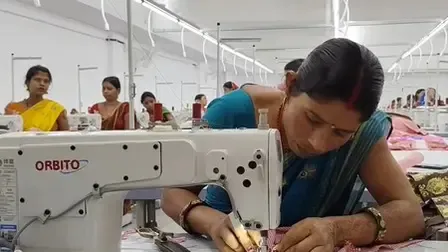
The Telangana government has announced a major self-employment initiative to provide automatic sewing machines with a 100% subsidy to skilled women from Backward Classes (BCs), targeting 1,000 women per constituency across the state. The scheme, announced on Sunday, April 26, 2025, in Hyderabad, is designed to empower women from economically weaker sections by enabling them to establish independent tailoring businesses and achieve financial self-reliance.
Scheme Details and Government Orders
Backward Classes Welfare Minister Ponnam Prabhakar chaired a high-level review meeting with key officials including BC Welfare Department Secretary Balamayadevi, BC Corporation Managing Director Mallayya Battu, and other senior functionaries to finalise the implementation roadmap for the scheme.
The minister confirmed that applications will be invited from eligible women in the near future, and the selection process will be conducted under the direct supervision of District Collectors to ensure transparency and accountability. The scheme is being rolled out as per the directive of Chief Minister A. Revanth Reddy, who has prioritised livelihood enhancement for women from weaker sections.
The initiative is aimed at enhancing the productivity of skilled BC women, expanding tailoring business opportunities at the grassroots level, and building a foundation for women-led micro-enterprises across Telangana's constituencies.
Broader Indira Mahila Shakti Vision
This scheme is part of the state government's larger Indira Mahila Shakti (IMS) Scheme, which carries an ambitious target of making one crore women financially independent and millionaires. The IMS framework goes well beyond sewing machines — it encompasses a wide portfolio of livelihood opportunities for women's self-help groups.
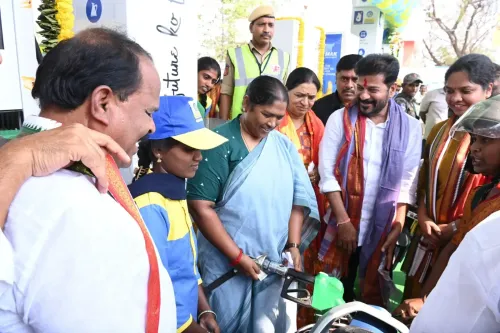
Under the IMS Scheme, women's groups across districts are already being given opportunities to operate canteens, dairy units, poultry farms, RTC buses, and petrol stations. The government is also planning to extend opportunities to run rice mills and solar plants, signalling a shift toward women-led green and agri-based enterprises.
Panchayat Raj, Rural Development, and Women and Child Welfare Minister Dansari Anasuya Seethakka emphasised that women's welfare remains the government's primary policy objective, underlining the political will behind these initiatives.
Skill Development and Employment Pipeline
Beyond the sewing machine distribution, the BC Welfare Department is actively planning to roll out skill development programs targeting unemployed youth and women from backward communities. These programs are expected to complement the physical asset distribution by building human capital and improving employability at scale.
Minister Ponnam Prabhakar stated that the combined strategy of asset provisioning and skill training is designed to create a self-sustaining employment ecosystem for BC women, reducing their dependence on wage labour and informal sector jobs.
Context and Political Significance
This announcement comes amid Telangana's broader push to consolidate its welfare credentials ahead of future electoral cycles. The Congress-led Telangana government, which came to power in December 2023 under Chief Minister Revanth Reddy, has been rolling out a series of welfare schemes targeting women, BCs, SCs, and STs as part of its governance agenda.
Notably, the IMS Scheme draws conceptual parallels with similar women empowerment programs in states like Andhra Pradesh and Tamil Nadu, where self-help group-linked livelihood schemes have shown measurable impact on rural household incomes. However, the scale of Telangana's ambition — one crore women as millionaires — is among the most aggressive targets set by any Indian state government in recent memory.
Critics and policy analysts will be watching closely whether the scheme delivers on its promise or follows the pattern of asset-distribution programs that have historically suffered from implementation gaps, beneficiary targeting issues, and post-distribution support deficits. The District Collector-supervised selection process is a positive structural safeguard, but robust monitoring mechanisms will be critical to ensure machines reach the most deserving women rather than politically connected beneficiaries.
What Comes Next
The government is expected to issue formal application guidelines shortly, with the BC Welfare Department and District Collectors playing a central role in beneficiary identification and verification. Skill development program timelines are also anticipated to be announced in the coming weeks.
With the Indira Mahila Shakti Scheme expanding its scope to include solar plants and rice mills, Telangana's women empowerment model could emerge as a significant policy benchmark — provided execution matches intent. All eyes will be on the first constituency-level rollout as a litmus test for the scheme's ground-level viability.
Point of View
But the real test lies in execution — India is littered with asset-distribution programs that generated headlines but minimal livelihoods. The District Collector oversight mechanism is a smart safeguard, yet without post-distribution support, skill linkages, and market access, machines risk gathering dust. The IMS Scheme's one-crore-millionaires target is politically bold but demands scrutiny: how many of the existing IMS beneficiaries — running canteens, dairy units, and petrol stations — have actually crossed into financial independence? Telangana must publish outcome data, not just outlay figures, to prove this is governance and not just optics.
NationPress
26 Sept 2026
Frequently Asked Questions
What is the Telangana government's sewing machine scheme for BC women?
The Telangana government has announced a scheme to provide automatic sewing machines with a 100% subsidy to 1,000 women from Backward Classes (BCs) in every constituency. The initiative aims to promote self-employment and financial independence among skilled BC women across the state.
Who announced the free sewing machine scheme in Telangana?
BC Welfare Minister Ponnam Prabhakar announced the scheme following a review meeting with senior officials. The initiative is being implemented as per the directions of Chief Minister A. Revanth Reddy.
How will beneficiaries be selected for the Telangana sewing machine scheme?
Applications will be invited from eligible women shortly, and the selection process will be conducted under the supervision of District Collectors. This oversight mechanism is intended to ensure transparency and fair beneficiary identification.
What is the Indira Mahila Shakti (IMS) Scheme in Telangana?
The Indira Mahila Shakti Scheme is a flagship Telangana government program targeting the financial empowerment of one crore women. Under IMS, women's groups are given opportunities to operate canteens, dairy units, poultry farms, RTC buses, petrol stations, rice mills, and solar plants.
What skill development programs is Telangana planning for BC women?
The BC Welfare Department is planning to implement dedicated skill development programs to complement the sewing machine distribution and increase employment opportunities for unemployed women and youth from backward communities. Timelines for these programs are expected to be announced soon.