Raj Thackeray Critiques Central Government's Indifference to Iran, Warns of Consequences for India
Synopsis
In a bold address, Raj Thackeray questions the Indian government's support for Iran, emphasizing the long-standing alliance and potential repercussions for India. He also launches a new initiative, 'Maharashtra Next,' to engage citizens in shaping the state's future.
Key Takeaways
Raj Thackeray raises concerns over India's diplomatic ties with Iran .
He warns of serious repercussions for India due to inaction.
Introduced the 'Maharashtra Next' platform for public engagement.
Criticized rising state debt and urban infrastructure issues.
Encouraged youth to focus on real-world issues rather than digital distractions.
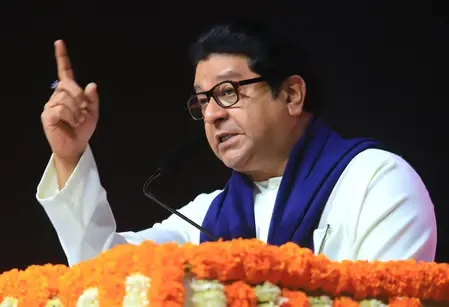
Mumbai, March 19 (NationPress) Raj Thackeray, the leader of the Maharashtra Navnirman Sena (MNS), criticized the Central government on Thursday for its insufficient support for Iran.
He emphasized that Iran has been a long-time ally of India, especially concerning the sensitive Jammu and Kashmir topic, warning that neglecting a trusted partner could result in severe diplomatic and economic repercussions for India.
Thackeray highlighted that a significant portion of India’s oil imports comes from Iran, which has been supplied in Rupees.
“When Iran faced an attack, our Prime Minister didn’t make a single supportive statement. Even after Khamenei’s passing, there was no official message of condolence or protest,” he noted during his Gudi Padwa address at Chhatrapati Shivaji Maharaj Park.
Celebrating the 20th anniversary of the MNS, Thackeray referred to this milestone as a “divine omen” and expressed optimism that his party would eventually reclaim Maharashtra’s “lost glory.”
In his extensive speech, he addressed the state’s escalating debt, deteriorating urban infrastructure, and sharply criticized Prime Minister Narendra Modi’s foreign policy concerning the Iran-Israel situation.
This marked Thackeray’s first public address following the MNS’s defeat in the Brihanmumbai Municipal Corporation elections, even after collaborating with his cousin, Uddhav Thackeray, on issues of Marathi pride and protecting the interests of the Marathi community.
On domestic issues, Thackeray criticized the state government regarding Maharashtra’s financial state, pointing out that state debt was approximately Rs 2 lakh crore in 2014 under Chief Minister Prithviraj Chavan, and has now surged to Rs 11 lakh crore.
“The Chief Minister speaks about a 3-trillion-dollar economy and growth, yet the state is drowning in debt,” he stated.
Thackeray described Maharashtra’s urban areas as “collapsed” and “formless,” criticizing the indiscriminate granting of skyscraper permissions while neglecting fundamental issues like traffic congestion.
He also urged the youth to break away from digital distractions.
“Disconnect from Instagram reels. The government aims to keep you occupied with IPL, movies, and social media so you won't question them. You're wasting away while expressing your frustration solely on mobile screens,” he advised the audience.
Reflecting on his formative years, Thackeray shared a lesson from his uncle and mentor, the late Balasaheb Thackeray.
He recalled Balasaheb’s words that the essence of a speech lies not in delivery but in offering something significant for contemplation.
These words, he said, remain “etched in his mind like a tightened screw.”
Despite electoral losses, Thackeray affirmed that the MNS is the only party truly representing Maharashtra.
He confidently asserted that the party will one day regain power to restore the state’s honor.
Additionally, Raj Thackeray introduced the “Maharashtra Next” website, envisioned as a collaborative hub to gather ideas for the state’s future development.
This platform evolves from Thackeray's 2014 “Blueprint” for Maharashtra, transitioning from a static document to an interactive resource.
Thackeray explained that the platform encompasses a variety of topics across 27 sectors, including infrastructure, transportation, energy, water management, social welfare (healthcare and education), economic policies, local entrepreneurship, and cultural conservation.
To maximize accessibility, the website is available in both Marathi and English.
“In 2006, from this very platform, I announced my intention to create a development blueprint for Maharashtra, which I unveiled in 2014. Since then, no one has inquired about its content. Therefore, to construct the Maharashtra of tomorrow, I am presenting this new initiative, Maharashtra Next,” Thackeray stated.
During the MNS’s 20th-anniversary celebration on March 9 at the historic Raigad fort, Thackeray acknowledged that while he had released a comprehensive development blueprint in 2014, it fell short of the public engagement he had anticipated.
Maharashtra Next represents his effort to modernize that vision by creating a “living document” that adapts to the current needs of the populace.
Point of View
Particularly concerning vital international relationships. His focus on Iran serves as a reminder of the complexities in global alliances and the potential repercussions of neglecting long-standing partnerships.
NationPress
3 Oct 2026
Frequently Asked Questions
What did Raj Thackeray say about the Central government's support for Iran?
Raj Thackeray criticized the Central government for its lack of support for Iran, emphasizing that Iran has been a long-standing ally of India and warning of potential diplomatic and economic consequences.
What is the 'Maharashtra Next' initiative?
The 'Maharashtra Next' initiative is a new platform launched by Raj Thackeray to crowdsource ideas for the future development of Maharashtra, transitioning from a static document to an interactive portal.
How has Maharashtra's state debt changed over the years?
Thackeray pointed out that Maharashtra's state debt has increased from approximately Rs 2 lakh crore in 2014 to Rs 11 lakh crore currently.
What critique did Thackeray offer regarding urban infrastructure in Maharashtra?
Thackeray described Maharashtra's urban areas as 'collapsed' and criticized the indiscriminate granting of permits for skyscrapers while ignoring basic issues like traffic congestion.
What advice did Thackeray give to the youth?
Thackeray urged the youth to disconnect from digital distractions and engage more actively in societal issues rather than expressing their frustrations solely through social media.