Shri Thanedar leads push to block ICE's $20 million electric-shock glove plan

Synopsis
Three House Democrats, led by Indian-American Congressman Shri Thanedar, are pushing back against a little-noticed ICE plan to spend up to $20 million on electric-shock gloves — devices whose own manufacturer warns 'may result in injury or death.' With ICE reportedly cutting training requirements for new recruits, the combination of a potentially lethal tool and undertrained officers is the core of a fast-escalating Congressional standoff.
Key Takeaways
Congressman Shri Thanedar , along with Bennie Thompson and Lou Correa , formally demanded a halt to ICE 's electric-shock glove procurement.
ICE announced on 10 August a plan to spend up to $20 million on the devices.
The glove manufacturer's own documentation warns use 'may result in injury or death.' Lawmakers allege ICE has reduced use-of-force training requirements for newly recruited officers under the Trump administration.
As of the statement's release, ICE , the Department of Homeland Security , and the manufacturer had not responded to the allegations.
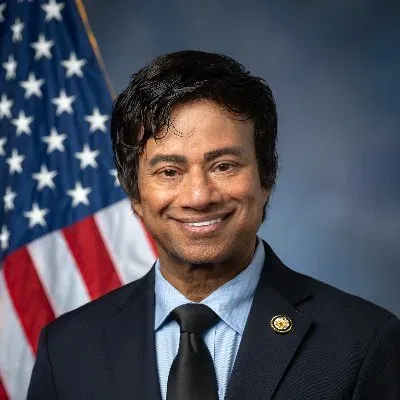
Indian-American Congressman Shri Thanedar and two senior House Democrats have formally demanded that the Trump administration halt a proposed Immigration and Customs Enforcement (ICE) procurement of electric-shock gloves worth up to $20 million, citing the manufacturer's own warning that the device 'may result in injury or death.' The letter, addressed to Homeland Security Secretary Markwayne Mullin, calls for the department to intervene before the purchase moves forward.
Key Developments
ICE announced on 10 August that it intended to spend up to $20 million on the electric-shock gloves, according to Democratic members of the House Homeland Security Committee. The agency's announcement did not identify the manufacturer, specify the number of gloves sought, or indicate a timeline for completing the purchase.
Thanedar, who serves as ranking member of the House Homeland Security Subcommittee on Oversight, Investigations and Accountability, was joined in the effort by committee ranking member Bennie Thompson and border security subcommittee ranking member Lou Correa.
What the Lawmakers Said
In their letter, the three representatives argued that equipping immigration officers with another potentially lethal device posed heightened risks given what they described as the agency's record involving deadly force and the misuse of weapons classified as less lethal.
'Given ICE's horrific record of violence against the public, the agency must not be allowed to equip its officers and agents with a device that demands both significant training for and restraint by its users,' the lawmakers wrote.
They further alleged that under the current administration, ICE had 'hired unqualified officers and agents and rushed them through training programs with reduced use of force instruction,' adding that 'many of these officers and agents should not have been hired at all, much less let loose on American streets with a badge, a gun, and electric shock gloves.'
Concerns Over Training and Oversight
Central to the lawmakers' objection is the question of whether newly recruited ICE personnel — reportedly trained under reduced use-of-force requirements — would receive sufficient instruction to operate the devices safely. The letter raises specific concerns about procurement oversight, testing standards, and the authorisation process before any officer is permitted to deploy the gloves.
Electric-shock devices are generally designed to temporarily incapacitate a person. Their safety, however, can vary significantly depending on the device's power output, the duration of contact, how it is applied, and the medical condition of the individual subjected to the shock.
What Remains Unanswered
As of the time of the lawmakers' statement, neither the Department of Homeland Security, ICE, nor the device's manufacturer had responded to the allegations. ICE's rationale for seeking the technology and any safeguards the agency may have proposed were also not disclosed in the announcement.
The intervention is expected to intensify Congressional scrutiny of ICE's use-of-force policies as the administration continues to expand immigration enforcement operations and recruitment. How the Department of Homeland Security responds to the letter will likely shape the next phase of the debate.
Point of View
But the political signal is significant: Democrats are finding a concrete, visceral issue — electric-shock gloves — to challenge the administration's immigration enforcement expansion. What the letter does not address is whether such devices, with proper training and oversight, could reduce more lethal uses of force — a question ICE has not been given the chance to answer publicly. The absence of any agency response, rationale, or proposed safeguards in the public record is itself a transparency problem, and one that Congress has the standing to press harder on. Thanedar's subcommittee role gives this more than symbolic weight.
NationPress
5 Oct 2026
Frequently Asked Questions
What is the ICE electric-shock glove plan that lawmakers want blocked?
ICE announced on 10 August a proposal to spend up to $20 million on gloves capable of delivering electric shocks to temporarily incapacitate individuals. Three House Democrats, led by Congressman Shri Thanedar, have demanded the Department of Homeland Security halt the procurement before it proceeds.
Who is Shri Thanedar and why is he involved?
Shri Thanedar is an Indian-American Congressman serving as ranking member of the House Homeland Security Subcommittee on Oversight, Investigations and Accountability. His subcommittee role gives him direct jurisdiction over ICE procurement and use-of-force policy, making his intervention more than a political statement.
Why are the lawmakers concerned about the electric-shock gloves?
The lawmakers cite the device manufacturer's own warning that use 'may result in injury or death,' and raise concerns about reduced training requirements for newly recruited ICE officers. They argue that combining a potentially lethal tool with undertrained personnel poses unacceptable risks to the public.
Has ICE or the Department of Homeland Security responded to the letter?
As of the time of the lawmakers' statement, neither ICE, the Department of Homeland Security, nor the device manufacturer had publicly responded to the allegations or provided ICE's rationale for seeking the technology.
What happens next in this procurement dispute?
The letter to Homeland Security Secretary Markwayne Mullin demands intervention before the purchase moves forward. The dispute is expected to intensify Congressional scrutiny of ICE's use-of-force policies, with the department's response — or lack thereof — likely to determine whether formal oversight hearings follow.