Is the India-EU Free Trade Pact a Threat to Bangladesh's Economy?
Synopsis
The EU-India free trade agreement raises alarms in Bangladesh as it threatens the country's vital textiles and apparel exports to Europe. With preferential access set to decrease, how will Bangladesh navigate this new competitive landscape?
Key Takeaways
EU-India FTA could weaken Bangladesh's export position Bangladesh faces challenges post-LDC graduation Competitive landscape in the EU is shifting India aims for $100 billion in textile exports by 2030 Strategic adaptation is essential for Bangladesh
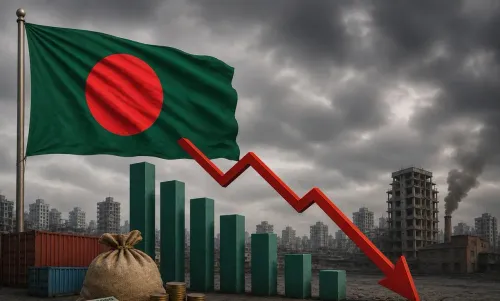
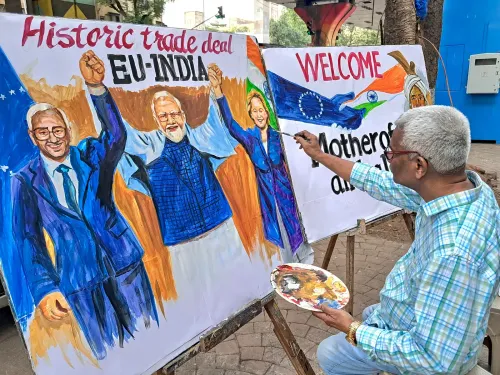
New Delhi, Jan 30 (NationPress) The EU-India free trade agreement has become a significant issue for Dhaka, as it provides market access advantages for India in the textiles, apparel, leather, and footwear industries that have historically supported Bangladesh's exports to Europe, according to a report by Bangladeshi media.
As Bangladesh prepares to graduate from its Least Developed Country (LDC) status in November 2026, the anticipated decline of its preferential access to the EU market post a three-year transition period makes this agreement particularly concerning, as highlighted by the Daily Star.
For many years, Indian exports of garments, textiles, leather, and footwear faced hefty tariffs when entering the EU market. However, the EU-India FTA aims to eliminate duties on footwear, reducing them from 17% to zero, and on apparel and textiles, from 9%-12% to zero, greatly enhancing India's competitive edge.
Bangladesh benefited from LDC duty-free access while competitors like India and Vietnam were subject to tariffs, enabling it to significantly increase its share of the EU apparel market. As China's share in EU apparel imports decreased from 45% in 2010 to 28% in 2025, Bangladesh's share surged from approximately 7% to 21%.
This transformation is notable as, in 2005, both Bangladesh and India held nearly equal market shares in the EU. However, over the next two decades, Bangladesh expanded its share threefold, while India's share dwindled to 5%. This growth was propelled not just by tariff benefits but also by favorable EU rules of origin for LDCs, particularly the single transformation rule.
Ironically, the very preferential advantages that once fueled Bangladesh's rapid growth in the EU market are now diminishing, coinciding with key competitors securing permanent duty-free access through free trade agreements.
Additionally, the safeguard provisions within the EU's Generalized System of Preferences pose a risk; even if Bangladesh qualifies for GSP+ upon graduation, its garment exports might still incur full Most Favored Nation (MFN) tariffs, which could drastically disrupt the competitive landscape in the EU.
The Indian government has ambitious plans to achieve $100 billion in textile and apparel exports by 2030, up from the current $40 billion, supported by a comprehensive policy framework that includes output-linked subsidies, export rebate schemes, input-side assistance, and significant investments in infrastructure and logistics. These initiatives reflect a dedicated effort to enhance competitiveness, scalability, and capacity improvement.
External factors exacerbate the situation; with US reciprocal tariffs limiting India's export potential, Indian exporters are likely to focus on alternative markets. The EU-India FTA facilitates this transition, intensifying competition in Europe, with Bangladesh being one of the most vulnerable players.
Point of View
I recognize the implications of the EU-India free trade agreement on Bangladesh's economy. While it presents challenges, it also calls for strategic innovation and adaptation in our export sectors. We must remain vigilant and proactive in safeguarding our interests while exploring new opportunities.
NationPress
1 Oct 2026
Frequently Asked Questions
What is the significance of the EU-India free trade agreement for Bangladesh?
The agreement could undermine Bangladesh's competitive edge in textiles and apparel, essential for its economy, especially as it prepares to lose LDC status.
How might Bangladesh's LDC graduation affect its EU market access?
Graduation may lead to reduced preferential access to the EU, impacting Bangladesh's ability to compete effectively against countries like India.
What are the potential risks for Bangladeshi exporters?
There is a risk that Bangladeshi exports could face full MFN tariffs even after qualifying for GSP+, altering the competitive balance significantly.