Bangladesh's Supply Chain: India's Role Becomes Essential Amidst Disruptions

Synopsis
As supply chain disruptions challenge Bangladesh's trade policies, India's strategic proximity and quick delivery capabilities emerge as vital solutions. This report highlights the urgency of formalizing supply agreements between the two nations.
Key Takeaways
Emergency supply security agreements between Bangladesh and India are essential.
The COVID-19 pandemic exposed vulnerabilities in supply chains.
India's proximity enables rapid transport of pharmaceutical supplies.
Bangladesh's dependency on active pharmaceutical ingredients is structural.
Formalizing agreements could enhance economic resilience .
New Delhi/Dhaka, March 21 (NationPress) In light of ongoing discussions between Bangladesh and India regarding trade and connectivity, a recent report highlights that the establishment of emergency supply security—with well-defined, structured, and legally binding terms—remains unformalized despite its evident importance.
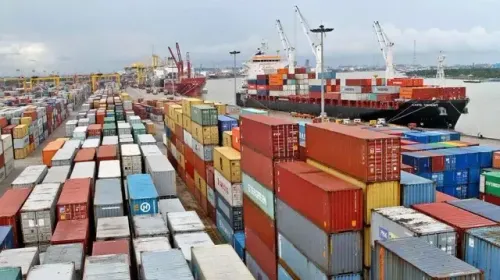
The 'Eurasia Times' reported that the spike in global container freight rates from 2020 to 2022, combined with port congestion that delayed transit times, compelled Bangladesh to confront a challenging reality: its trade policies had not formally recognized the inadequacy of supply chains designed for normal circumstances in the face of disruptions.
“The shortage or delays of pharmaceutical raw materials and industrial inputs became apparent. Critical industrial supplies were stuck at distant ports. The prices of food commodities surged as disrupted maritime routes inflated costs across all import categories. The neighboring country capable of reaching Bangladesh most swiftly, via road in a matter of days, was India. This reality has yet to be integrated into policy,” the report noted.
The analysis pointed out that prior to the pandemic, Bangladesh sourced active pharmaceutical ingredients worth hundreds of millions of dollars each year from both China and India.
As Chinese factories shut down and global logistics faced interruptions, India's role in supplying these materials became increasingly vital.
“Despite facing their own domestic challenges, Indian manufacturers quickly resumed cross-border land deliveries once restrictions were lifted. A truck journeying through Benapole or Petrapole can transport pharmaceutical supplies from Indian production centers to Dhaka in less than two days in ideal conditions. No shipping route from Shanghai or Rotterdam can match that efficiency,” it added.
“The dependency on pharmaceuticals is structural. Bangladesh's robust domestic drug industry primarily produces finished medicines for local consumption and some for export. The active pharmaceutical ingredients essential for these medicines, which halt production without them, are imported. India and China are the primary global suppliers of these compounds. Given China's distance and its demonstrated supply vulnerabilities during crises, India serves as the critical alternative. There is no comparable option that operates on the same timeline,” it mentioned.
The report underscored Bangladesh's energy needs, asserting that India, with its operational domestic refineries and an overland supply route via the Bangladesh–India Friendship Pipeline, possesses the capability to act as an emergency diesel supplier.
“While it has provided this support in specific instances, the arrangement has yet to be established as a formal supply agreement,” it concluded.
Point of View
It is imperative to recognize the strategic importance of the Bangladesh-India relationship in the current context. The report illustrates how addressing supply chain vulnerabilities can enhance economic stability and resilience, benefiting both nations.
NationPress
30 Sept 2026
Frequently Asked Questions
Why is India's role critical for Bangladesh's supply chain?
India's proximity allows for rapid transportation of essential goods, especially pharmaceuticals, which is vital given recent global supply disruptions.
What are the main commodities affected by supply chain issues?
Pharmaceutical raw materials, industrial inputs, and food commodities have faced shortages and price increases due to disrupted supply chains.
Has Bangladesh formalized supply agreements with India?
No, despite the clear need and ongoing discussions, formal supply agreements have yet to be established.
How has the pandemic affected Bangladesh's trade policies?
The pandemic highlighted the inadequacies in Bangladesh's trade policies, which were not designed to handle supply chain disruptions.
What is the Bangladesh–India Friendship Pipeline?
It is a pipeline that facilitates the transportation of diesel and other fuels from India to Bangladesh, enhancing energy security.