Economic Challenges in Bangladesh Amidst Iran Conflict

Synopsis
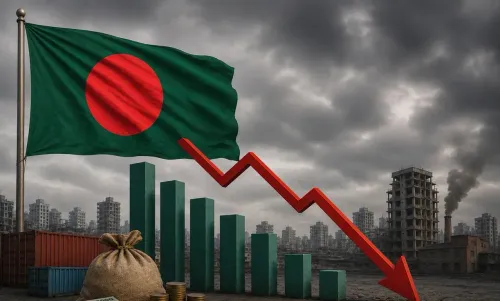
As the war in Iran unfolds, Bangladesh faces mounting economic challenges, with rising fuel and food prices threatening its financial stability. This report delves into the interconnected impacts on the nation’s economy and essential supplies.
Key Takeaways
Conflict in Iran: Creating economic pressures in Bangladesh.
Strait of Hormuz: Essential for oil and LNG transportation.
Rising Prices: Oil surpassing $100 per barrel, impacting agriculture.
Fiscal Strain: Government subsidies are absorbing external shocks.
Inflation Risks: Need for balance between inflation control and economic growth.
New Delhi, April 5 (NationPress) The ongoing conflict in Iran is exerting significant economic strain on Bangladesh, influencing vital sectors such as fuel, fertiliser, shipping, and foreign currency exchange, according to a recent report.
Despite being geographically distant from the war, Bangladesh's intricately linked economy is rapidly feeling the repercussions, as noted by The Daily Star.
The disruption primarily flows through the Strait of Hormuz, a crucial passage where nearly one-fifth of the globe's oil and LNG typically transit.
Any disruption here has ramifications for energy supplies, shipping, and fertiliser, all of which are critical for agricultural productivity.
Global markets are already reacting, with oil prices surging past $100 per barrel, delays in LNG shipments, and rising freight charges. Additionally, fertiliser costs are increasing, threatening food production.
Bangladesh is facing a confluence of these shocks. Escalating energy prices are pushing up costs for electricity and transportation, while climbing fertiliser prices will heighten agricultural expenditures, as indicated in the report.
Rising freight charges further inflate import expenses. The real concern extends beyond mere price increases; it also encompasses the scarcity of these essential commodities.
Deficiencies in fuel, fertiliser, or transport can create more significant economic disruptions than price hikes alone, as highlighted in the report.
The foremost pressure point lies in the balance of payments. Import expenditures are rising, while export revenues and remittances may suffer if Gulf labor markets weaken.
The government is experiencing fiscal challenges as well. Efforts to cushion the impact of rising global fuel prices mean that subsidies are absorbing some of the external shocks.
Meanwhile, poor tax collection leaves minimal capacity for additional support, according to the report.
Increasing energy and fertiliser prices are anticipated to drive up transport and food costs, leading to classic cost-push inflation.
Relying solely on monetary policy to address this issue is insufficient, forcing the government to navigate inflation concerns alongside slower economic growth.
The financial sector might also feel repercussions, as weakened bank balance sheets could deteriorate if economic activity decelerates, as indicated in the report.
Point of View
Bangladesh must navigate complex economic pressures that threaten its stability. As an editor-in-chief, I emphasize the need for a national-first approach, focusing on mitigating the impacts of rising fuel and food costs while ensuring essential supplies remain available to the public.
NationPress
23 Sept 2026
Frequently Asked Questions
How is the Iran conflict affecting Bangladesh's economy?
The conflict is causing rising costs in fuel, fertiliser, and freight, leading to increased prices and potential shortages of essential goods.
What are the main economic pressures on Bangladesh?
Key pressures include higher import costs, rising energy prices, and the potential weakening of export earnings and remittances.
What is the role of the Strait of Hormuz in this situation?
The Strait of Hormuz is a vital route for global oil and LNG supplies, and any disruptions here directly impact energy availability and costs in Bangladesh.
How is the Bangladeshi government responding to these challenges?
The government is attempting to limit the impact of rising global fuel prices through subsidies, but fiscal constraints hinder further support.
What long-term effects could this situation have on Bangladesh?
If current trends continue, Bangladesh may face sustained inflation, increased transportation costs, and potential economic slowdowns.