Tamil Nadu reservoirs at 33.7% capacity despite northeast monsoon rain
Synopsis
Tamil Nadu's reservoirs are at barely a third of capacity despite the northeast monsoon spreading statewide — because parched, cracked reservoir beds are absorbing rain faster than it can accumulate. With 43 of 90 reservoirs below 25% storage and El Niño blamed for deficient rains earlier in the year, the state faces a serious water availability crunch heading into summer.
Key Takeaways
Tamil Nadu's 90 reservoirs collectively hold 75.7 TMC , just 33.7% of combined storage capacity, as of 3 November 2026 .
Only 3 reservoirs are at full capacity; 43 hold less than 25% of their storage.
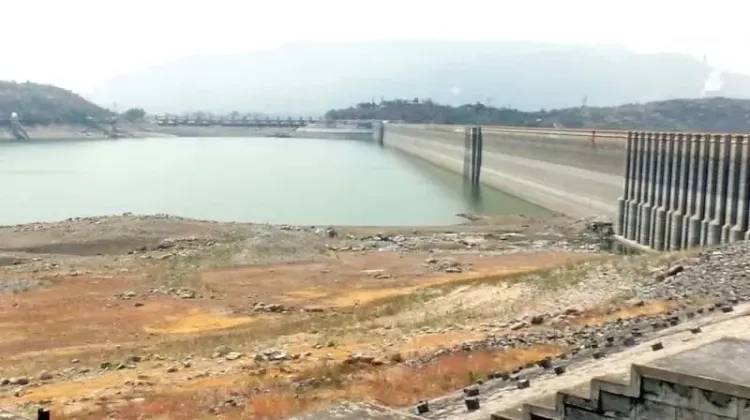
Dried, cracked reservoir beds are absorbing incoming rainfall before surface storage can build up, according to Dam Protection Movement officials.
The El Niño phenomenon is blamed for a deficient southwest monsoon, which caused the sharp pre-monsoon storage decline.
Bright spots: Gundar, Mambazhathuraiyar, Sothuparai, Sastha Koil, Kullursandai, Varadhamanadhi and Peruvaripallam reservoirs have all crossed 95% capacity.
Authorities are monitoring inflows closely, warning that sustained, widespread rainfall is needed to restore state-wide water reserves.
Tamil Nadu's 90 reservoirs collectively held just 75.7 thousand-million cubic feet (TMC) of water as of 3 November 2026, amounting to only 33.7 per cent of their combined storage capacity — even as the northeast monsoon intensified and spread rainfall across the state. The figures, cited by Water Resources Department officials, underscore a deepening water availability concern heading into the dry months.
The Storage Picture
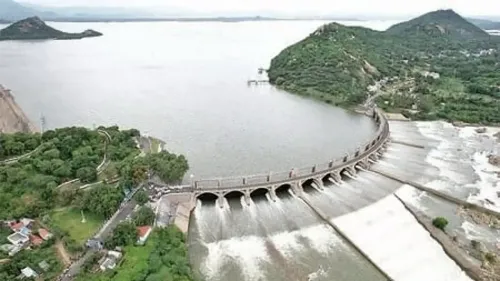
Of the state's 90 reservoirs, only three have reached full capacity. A significant 43 reservoirs hold less than 25 per cent of their storage, while another 24 are below the 50 per cent mark. The stark distribution highlights how unevenly the monsoon's benefits have been captured across different catchment areas.
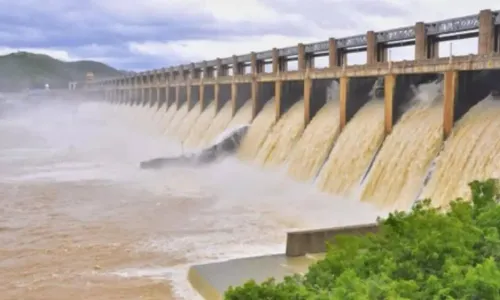
A handful of reservoirs have bucked the trend. Gundar in Tenkasi, Mambazhathuraiyar in Kanniyakumari, Sothuparai in Theni, Sastha Koil and Kullursandai in Virudhunagar, and Varadhamanadhi in Dindigul have reportedly crossed 95 per cent of their storage capacity. The Peruvaripallam reservoir under the Coimbatore Water Resources Department has also recorded storage exceeding 95 per cent.
Why Rain Is Not Filling the Reservoirs
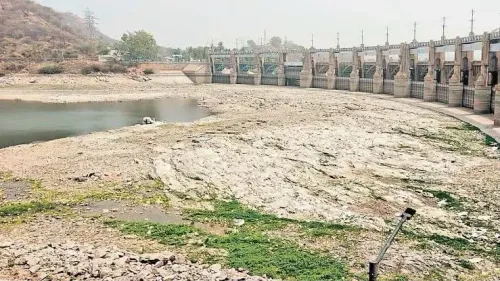
Water Resources Department officials attribute the persistently low levels primarily to a prolonged dry spell and intense heat that left reservoir beds severely parched before the monsoon arrived. As storage fell, large stretches of reservoir floors became exposed; sustained high temperatures then dried the accumulated silt, producing extensive cracking across the beds.
'The rainfall currently being received is being absorbed rapidly by the dried-up reservoir beds. Consequently, there has been no significant increase in water storage,' an official associated with the Dam Protection Movement explained. He noted that sustained rainfall would first need to replenish soil moisture and restore groundwater conditions before meaningful surface-water accumulation could occur.
The same official cited the El Niño weather phenomenon as a key upstream factor, arguing it contributed to deficient southwest monsoon rainfall earlier in the year, triggering the sharp decline in reservoir levels that the northeast monsoon has so far been unable to reverse.
Geographic Spread of the Monsoon
Districts along the Western Ghats have received northeast monsoon showers over the past several days, and precipitation has only recently become widespread across northern Tamil Nadu. Officials acknowledge, however, that the recent spread has yet to translate into a statistically meaningful improvement in aggregate storage.
What Authorities Are Watching
State officials are closely monitoring rainfall patterns and reservoir inflows to assess whether storage will recover in the weeks ahead. The uneven distribution across the state's reservoirs, they note, reinforces the need for sustained and well-distributed monsoon rainfall to restore water reserves before the onset of summer. The situation will remain critical unless catchment areas across multiple districts receive consistent precipitation over the coming weeks.
Point of View
The first weeks of rainfall function as soil moisture recharge, not storage. This is a climate-amplified feedback loop: El Niño depresses the southwest monsoon, reservoirs drain to critical lows, heat finishes the job on the beds, and then the northeast monsoon's early pulse is lost to absorption. Tamil Nadu's water managers are essentially waiting for the second half of the northeast monsoon to do what the first half could not. If that window narrows — as it has in recent years — the state enters summer 2027 with a structural deficit that no amount of demand-side management can fully offset.
NationPress
3 Nov 2026
Frequently Asked Questions
What is the current water storage level in Tamil Nadu's reservoirs?
As of 3 November 2026, Tamil Nadu's 90 reservoirs collectively hold 75.7 TMC of water, which is just 33.7% of their combined storage capacity. Only three reservoirs are at full capacity, while 43 hold less than 25%.
Why are Tamil Nadu reservoirs still low despite monsoon rainfall?
Water Resources Department officials say prolonged dry weather and intense heat cracked and dried the reservoir beds before the northeast monsoon arrived. Incoming rainfall is being rapidly absorbed by the parched beds rather than accumulating as surface storage.
What role did El Niño play in Tamil Nadu's water crisis?
According to an official from the Dam Protection Movement, El Niño contributed to deficient southwest monsoon rainfall earlier in 2026, causing a sharp decline in reservoir storage levels long before the northeast monsoon season began.
Which Tamil Nadu reservoirs are near full capacity?
Gundar in Tenkasi, Mambazhathuraiyar in Kanniyakumari, Sothuparai in Theni, Sastha Koil and Kullursandai in Virudhunagar, Varadhamanadhi in Dindigul, and Peruvaripallam in Coimbatore have all reportedly crossed 95% of their storage capacity.
What needs to happen for reservoir levels to improve significantly?
Officials say sustained and well-distributed rainfall across catchment areas is essential — first to replenish soil moisture and restore groundwater conditions, and then to allow surface water to accumulate meaningfully. Authorities are monitoring inflows closely over the coming weeks.