Trump says Iran leaders approved nuclear deal framework, signing days away
Synopsis
President Trump declared on 12 June that Iran’s leadership has approved a framework deal permanently barring Tehran from a nuclear weapon—with documents being prepared and a signing potentially days away in Europe. Trump’s qualified claim that the Supreme Leader has signed off, combined with assertions that Iran’s military has been ‘decimated,’ makes this one of the most consequential—and unverified—diplomatic announcements of his presidency.
Key Takeaways
President Donald Trump announced on 12 June that Iran’s leadership has approved a framework nuclear deal with the United States .
The deal would permanently bar Iran from acquiring or developing a nuclear weapon under any circumstances.
Trump described the agreement as “a very strong memorandum of understanding,” backed by multiple regional countries.
A formal signing could take place “very soon,” possibly over the weekend in Europe , according to Trump.
When asked if Iran’s Supreme Leader had approved the deal, Trump said: “I understand the answer is yes.” Trump said he had spoken with leaders of Israel , Qatar , UAE , Saudi Arabia , Bahrain , and Kuwait after the reported breakthrough.
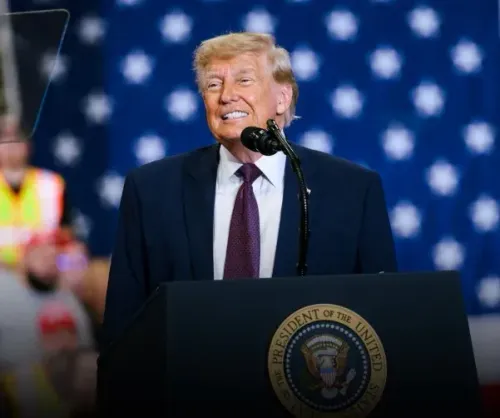
President Donald Trump on 12 June declared that Iran's leadership has approved a framework agreement with the United States that would permanently bar Tehran from acquiring a nuclear weapon, raising expectations of a formal signing within days. Speaking at the White House, Trump described the development as a major diplomatic breakthrough following weeks of military conflict.
What Trump Said
Trump announced that negotiations had reached their final stage and that documents were being prepared. “We just made a great settlement of the war with Iran, and we’re going to be subject to finalization of documents, which should get done over the next few days,” he said. He added that a signing could take place “very soon,” possibly over the weekend in Europe.
When asked whether Iran’s Supreme Leader had personally approved the arrangement, Trump replied: “I understand the answer is yes.”
Key Terms of the Agreement
Trump characterised the deal as “a very strong memorandum of understanding” under which Iran would be prohibited from acquiring or developing nuclear weapons under any circumstances. “They will not purchase, develop in any way, any shape, in any way, shape or form a nuclear weapon,” he said. He added that the agreement had also received backing from “many other countries that have great influence over them.”
Trump said he had spoken with leaders from Israel, Qatar, the United Arab Emirates, Saudi Arabia, Bahrain, and Kuwait following the reported breakthrough.
Military Pressure as Leverage
The President argued that sustained military pressure had compelled Tehran to accept the terms. “They’ve taken a pounding,” Trump said. “They want to make the deal a lot more than I do.” He claimed Iran’s military capabilities had been severely degraded during the conflict. “Their navy is gone, their air force is gone, their anti-aircraft is gone, everything’s gone,” he said, adding that Tehran had nonetheless “proven to be rational.”
A New Leadership Dynamic in Tehran
Trump also suggested that a different group had come to the fore in Tehran following the conflict. “There’s a different group—there’s a different level and I think it’s frankly a smarter level,” he said. The remarks imply a significant shift in the Iranian decision-making structure, though independent confirmation of that assessment was not immediately available.
What Comes Next
The formal agreement has not yet been signed, and Trump’s characterisation of Supreme Leader approval was qualified (“I understand the answer is yes”), leaving room for uncertainty. Finalisation of documents is expected within days, with a potential signing ceremony in Europe over the coming weekend. The deal, if concluded, would mark one of the most consequential diplomatic outcomes of Trump’s presidency and a fundamental shift in the long-running standoff over Iran’s nuclear programme.
Point of View
And the agreement remains unsigned. The claim that Iran’s military has been effectively destroyed is unverified by independent sources, and the emergence of a ‘different group’ in Tehran is asserted without corroboration. History of US-Iran diplomacy—from the 2015 JCPOA to its 2018 collapse—demands scrutiny of whether this memorandum of understanding will survive the transition from announcement to binding treaty. The regional endorsements Trump cited are significant, but the absence of any Iranian official statement is a gap that coverage must not paper over.
NationPress
29 Jul 2026
Frequently Asked Questions
What is the Iran-US nuclear deal framework announced by Trump?
It is a framework agreement, described by President Trump as a ‘memorandum of understanding,’ under which Iran would be permanently prohibited from acquiring or developing a nuclear weapon. Trump announced on 12 June that Iran’s leadership had approved the deal, with formal documents expected to be signed within days.
Has Iran’s Supreme Leader officially confirmed the deal?
Trump said he understood the Supreme Leader had approved the arrangement, but his exact words were ‘I understand the answer is yes’—a qualified statement rather than a direct confirmation. No independent statement from Iranian officials was immediately available to corroborate this.
When and where could the deal be formally signed?
Trump indicated the signing could happen ‘very soon,’ possibly over the coming weekend in Europe, once document finalisation is complete. No specific venue or date was confirmed at the time of his remarks.
Which countries have backed the agreement?
Trump said the memorandum of understanding had been endorsed by several countries with regional influence, and that he had personally spoken with leaders from Israel, Qatar, the UAE, Saudi Arabia, Bahrain, and Kuwait following the reported breakthrough.
Why does this deal matter?
Iran’s nuclear programme has been a central flashpoint in Middle East geopolitics for over two decades. A binding agreement permanently barring Tehran from a nuclear weapon would represent a fundamental shift in that standoff and could reshape regional security arrangements, if it holds.