Trump says US strikes triggered Iran leadership shift, nuclear deal near
Synopsis
Trump broke with decades of US diplomatic convention by openly framing American military strikes as having produced a regime change in Iran — and then claiming the new leadership has already approved a nuclear deal he expects to sign within days. If accurate, it would be the most consequential US-Iran agreement since the 2015 JCPOA. If not, the gap between Trump’s confidence and Tehran’s confirmation will define the story.
Key Takeaways
President Donald Trump claimed on 12 June that US military strikes had reshaped Iran’s leadership structure, bringing a more pragmatic group to power in Tehran .
Trump described the change as ‘a regime change,’ an unusually explicit framing that departs from traditional US policy language on Iran.
He said Iran’s new leadership had approved a memorandum of understanding permanently barring Tehran from developing or acquiring nuclear weapons.
Trump claimed Iran’s military capabilities — navy, air force, and air defences — had been effectively destroyed in recent operations.
A formal deal could be signed within days , according to Trump, though no independent confirmation from Iranian officials has emerged.
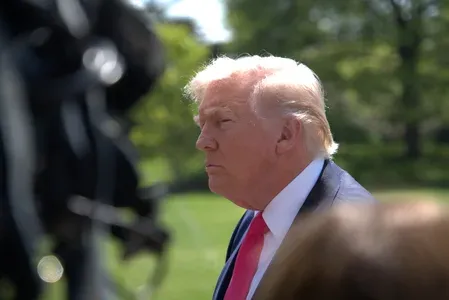
US President Donald Trump on 12 June claimed that recent American military operations had fundamentally reshaped the leadership structure inside Iran, asserting that a new, more pragmatic group of officials had emerged in Tehran and was actively engaging with Washington on a nuclear agreement. Speaking at the White House, Trump expressed confidence that a formal deal to permanently bar Iran from acquiring nuclear weapons could be signed within days.
Trump's Claim of a Leadership Shift
Trump framed the change in unusually direct terms, describing it as a form of regime change driven by military pressure. 'It’s a regime change, because I find these people to be much more rational than the people that are no longer with us,' he told reporters. He added that the United States had, in effect, eliminated successive layers of Iranian leadership: 'We knocked out the first team of leadership, the second team of leadership. There’s a different group — there’s a different level and I think it’s frankly a smarter level, and it’s a level that has reason.'
The remarks are notable because successive US administrations have traditionally avoided explicitly endorsing regime change as a stated objective of American policy toward Iran. Trump’s comments appeared to directly link recent military operations with political changes inside the country.
Iran's Military Capabilities, as Trump Described Them
Trump painted a stark picture of Iran’s military condition following the conflict. 'Their navy is gone, their air force is gone, their anti-aircraft is gone, everything’s gone,' he said. He argued that the cumulative impact of military pressure had left the current Iranian leadership more motivated to reach a settlement: 'They’ve taken a pounding. They want to make the deal a lot more than I do.'
What the Proposed Deal Covers
According to Trump, the central objective of the negotiations is a permanent prohibition on Iran obtaining nuclear weapons. 'They will not purchase, develop in any way, any shape, in any way, shape or form a nuclear weapon. They will not have a nuclear weapon,' he said. He described the proposed arrangement as 'a very strong memorandum of understanding' and indicated that the current Iranian leadership had already endorsed its terms: 'They’ve all approved the deal. Everybody’s approved the deal.'
Trump also suggested that a successful agreement could open the door for Iran’s economic recovery. 'They’ve got a chance to build a country,' he said.
Significance and What Comes Next
This comes amid a broader pattern of US pressure on Iran’s nuclear programme that has spanned multiple administrations, including the original 2015 JCPOA, its withdrawal by Trump in 2018, and years of failed re-engagement efforts. A signed memorandum of understanding, if it materialises, would mark the most significant US-Iran nuclear accord in over a decade. Analysts and foreign policy observers are likely to scrutinise both the verification mechanisms and the legal standing of any such agreement. The timeline Trump indicated — a deal within days — has not been independently confirmed by Iranian officials, and the claims about Iran’s military losses have not been verified by independent sources.
Point of View
Raising the question of whether this is a genuine breakthrough or a negotiating posture designed to pressure Iran’s new interlocutors. The broader pattern is familiar: Trump’s maximum-pressure framework produced the same confident deal-is-close rhetoric in 2018-19 without a signed agreement. The test this time is whether the claimed military degradation of Iran’s capabilities has genuinely altered the cost-benefit calculus in Tehran — or whether the gap between White House confidence and Iranian confirmation will widen in the days ahead.
NationPress
15 Sept 2026
Frequently Asked Questions
What did Trump say about Iran’s leadership on 12 June?
Trump claimed that recent US military operations had eliminated successive layers of Iranian leadership, bringing a new, more pragmatic group to power in Tehran. He described this explicitly as ‘a regime change’ and said the new leadership was prepared to finalise a nuclear agreement with Washington.
What does the proposed US-Iran nuclear deal involve?
According to Trump, the deal centres on a permanent prohibition on Iran developing or acquiring nuclear weapons, structured as a ‘very strong memorandum of understanding.’ He said the current Iranian leadership had already approved the framework and that signing could happen within days.
Why are Trump’s remarks about regime change significant?
US administrations have traditionally avoided endorsing regime change as an explicit policy goal toward Iran, as such language complicates diplomacy and can harden opposition inside the target country. Trump’s direct framing links American military action to political change inside Iran in a way that departs from decades of diplomatic convention.
Has Iran confirmed the deal or the leadership shift?
As of Trump’s remarks on 12 June, no independent confirmation from Iranian officials had emerged to corroborate his claims about either the leadership transition or the approval of a nuclear memorandum. The claims about Iran’s military losses also remain unverified by independent sources.
What is the historical context of US-Iran nuclear negotiations?
The two countries reached the Joint Comprehensive Plan of Action (JCPOA) in 2015, which Trump withdrew from in 2018. Subsequent re-engagement efforts under multiple administrations failed to produce a new agreement. A signed memorandum of understanding, if it materialises, would be the most significant US-Iran nuclear accord in over a decade.