Trump Suggests Allies Should Secure Their Own Oil Amid Iran Conflict
Synopsis
In a surprising turn of events, President Trump has hinted at reducing U.S. military involvement in the Iran conflict, urging allies to secure their own oil resources. This shift raises questions about the future of the Hormuz Strait and global oil supply.
Key Takeaways
Trump hints at reduced military involvement Allies urged to secure their own oil Brent crude oil prices climb to $116 Uncertainty around Hormuz Strait remains Domestic pressures influencing U.S. policy
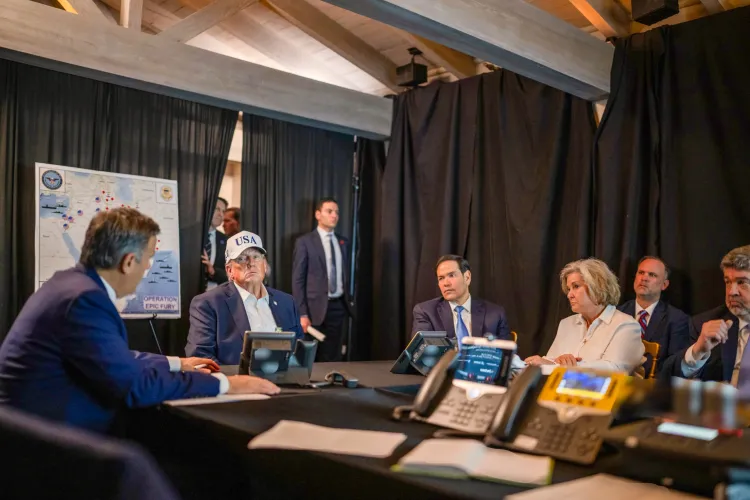
New York, March 31 (NationPress) As the campaign led by Israel and the United States against Iran diverged from its intended goals and began to impact global economies, President Donald Trump conveyed to his allies on Tuesday, “The hard part is done. Go get your own oil,” suggesting he might be considering a reduction in hostilities without a clear opening of the Hormuz Strait.
Trump’s suggestion came in light of a Wall Street Journal article on Monday, which indicated he had communicated to his staff a willingness to set aside demands regarding the Strait's status, opting instead to focus on undermining Iran’s missile capabilities and naval forces.
The publication did not disclose its sources, and the White House refrained from commenting on the matter.
In his communication, Trump urged allies, “You’ll have to start learning how to fight for yourself, the USA won’t be there to help you anymore.”
He continued, “Build up some delayed courage, go to the Strait, and just TAKE IT.”
This statement coincided with Brent crude oil prices climbing to $116 a barrel on Tuesday, which seemed to alleviate some pressure on struggling stock markets, resulting in a 422-point increase in the Dow Jones Index, or nearly 1 percent, by midday.
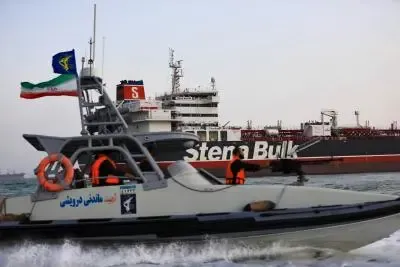
However, the ambiguity surrounding Trump's comments and the report about his intentions created uncertainty. If Iran controlled the Strait, there was no assurance that oil would flow freely through this critical passage, which handles about 20 percent of the world’s oil and gas supplies.
If attacks on Iran’s missile installations and navy persisted, Iran’s retaliatory actions could continue to disrupt Gulf oil production and transport. On Tuesday, Iran escalated tensions by setting fire to a Kuwaiti oil tanker.
Trump asserted that one of his primary goals, regime change, had been accomplished, and that a “new, and more reasonable, regime” was now in power.
He noted that there had been “great progress” in “serious talks” with Iran, citing their cooperation in allowing 20 oil-laden ships to pass through the Strait.
Iran refuted claims of ongoing negotiations but acknowledged that messages had been relayed between the U.S. and Iran through intermediaries.
As the conflict with Iran extends into its second month, far longer than Trump had anticipated, he has reversed several policies in response to domestic pressures ahead of the mid-term elections in November.
Gas prices have surged to approximately $4 per gallon (3.8 liters), up from about $3 per gallon when the conflict began in late February.
Most notably, his decision to ease certain sanctions on Iran regarding oil sales, even while engaged in conflict, raised eyebrows.
“I just want to have as much oil in the system as possible, and we don’t even know if Iran gets that money,” he justified.
Previously, he permitted India to purchase Russian oil after imposing a 25 percent tariff on New Delhi for sourcing energy from Moscow.
This week, he also authorized Russia to supply oil to Cuba, which is currently facing a humanitarian crisis due to energy shortages.
He had earlier claimed that the virtual embargo would help achieve his objective of regime change in Havana.
Point of View
I observe a significant shift in U.S. foreign policy with President Trump's recent comments. The call for allies to fend for themselves in securing oil resources indicates a potential change in America's role in global conflicts. This situation warrants close attention as it unfolds.
NationPress
7 Oct 2026
Frequently Asked Questions
What did President Trump say about the Hormuz Strait?
President Trump hinted that he may be ready to reduce U.S. military involvement and suggested that allies should secure their own oil, indicating a possible shift in U.S. policy regarding the Hormuz Strait.
How have oil prices been affected by the conflict?
Brent crude oil prices reached $116 a barrel due to the ongoing tensions, which has had a notable impact on global stock markets.
What has Iran's response been to U.S. actions?
Iran has denied that formal talks are taking place but acknowledged that messages have been exchanged with the United States through intermediaries.
What are the implications of Trump's statements?
Trump's statements suggest a potential reduction in U.S. support for allies, raising concerns about the security of oil supplies from the Gulf region.
What has been the impact of the conflict on gas prices?
Gas prices have surged to around $4 per gallon, rising significantly since the conflict began in late February.