Two of five rescued baby orangutans anaemic, health tests ongoing at Nandankanan Zoo
Synopsis
Five baby orangutans rescued from an Odisha forest — thousands of kilometres from their natural rainforest habitat — are now under expert care at Nandankanan Zoo, but two have tested anaemic. With stress from early maternal separation compounding their fragile health, the full picture will only emerge once biochemical and faecal test results are in.
Key Takeaways
All five infant orangutans rescued from Baleshwar forest division are housed at Nandankanan Zoological Park , Bhubaneswar .
Blood tests revealed one orangutan is severely anaemic and another is moderately anaemic ; medication has been recommended.
Dr Shashidhar , Assistant Director of Mysuru Zoo , said a comprehensive health assessment will follow once all biochemical and faecal test reports are available.
Experts warn the animals face elevated infection risk due to stress caused by early separation from their mothers.
Orangutans are critically endangered and not native to India; they are found in the wild only in Indonesia and Malaysia .
The animals will require controlled-environment care for several years before they can become self-sufficient, given their extended infancy and juvenile periods.
Two of the five infant orangutans rescued from Baleshwar forest division in Odisha and housed at Nandankanan Zoological Park in Bhubaneswar have been found to be anaemic, according to a health review conducted on Wednesday, 16 September 2026. Dr Shashidhar, Assistant Director of Mysuru Zoo and a member of the technical team constituted by the Odisha Government, said all five primates appeared physically normal and active during examination, but blood and faecal analysis revealed underlying concerns.
What the Tests Revealed
Dr Shashidhar said that blood investigation of the five animals found one to be severely anaemic and another moderately anaemic. 'Upon blood investigation work, we found that one is severely anaemic, while another is moderately anaemic. We have suggested medication and are awaiting the results of several other test reports such as the biochemical test results. Once the reports are available, we will conduct a comprehensive health assessment,' he said.
Faecal samples have also been collected and sent for detailed laboratory analysis. A full health assessment will be carried out once all reports are available, with further treatment decisions to follow.
Stress and Early Separation a Key Concern
The expert flagged that the young orangutans are likely under significant psychological stress, having been separated from their mothers at a very early age. 'Orangutans have a long dependency on their mothers. Since they have been separated too early, they are under tremendous stress, which can make them more prone to infections,' Dr Shashidhar said.
He noted that orangutans have a long infancy spanning zero to three years, followed by a juvenile period from four to seven years, meaning the animals would need to be maintained in a controlled, enclosed environment for a considerable period before becoming self-sufficient.
Nandankanan Zoo's Arrangements
Dr Shashidhar appreciated the infrastructure at Nandankanan Zoo, noting that the facility has temperature and humidity-controlled rooms designed to replicate a suitable environment for the animals. 'They are doing well at present,' he added. The zoo's team is also monitoring the animals' diet and nutrition, tailored to their age and evolving health condition.
Background: How They Were Found
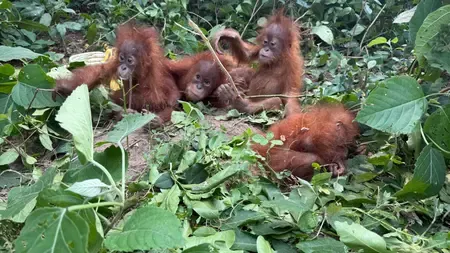
The five infant orangutans were discovered abandoned in a forest in Balasore district, Odisha, after local residents spotted them and alerted forest officials. Viral videos of the baby apes sitting together on the forest floor and eating bananas drew widespread attention, given that the animals are thousands of kilometres from their natural habitat in the tropical rainforests of Indonesia and Malaysia.
Orangutans are not native to India and are listed as critically endangered. The circumstances of how they arrived in Odisha remain under investigation. All five were subsequently transferred to Nandankanan Zoological Park for care and monitoring.
Further updates on the animals' health are expected once the complete laboratory reports are available and the expert team completes its comprehensive assessment.
Point of View
And their physical condition reflects the toll of what is likely an illegal wildlife trafficking chain. Stress-induced immunosuppression in critically endangered primates is not a routine veterinary footnote — it is a signal that these animals' prognosis depends heavily on how quickly investigators can establish provenance and whether their care regime can approximate maternal bonding at all. The broader question mainstream coverage is glossing over is enforcement: how did five critically endangered, non-native great apes end up in an Odisha forest, and who is accountable?
NationPress
16 Sept 2026
Frequently Asked Questions
What is the current health status of the five rescued baby orangutans?
All five infant orangutans appeared physically normal and active during examination, but two were found to be anaemic — one severely and one moderately — following blood tests. A comprehensive health assessment is pending the results of biochemical and faecal sample analysis.
Where are the rescued orangutans being kept?
The five baby orangutans are currently housed at Nandankanan Zoological Park in Bhubaneswar, Odisha, which has temperature and humidity-controlled rooms suited to the animals' needs.
Why are the baby orangutans under stress?
According to Dr Shashidhar of Mysuru Zoo, the animals were separated from their mothers at a very early age. Orangutans have a long maternal dependency, and premature separation causes significant psychological stress, making them more susceptible to infections.
How did orangutans end up in Odisha?
The five infant orangutans were found abandoned in a forest in Balasore district, Odisha, by local residents who alerted forest officials. Orangutans are not native to India — they are found in the wild only in Indonesia and Malaysia — and the circumstances of their arrival are under investigation.
How long will the orangutans need special care?
Dr Shashidhar indicated the animals will need to be kept in a controlled environment for a considerable period, given that orangutans have an infancy phase from zero to three years and a juvenile phase from four to seven years. Ongoing nutrition and care will be adjusted based on their age and health progress.