Is the UK Taking Action in the Epstein Scandal While India Remains Silent?
Synopsis
As the investigation into the Jeffrey Epstein scandal gains momentum, the SS-UBT criticizes India's lack of judicial accountability compared to the UK's decisive actions. This editorial highlights the discrepancies between democratic ideals and actual governance in both nations, questioning the integrity of India's political climate amidst global scrutiny.
Key Takeaways
Contrast between UK and India’s judicial accountability Prince Andrew's arrest reflects UK's commitment to law SS-UBT raises concerns over political shielding in India Implications of Modi government's silence on scandals Call for greater transparency and ethical governance
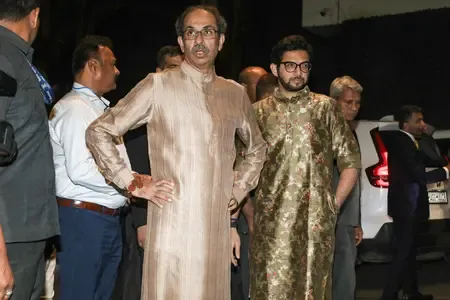
Mumbai, Feb 21 (NationPress) The Shiv Sena-Uddhav Balasaheb Thackeray (SS-UBT) on Saturday lambasted the Union government, stating that as global inquiries into the Jeffrey Epstein scandal escalate, a stark difference has surfaced between the judicial accountability exhibited in the United Kingdom and the perceived political protection of officials in India.
While Britain asserts its title of “Great Britain” through tangible judicial actions, India's self-proclaimed title as “Vishwaguru” (World Teacher) faces scrutiny from those who notice an increasing disparity between democratic claims and ethical conduct.
The Thackeray faction, in a pointed editorial in the party's mouthpiece 'Saamana', highlighted that British authorities have taken a significant step to uphold the rule of law by arresting Prince Andrew, the brother of King Charles, in relation to the Epstein sexual exploitation case. This arrest stemmed from allegations made by a victim involving a 17-year-old girl.
Before this legal action, King Charles made decisive moves to revoke his brother's royal titles and military honors, thereby distancing the monarchy from the scandal. These actions reinforce the British democratic foundation, emphasizing that no one is above the law.
However, the Thackeray camp remarked, “While Britain takes action against its own royalty, the political climate in India remains tense.”
Though Prime Minister Narendra Modi often speaks on democracy during his international visits, there exists a perceived lack of transparency concerning Indian figures, including politicians and industrialists, whose names have surfaced in Epstein-related documents. The editorial pointed out, “Despite the controversy surrounding Union Minister Hardeep Singh Puri, the government has shown no intent to dismiss him from office, which has led to public speculation regarding the nature of the information contained in the Epstein files.”
The Thackeray faction criticized the Modi administration, stating, “Currently in India, a 'my way or the highway' governance style prevails. While Prime Minister Modi frequently addresses democracy on the world stage, he remains entirely silent on the darkness enveloping democracy, the constitution, and morality in his own nation.”
Furthermore, it noted a significant lack of transparency regarding Indian names appearing in Epstein-related documents.
The editorial concluded, “The Modi administration has made substantial efforts to eliminate 'signs of slavery' by replacing British-era structures, such as South Block and the old Parliament building. However, these actions are hypocritical, as the government is substituting physical buildings while seemingly allowing a 'culture of exploitation' to persist. There is an absence of parliamentary discourse regarding the involvement of Indian officials in the Epstein case. The current administration's rhetoric on Indian revolutionaries, none of whom were affiliated with the BJP, starkly contrasts their selective stance on 'slavery.'”
Point of View
The contrasting responses of the UK and India to the Epstein scandal raise serious questions about governance and accountability. The SS-UBT's critique highlights the urgent need for transparency and ethical conduct in leadership, emphasizing that true democracy demands responsibility from all, including those in power.
NationPress
30 Sept 2026
Frequently Asked Questions
What actions has the UK taken regarding the Epstein scandal?
The UK has arrested Prince Andrew in connection with the Epstein sexual exploitation case, demonstrating a commitment to judicial accountability.
How is India responding to the scandal?
India has faced criticism for perceived political shielding of officials, with a notable lack of transparency regarding names linked to Epstein.
What does the SS-UBT editorial highlight?
The editorial contrasts the UK’s decisive actions with India's political atmosphere, questioning the integrity of its democratic practices.
Who is Hardeep Singh Puri?
Hardeep Singh Puri is a Union Minister in India whose name has surfaced in connection with the Epstein scandal, raising questions about political accountability.
What are the implications of the Modi government's silence?
The Modi government's silence on controversies involving Epstein-related figures suggests a troubling lack of transparency and accountability.