UN launches critical minerals support plan for 6 developing nations
Synopsis
The UN has picked six mineral-rich developing nations — including Zambia, Nigeria, and Indonesia — for a new support mechanism designed to stop them from being permanent raw-material suppliers in the clean energy boom. With critical mineral demand set to almost triple by 2030, the initiative could reshape who captures value in the global green transition — if real funding follows the framework.
Key Takeaways
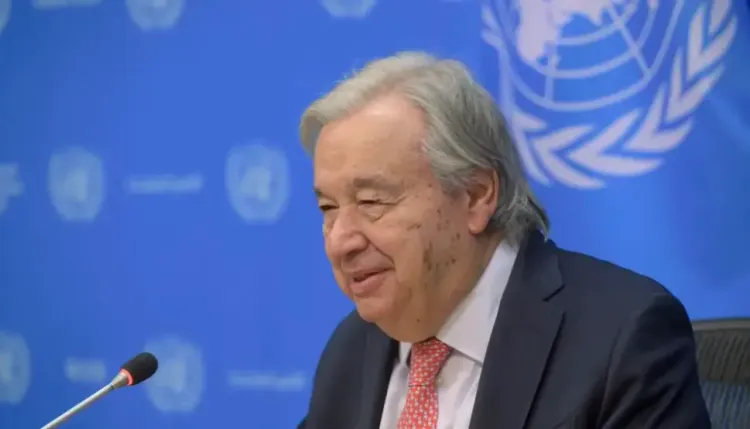
UN Secretary-General António Guterres launched the Country Support Mechanism on Critical Energy Transition Minerals on 24 September 2025 in New York .
The first six beneficiary countries are Guinea , Indonesia , Madagascar , Nigeria , Zambia , and Zimbabwe .
The UN projects global demand for critical minerals will almost triple by 2030 as renewable energy deployment accelerates.
Key minerals covered include copper , lithium , nickel , cobalt , and rare earth elements .
The mechanism is led by the UNDP and the UN Development Coordination Office , with UNCTAD and UNEP as co-leads of the broader task force.
No specific funding amount was announced at launch, raising questions about implementation.
UN Secretary-General António Guterres on Wednesday, 24 September 2025 launched the Country Support Mechanism on Critical Energy Transition Minerals in New York, a new initiative designed to help mineral-rich developing nations translate surging global demand for clean energy resources into domestic jobs, industrial growth, and stronger governance. Six countries — Guinea, Indonesia, Madagascar, Nigeria, Zambia, and Zimbabwe — have been selected as the first beneficiaries.
What the Mechanism Offers
The support mechanism will provide tailored technical assistance to each participating country, helping them strengthen governance frameworks, expand local mineral processing, and put in place safeguards for communities and the environment. Teams working through UN resident offices will assess country-specific needs and coordinate assistance packages accordingly.
Priority areas include institutional governance, value-added industrial development, environmental protection, and human rights safeguards. The work will follow principles and recommendations developed by the Secretary-General's Panel on Critical Energy Transition Minerals.
The Stakes: A Tripling of Demand by 2030
The UN projects that global demand for critical minerals will almost triple by 2030 as the world accelerates its shift toward renewable energy. Minerals such as copper, lithium, nickel, cobalt, and rare earth elements are central to technologies including wind turbines, solar panels, electric vehicles, and battery storage systems.
This comes amid a longstanding tension in the global clean energy supply chain: resource-rich developing countries have historically exported raw materials at low margins while higher-value processing and manufacturing have occurred elsewhere. The new mechanism is explicitly designed to address that imbalance.
'The countries that hold the critical minerals powering the energy transition must be the first to benefit from them,' Guterres said at the launch.
Who Leads the Mechanism
The UN Development Programme (UNDP) and the UN Development Coordination Office will jointly lead the mechanism, drawing expertise from across the UN system. The initiative is part of a broader UN task force on critical energy transition minerals, co-led by the UNDP, the UN Conference on Trade and Development (UNCTAD), and the UN Environment Programme (UNEP).
UNDP Administrator Alexander de Croo said mineral wealth could transform economies, provided value creation, environmental protection, and good governance advanced together. UNEP Executive Director Inger Andersen said her agency would contribute expertise on responsible sourcing, environmental protection, and more circular use of resources.
Zambia's Ambition: Beyond Raw Copper
Zambia's Foreign Minister Mulambo Haimbe used the launch to signal his country's determination to move up the value chain. 'We want Zambians to be full participants in, not simply suppliers to, the global clean energy and technology transition,' he said.
Haimbe noted that realising that ambition would require stronger governance, sustained investment, and international partnerships that help resource-rich nations expand their role across mineral supply chains — not just at the extraction stage.
What Remains Unresolved
Notably, the announcement outlined the scope of technical and institutional support but did not specify a funding amount for the mechanism. Critics and development economists have long argued that without ring-fenced capital commitments, such initiatives risk remaining frameworks on paper. The six initial beneficiaries and the broader international community will be watching whether concrete financing follows the launch.
All eyes will now be on how quickly country-level needs assessments are completed and whether early-stage assistance in Zambia, Nigeria, and the others translates into measurable gains in local processing capacity.
Point of View
With results that rarely kept pace with rhetoric. The six countries selected are genuine mineral powerhouses, and the demand trajectory is undeniable, but the history of resource-rich nations actually retaining value from commodity booms is poor. Whether this initiative moves the needle depends entirely on whether technical assistance is backed by capital — and on whether the governance frameworks it promises can survive political cycles in countries where resource revenues are perennially contested.
NationPress
24 Sept 2026
Frequently Asked Questions
What is the UN's Country Support Mechanism on Critical Energy Transition Minerals?
It is a new UN initiative launched on 24 September 2025 to provide technical assistance to mineral-rich developing countries, helping them strengthen governance, process more minerals locally, and capture a greater share of the economic value from the global clean energy transition. The mechanism is led by the UNDP and the UN Development Coordination Office.
Which countries are the first beneficiaries of the mechanism?
The six initial beneficiary countries are Guinea, Indonesia, Madagascar, Nigeria, Zambia, and Zimbabwe. They were selected based on their mineral wealth and potential to benefit from tailored UN support.
Why is demand for critical minerals expected to surge?
The UN projects that demand for critical minerals will almost triple by 2030 as the world shifts toward renewable energy. Minerals like copper, lithium, nickel, cobalt, and rare earth elements are essential components of wind turbines, solar panels, electric vehicles, and battery storage systems.
How much funding has been committed to the mechanism?
The launch announcement outlined the scope of technical and institutional support but did not specify a funding amount. This has been flagged as a key gap, as concrete financing will be necessary for the initiative to deliver tangible outcomes.
What does Zambia hope to achieve through this mechanism?
Zambia's Foreign Minister Mulambo Haimbe said the country aims to move beyond simply exporting raw copper and generate greater economic value domestically. He stated that Zambians want to be 'full participants in, not simply suppliers to, the global clean energy and technology transition.'