UN flags al-Qaeda threat in Bangladesh as extremism surges under BNP rule
Synopsis
The UN Security Council has flagged al-Qaeda's push to embed a terrorist cell in Bangladesh — and a detailed report argues the Yunus interim government's reluctance to act gave extremists the room to organise. With Bangladesh Air Force personnel among those detained for TTP links and weapons caches turning up across Dhaka, the BNP government now inherits a security crisis it did not create but cannot afford to ignore.
Key Takeaways
The UN Security Council has warned of al-Qaeda 's efforts to establish a terrorist cell in Bangladesh .
Extremist activity surged after the fall of Sheikh Hasina 's government in August 2024 , with banned groups holding open rallies in Dhaka .
A madrasa explosion in Keraniganj, Dhaka in December 2025 injured four people ; follow-up raids uncovered 10 grenades , 3 pistols , and 19 rounds of ammunition .
20 people , including Bangladesh Air Force members, were detained in April for alleged links to Tehrik-e-Taliban Pakistan (TTP) .
The Muhammad Yunus -led interim government was reportedly reluctant to confront extremist groups, critics argue.
Prime Minister Tarique Rahman 's BNP government is now under pressure to enforce zero tolerance on violent extremism.
The UN Security Council has warned of al-Qaeda's efforts to establish a terrorist cell in Bangladesh, a development that analysts say must serve as an urgent signal for the Bangladesh Nationalist Party (BNP) government led by Prime Minister Tarique Rahman. According to a report in the Times of Bangladesh, the current resurgence of violent extremism gained momentum during the preceding Muhammad Yunus-led interim government, which critics say failed to confront the growing threat decisively.
How the Post-Hasina Vacuum Enabled Extremism
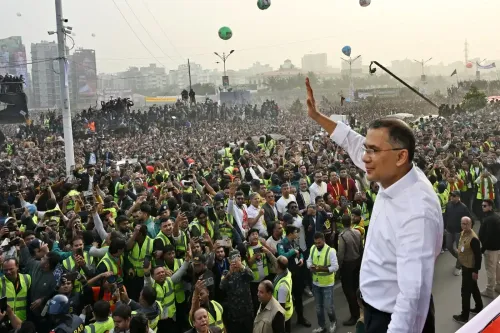
The collapse of Sheikh Hasina's Awami League government in August 2024 triggered not just a political transition but also opened space for resurgent extremist forces, according to the report. Banned outfits began holding rallies, processions, and public meetings without obstruction. Hizb ut-Tahrir, despite its proscribed status, reportedly staged open processions in Dhaka and publicly called for a caliphate.
The report noted that radical groups — both old and newly formed — grew increasingly visible at seminars, religious gatherings, educational institutions, and madrasas. Online campaigns also expanded, with efforts reportedly under way to unite disparate groups under a common platform aimed at establishing Islamic rule in Bangladesh along the lines of Afghanistan's Taliban model.
Key Incidents That Raised the Alarm
A series of troubling security incidents punctuated the Yunus interim period. In December 2025, a powerful explosion at a madrasa in the Keraniganj area of Dhaka caused extensive structural damage and injured four people. Investigators attributed the blast to extremist elements and identified two individuals with prior arrests linked to alleged militant activities. A woman detained at the site had also previously been jailed over suspected militant links, according to the report.
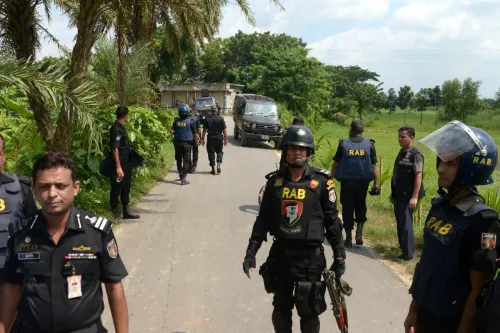
Following the Keraniganj blast, a mobile phone recovered at the scene led a joint forces team to the residence of the personal driver of banned Neo-JMB leader Hafiz Khalid Ibrahim in Jashore on 1 February of this year. The raid yielded ten powerful grenades, three foreign-made pistols, 19 rounds of ammunition, and other weapons, the report stated.
TTP Links and Broader Militant Networks
In April this year, 20 people — including members of the Bangladesh Air Force — were detained for their alleged links to Tehrik-e-Taliban Pakistan (TTP). The development was described as a major shock, underscoring what the report called a 'disturbing reality' about the depth of militant penetration.
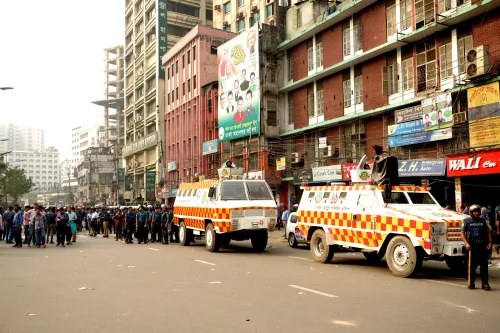
Further suspected militant incidents followed, including bomb blasts and the discovery of pipe and pressure cooker bombs across Dhaka, Cumilla, Ashulia, and Savar in recent months. Investigators reportedly believe several extremist networks may be connected to these incidents.
Interim Government's Response Under Scrutiny
The report argued that these developments demanded an immediate and comprehensive security response. Instead, it stated, the Yunus-led interim government appeared reluctant to confront the growing extremist threat — seemingly wary of alienating Islamist groups that had long claimed persecution under the Awami League regime.
With the BNP now in government, analysts and the report both argue that Prime Minister Tarique Rahman must adopt a policy of zero tolerance towards violent extremism. The UN Security Council's warning adds international weight to what has been, until recently, a largely domestic debate about Bangladesh's security trajectory.
Point of View
Without the credibility that a longer governance record would provide. The TTP link involving Air Force personnel is the most alarming data point and deserves far more scrutiny than it has received.
NationPress
5 Oct 2026
Frequently Asked Questions
What has the UN Security Council warned about Bangladesh?
The UN Security Council has warned that al-Qaeda is actively attempting to establish a terrorist cell in Bangladesh. The warning coincides with a documented surge in extremist activity following the fall of the Sheikh Hasina government in August 2024.
What extremist incidents have occurred in Bangladesh recently?
A madrasa in Keraniganj, Dhaka was rocked by a powerful explosion in December 2025, injuring four people and leading to the recovery of grenades, pistols, and ammunition in a follow-up raid. Bomb blasts and discoveries of pipe and pressure cooker bombs have also been reported in Dhaka, Cumilla, Ashulia, and Savar.
Why were Bangladesh Air Force members detained?
Twenty people, including Bangladesh Air Force personnel, were detained in April this year for alleged links to Tehrik-e-Taliban Pakistan (TTP). The arrests were described as a major shock and highlighted the depth of suspected militant infiltration.
What role did the Yunus interim government play in the extremism surge?
According to a report in the Times of Bangladesh, the Muhammad Yunus-led interim government was reportedly reluctant to confront growing extremist threats, seemingly to avoid alienating Islamist groups. Critics argue this allowed banned outfits to hold public rallies and expand their networks without obstruction.
What is expected of the BNP government under Tarique Rahman?
Analysts and the Times of Bangladesh report argue that Prime Minister Tarique Rahman's BNP government must adopt a policy of zero tolerance towards violent extremism. The UN Security Council's warning adds international pressure to act decisively against al-Qaeda and affiliated networks.