UN Security Council Passes Resolution Against Iran's Aggressions in the Middle East, India as Cosponsor
Synopsis
In a decisive move, the UN Security Council has unanimously adopted a resolution, with India as a cosponsor, condemning Iran's aggressive actions against its Middle Eastern neighbors. This resolution highlights Iran's isolation due to its attacks, signaling a significant geopolitical shift.
Key Takeaways
UN Security Council passes a resolution against Iran.
India cosponsors the resolution, emphasizing its diplomatic role.
Russia and China abstained, indicating a shift in alliances.
The resolution calls for an immediate halt to Iranian attacks.
Iran's isolation is highlighted by the international community's response.
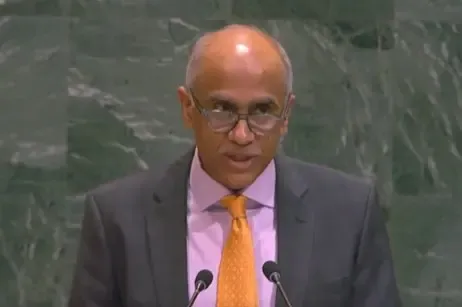
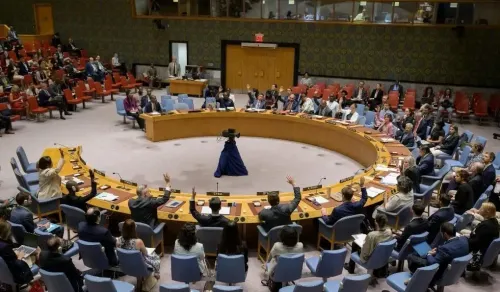
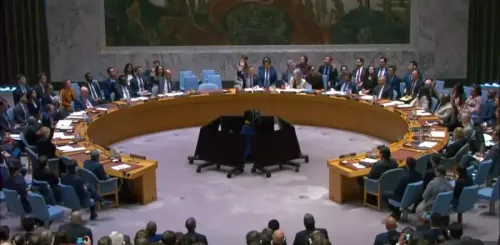
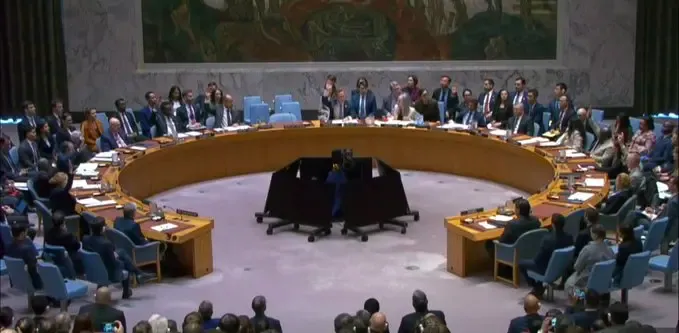
United Nations, March 12 (NationPress) – The Security Council has officially passed a resolution, with India as a cosponsor, denouncing Iran's actions towards its Middle Eastern neighbors in the strongest terms.
This resolution was approved on Wednesday (local time) as both Russia and China surprisingly chose not to veto it, despite their concerns.
With these two nations abstaining, the resolution garnered support from the remaining 13 members of the Council.
The abstentions from Moscow and Beijing reflect Iran's growing isolation following its assaults on Gulf nations, which have further exacerbated an energy crisis impacting global economies, including Jordan, which was not directly involved in the conflict.
The Permanent Representative of Russia expressed to reporters that while Moscow views the resolution as biased and one-sided, it refrained from a veto, acknowledging that Gulf nations are suffering.
According to him, the consequences affect not only American military bases in the region but also civilians and civilian infrastructure, which he emphasized is deeply concerning.
A competing resolution proposed by Russia, calling for an immediate cessation of hostilities and condemning all attacks on civilians without specifying any country, failed to secure the nine votes required for passage.
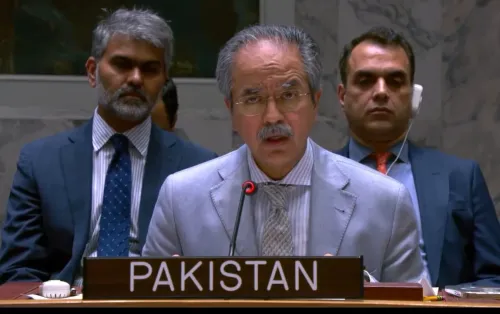
Pakistan was among the nations supporting the resolution, joining China, Russia, and Somalia in voting favorably, while nine nations opted to abstain.
The United States' negative vote did not constitute a veto as the resolution did not achieve the necessary votes to pass. Latvia also voted against it.
The adopted resolution demands that Iran ceases its attacks on Bahrain, Kuwait, Oman, Qatar, Saudi Arabia, the United Arab Emirates, and Jordan.
Notably, the resolution did not address the actions of the United States and Israel, who initiated the current conflict with their strikes against Iran.
Iran extended its counterstrikes towards Gulf nations and Jordan, despite their non-involvement in the attacks, with some hosting US military bases.
Bahrain's Permanent Representative, Jamal Fares Alrowaiei, who initiated the resolution and secured a high number of cosponsors, stated, "The international community firmly rejects these unjust and hostile acts by Iran, which are aimed at sovereign nations and threaten the stability of their populations."
He clarified that Bahrain did not take part in the US-Israel attacks on Iran, yet Iran has retaliated against them.
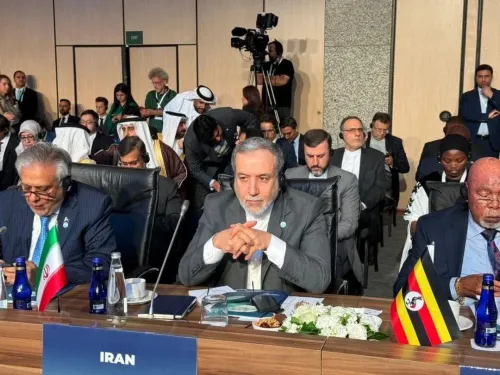
Iran's Permanent Representative, Amir-Saeid Iravani, criticized the Council's credibility after the resolution's passage, stating, "This resolution represents a manifest injustice against my nation, which is the primary victim of this aggression."
He labeled the resolution's adoption a significant setback to the Council's integrity, pointing out that the US Permanent Representative Mike Waltz presided over the session even though the US is viewed as an aggressor.
The US obtained the presidency for the month due solely to its alphabetical order.
Israel's Permanent Representative, Danny Danon, remarked, "The Islamic regime is attacking neighboring countries out of desperation, as it realizes that the world has recognized its true nature."
He added, "Tehran is attempting to export terror and destruction, yet even the Security Council is losing patience with its aggression."
Waltz condemned the atrocities occurring, including deliberate strikes on civilian infrastructure, ports, airports, energy facilities, hotels, and resorts across the Gulf, calling these actions unacceptable.
He urged Iran to heed the Council's voice, as reflected in the resolution that faced no opposition today from the international community.
(Arul Louis can be contacted at arul.l@ians.in)
Point of View
Reflecting a collective stance against aggression. India's role as a co-sponsor underscores its commitment to regional stability and the importance of multilateral cooperation in addressing geopolitical challenges.
NationPress
28 Sept 2026
Frequently Asked Questions
What was the resolution passed by the UN Security Council?
The resolution condemns Iran's attacks on its neighbors in the Middle East and calls for an immediate cessation of hostilities.
How did Russia and China respond to the resolution?
Both Russia and China surprised many by abstaining from voting against the resolution, allowing it to pass.
Which countries were specifically mentioned in the resolution?
The resolution demanded that Iran stop its attacks on Bahrain, Kuwait, Oman, Qatar, Saudi Arabia, the UAE, and Jordan.
What was Iran's reaction to the resolution?
Iran's representative criticized the resolution as a manifest injustice and questioned the credibility of the UN Security Council.
What does this resolution mean for Iran's international standing?
The resolution highlights Iran's isolation and may impact its diplomatic relations, especially with Gulf nations and beyond.