Akhilesh Yadav Claims Community Disrespect in UP Exam Controversy
Synopsis
In a significant political uproar, Akhilesh Yadav asserts that a Sanskrit exam question in Uttar Pradesh disrespects a community. The incident raises concerns about the integrity of exam paper preparation and the influence of political affiliations.
Key Takeaways
Akhilesh Yadav alleges disrespect towards a community in an exam paper.
The controversy highlights potential biases in educational materials.
Calls for scrutiny of exam paper committees have been made.
Social media has amplified discussions surrounding the incident.
No official response has been received from Uttar Pradesh authorities.
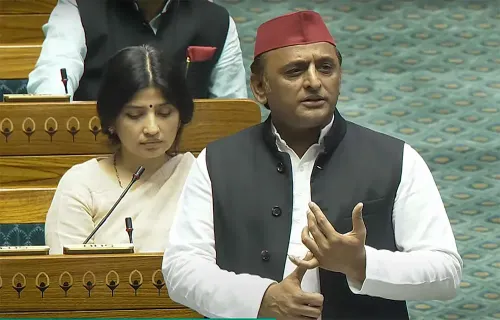
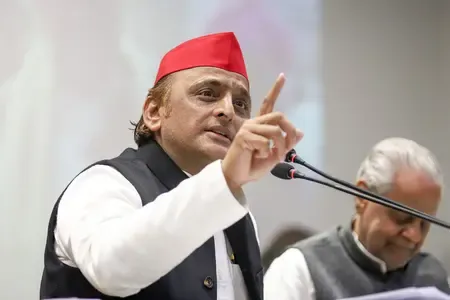
Lucknow, March 18 (NationPress) The President of the Samajwadi Party, Akhilesh Yadav, raised allegations on Wednesday regarding the insult of a specific community in Uttar Pradesh. This claim emerged after a question from a Class 7 Sanskrit annual exam paper went viral on social media, stoking a political uproar.
In a post on the social media platform X, Yadav shared an image of the alleged question paper, asserting that such occurrences are being orchestrated intentionally by those in positions of authority.
He expressed that this incident pointed to a troubling trend and cast doubt on the methodology used to develop exam papers. Yadav emphasized that the makeup of committees responsible for crafting these papers should be scrutinized.
"The core issue should not solely focus on the question itself, but also on whether individuals from the same demographic as those in power are involved in the team that creates these exam papers," stated Akhilesh Yadav.
He further contended that if even one member from the allegedly "victimized" community had participated in the committee, such a question would not have been intentionally included.
The image shared by Yadav appears to depict a Sanskrit exam paper for Class 7 students scheduled for the 2026 academic year. One of the multiple-choice questions pertaining to the 'Surasmriti' lesson contains options that the SP leader claims are derogatory towards a particular community.
The post rapidly garnered attention on social media, sparking a debate among supporters and detractors regarding the intent behind the question.
However, there was no prompt official reaction from the Uttar Pradesh authorities concerning the validity of the paper or the claims made by the Samajwadi Party leader.
Previously serving as the Chief Minister of UP, Akhilesh Yadav also posed a series of hypothetical questions to further illustrate his critique, warning that if such patterns persist, future exam papers could begin incorporating politically charged or contentious questions linked to recent events and governance.
Some of the "Special Questions" he enumerated included:
"Is the phrase ‘Haata nahi bhaata’ an idiom or a proverb? Please explain its meaning."
"Who issued notices against the gatherings of a specific community?"
"Who disrupted the traditional Sanatani practice of Shankaracharyas taking a sacred dip during the Kumbh Mela?"
"Who unjustly imprisoned a newlywed individual despite their innocence?"
"Under whose governance did the incident occur, where a poor mother and daughter’s home was set ablaze, resulting in their tragic deaths?"
"On whose orders was the construction dismantled to hinder the placement of a statue honoring a respected figure from a certain community?"
"In Barabanki, who orchestrated violence against whom, and what was the underlying motive and intended message?"
In the section for “Supplementary Questions,” he added:
"During the struggle for our country’s independence, who played the covert roles of traitors or antagonists?"
"Who are labeled as ‘Vanspativadi’ (ideologically vegetarian individuals)?"
"Explain the concept of ‘withdrawal of cases’ with relevant examples."
This controversy contributes to the ongoing political contention within the state, where opposition parties have persistently accused the government of permitting divisive narratives to infiltrate public discussions, including education.
Point of View
Highlighting allegations of community insensitivity and the scrutiny of educational practices. While Yadav's claims raise legitimate concerns, the absence of an official response from the government leaves room for speculation and debate.
NationPress
21 Sept 2026
Frequently Asked Questions
What was the controversy surrounding the Sanskrit exam paper?
Akhilesh Yadav alleged that a question in the Class 7 Sanskrit exam paper insulted a specific community, leading to a political controversy.
What did Akhilesh Yadav suggest regarding the examination committees?
He suggested that the composition of committees responsible for preparing exam papers should be scrutinized to ensure diverse representation.
What kind of questions did Yadav propose to illustrate his concerns?
Yadav proposed hypothetical questions that could be politically charged, emphasizing the potential for bias in educational content.
How did social media react to Yadav's claims?
His post sparked a debate among supporters and critics regarding the intent and implications of the questioned exam content.
Was there any response from the Uttar Pradesh authorities?
No immediate official response was provided regarding the authenticity of the exam paper or Yadav's allegations.