Akhilesh Yadav: Forging a Harmonious Future Through Cultural Heritage
Synopsis
Akhilesh Yadav, the National President of the Samajwadi Party, spoke at a recent event in Jaipur, emphasizing the importance of cultural heritage in achieving social harmony and political integrity. He addressed various issues affecting Uttar Pradesh, including electoral irregularities and the preservation of historical identity.
Key Takeaways
Akhilesh Yadav emphasizes cultural heritage as crucial for future harmony.
He raises alarms over electoral irregularities in Uttar Pradesh.
Advocates for the preservation of historical identity.
Calls for innovation blended with tradition for socio-economic growth.
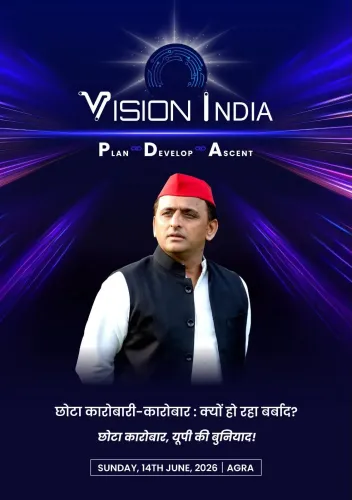
Commits to initiatives like Vision India: Harmonious Heritage .
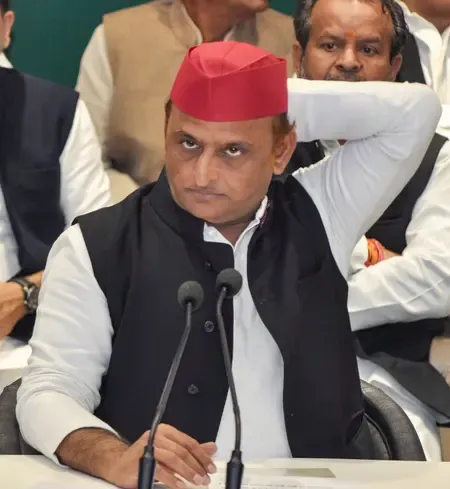
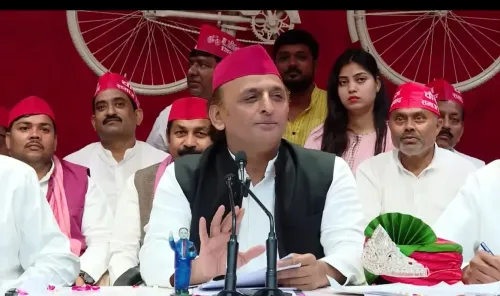
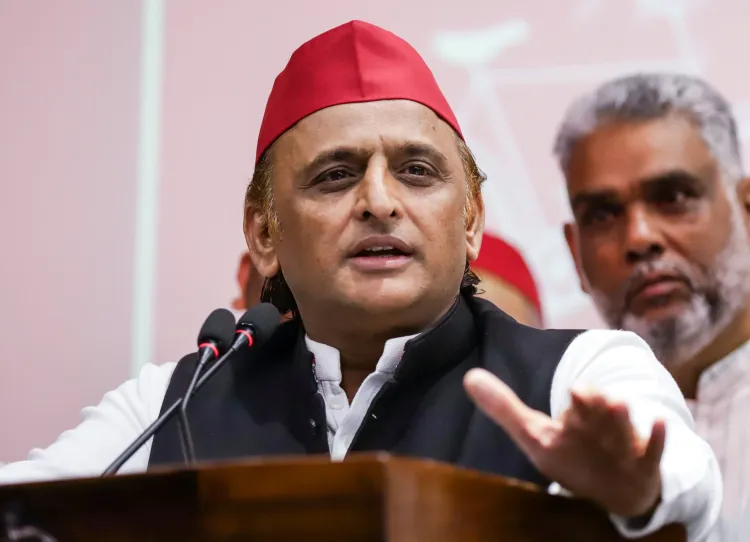
Jaipur, April 11 (NationPress) Akhilesh Yadav, the National President of the Samajwadi Party, a Member of Parliament, and former Chief Minister of Uttar Pradesh, visited Jaipur on Saturday for a private event, during which he discussed various cultural, social, and political matters.
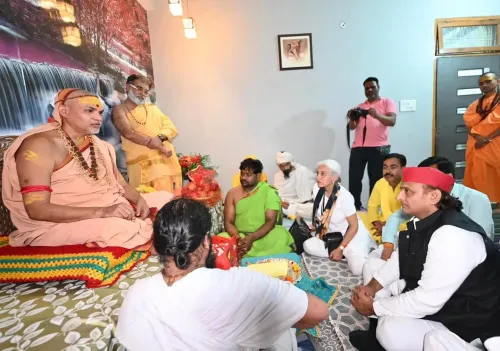
During a press conference, he addressed pressing topics in Uttar Pradesh, including the ongoing controversies surrounding the Shankaracharya.
Yadav emphasized the importance of Shankaracharya’s perspective, mentioning that he is currently battling against fake saints in the state.
He expressed continued respect towards him, seeking his blessings to progress. He humorously noted a recent instance where a fake saint attempted to obtain a certificate from a genuine saint in Uttar Pradesh, despite his own lack of credentials.
Commenting on the current political landscape in Uttar Pradesh, Yadav raised concerns about irregularities in the electoral process.
He alleged that during the Special Intensive Revision, votes from Samajwadi Party supporters were being unlawfully removed through the misuse of Form 7 and fraudulent signatures.
He mentioned that this issue has been referred to the Election Commission, yet no action has been taken against those employing unethical methods to delete voter names.
Yadav added that party members are vigilantly monitoring the process to safeguard against wrongful deletions.
“This is why we assert that the Election Commission is operating with bias,” he stated.
On the topic of the film Dhurandhar 2 and its character Atiq Ahmed, he urged the public not to take such representations seriously, as each producer includes a disclaimer asserting that the story and characters are fictional.
“So why do we accept these characters as truth?” he questioned, referring to fictional depictions in films.
Addressing law-and-order issues, he pointed out the recent ganja seizures in Uttar Pradesh, questioning their sources and distribution channels.
When discussing political alliances, Yadav recalled his previous discussions with Nitish Kumar and expressed his hope for Kumar's leadership at the national level as Prime Minister.
He alleged that political changes have altered this course.
“The individual who should have stepped down as Prime Minister will instead retire as a Rajya Sabha Member of Parliament. This is how the BJP conducts politics,” he remarked.
Highlighting the Samajwadi Party's past achievements, he mentioned developments in infrastructure, such as the expressway constructed during their administration, suitable for aircraft landings, along with initiatives like laptop distribution aimed at bridging the digital divide.
“We will persist in taking similar measures for the state's further advancement,” he affirmed.
He also raised alarms about heritage preservation and development in Varanasi, claiming that historical elements are being altered or erased.
He cited the example of Manikarnika Ghat and expressed concerns regarding the safeguarding of cultural identity.
“A statue of Ahilya Devi was destroyed merely because certain leaders wanted to rewrite history,” he stated, adding that political figures denied the incident and claimed the video was generated by AI.
The summit convened a diverse assembly of scholars, cultural historians, industry leaders, and youth representatives to discuss the preservation and promotion of India's shared cultural heritage.
As the Chief Guest, Akhilesh Yadav underscored the changing landscape of India’s harmonious heritage, particularly regarding the nation’s skilled youth and their socio-economic potential.
He asserted that integrating innovation with traditional wisdom can turn cultural diversity into a catalyst for social harmony and global impact.
Referring to Jaipur’s identity, he remarked, “Jaipur is recognized as the ‘Pink City,’ and pink symbolizes harmony, emerging from a perfect blend of red and white. The city’s art, architecture, music, and cuisine embody a profoundly rooted multicultural ethos.”
He further stated that harmony nurtures peace and fosters an environment conducive to progress and prosperity. Real progress, according to him, guarantees equal opportunities, erases discrimination, and bridges societal divides, ultimately achieving social justice.
Reiterating his dedication, Yadav said, “Through initiatives like Vision India: Harmonious Heritage, we will relentlessly pursue our goals. Whether it takes years or even a century, we are resolved to realize this vision.”
He asserted that harmony is fundamental to sustainable development.
Earlier, a specialized expert panel featuring prominent figures from the heritage and conservation sectors convened, which also included the former Chief Secretary of Uttar Pradesh, Alok Ranjan.
Frequently Asked Questions
What did Akhilesh Yadav discuss in Jaipur?
Akhilesh Yadav addressed various cultural, social, and political issues, including electoral irregularities and the importance of preserving cultural heritage.
What concerns did he raise about the electoral process?
He alleged that improper means were being used to delete votes of Samajwadi Party supporters during the electoral revision.
How does Yadav view the portrayal of characters in films?
He urged the public not to trust fictional portrayals in cinema, emphasizing the disclaimers producers include regarding the fictional nature of stories.
What initiative did Yadav mention for future development?
He highlighted 'Vision India: Harmonious Heritage' as a long-term commitment to fostering social harmony through cultural preservation.
What is Akhilesh Yadav's stance on historical preservation?
He expressed concerns about the erasure of historical elements in places like Varanasi and the need to protect cultural identity.