UP govt holds Durga Saptashati recitals in temples, Saptami to Navami
Synopsis
The Yogi Adityanath government is turning the final three days of Navratri into a state-backed cultural campaign, staging Durga Saptashati recitals and devotional performances at 24 temples across UP — weaving a women's safety message into one of the year's most attended religious occasions, while also providing livelihood support to local artists.
Key Takeaways
The Yogi Adityanath -led UP government is organising devotional programmes at 24 temples from Saptami to Navami under Mission Shakti .
Events feature Durga Saptashati recitations and traditional devotional songs, with 3 local artists performing at each venue.
A significant number of performers are women , in line with the initiative's gender-empowerment goals.
Key venues include temples in Lucknow , Prayagraj , Varanasi , Mirzapur , Mathura , and several other cities.
Tourism and Culture Minister Jaiveer Singh said the events aim to be 'a catalyst for social change' on women's safety and self-reliance.
The programme also provides livelihood support to local and folk artists across participating temple sites.
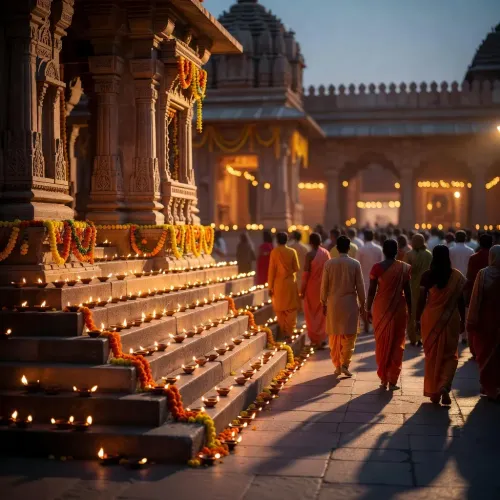
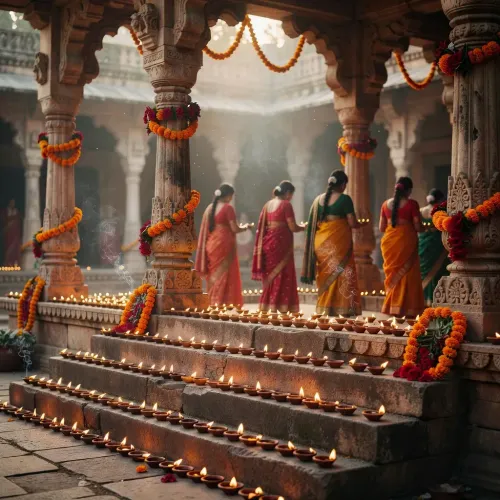
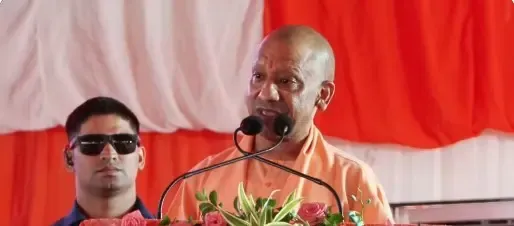
The Yogi Adityanath-led Uttar Pradesh government has launched a series of cultural and devotional programmes across select temples in the state from Saptami to Navami — the final three days of Sharadiya Navratri — featuring recitations of the 'Durga Saptashati' and traditional devotional singing under the banner of the 'Mission Shakti' initiative. The events, which began on Friday, 17 October, are aimed at upholding the tradition of worshipping Shakti (divine feminine power) while spreading awareness about the safety, dignity, and self-reliance of women and girls.
What the Programme Involves
Cultural events are being organised at a total of 24 temples across Uttar Pradesh, with three local artists performing at each venue. A significant proportion of the performers are women, aligning the religious occasion with the government's stated gender-empowerment goals. Each programme features traditional devotional songs dedicated to Goddess Durga, alongside recitations from the Durga Saptashati — a sacred text comprising 700 verses in praise of the goddess.
Key Temples and Locations
Among the prominent venues are Chandrika Devi and Sankata Devi temples in Lucknow, and Alopi Devi and Lalita Devi temples in Prayagraj. The programme also extends to noted shrines including Maa Vindhyavasini Devi in Mirzapur, Vishalakshi Temple and Mahalakshmi Devi Temple in Varanasi, Jwala Devi in Sonbhadra, Katyayani Devi in Mathura, Maa Shitala Chaukiya Dham in Jaunpur, Belha Devi in Pratapgarh, and Chamunda Devi Temple in Firozabad, among others.
What the Government Said
Uttar Pradesh Minister of Tourism and Culture Jaiveer Singh described Sharadiya Navratri as a festival of faith, Shakti, and cultural traditions. 'Our endeavour is to ensure that these religious events serve as a catalyst for social change, fostering awareness regarding the safety, dignity, and self-reliance of women and girls,' he said. Singh also noted that the programmes would give local artists — especially women — an opportunity to showcase their talent.
Livelihood and Cultural Impact
Beyond the religious dimension, the initiative is expected to provide livelihood support to participating artists at all 24 temple venues. The UP government has framed the effort as a dual-purpose exercise: preserving folk culture and traditional devotional forms while also embedding a social message within a high-footfall religious context. This comes amid the broader Mission Shakti campaign, which the Adityanath government has run across multiple phases to address women's safety and empowerment in the state.
Broader Context
Notably, this is not the first time the UP government has leveraged Navratri observances to amplify Mission Shakti messaging — the initiative has been deployed during earlier festival cycles as well. The use of religious venues and occasions to promote state welfare campaigns reflects a governing approach that blends cultural identity with administrative outreach. All programmes are scheduled to conclude on Navami, the ninth day of Sharadiya Navratri.
Point of View
Which has historically ranked poorly on such metrics. Blending cultural programming with welfare goals can broaden reach, but without follow-through in policing, legal aid, and economic opportunity, the messaging risks being more symbolic than structural. The livelihood angle for folk artists, however, is a concrete and welcome addition that mainstream coverage tends to overlook.
NationPress
16 Oct 2026
Frequently Asked Questions
What is the UP government's Durga Saptashati programme during Navratri 2026?
It is a series of devotional cultural events organised at 24 temples across Uttar Pradesh from Saptami to Navami — the last three days of Sharadiya Navratri — under the Mission Shakti initiative. Each event features recitations of the Durga Saptashati and traditional devotional songs performed by three local artists, many of them women.
Which temples are hosting the Durga Saptashati recitations in UP?
Key venues include Chandrika Devi and Sankata Devi in Lucknow, Alopi Devi and Lalita Devi in Prayagraj, Maa Vindhyavasini Devi in Mirzapur, Vishalakshi Temple and Mahalakshmi Devi Temple in Varanasi, Katyayani Devi in Mathura, and Chamunda Devi Temple in Firozabad, among others — totalling 24 temples statewide.
What is Mission Shakti in Uttar Pradesh?
Mission Shakti is a multi-phase campaign launched by the Yogi Adityanath government focused on the safety, dignity, and self-reliance of women and girls in Uttar Pradesh. It combines law-enforcement measures with awareness drives, often timed to major cultural and religious occasions.
Why is the UP government holding these events during Navratri?
According to Tourism and Culture Minister Jaiveer Singh, the government aims to use the high public footfall and religious significance of Navratri to amplify its women's safety message and serve as a catalyst for social change. The events also support local folk artists by providing performance opportunities and livelihood income.
When do the Navratri cultural programmes in UP temples begin and end?
The programmes began on Friday, 17 October 2026 (Saptami) and are scheduled to run through Navami, the ninth day of Sharadiya Navratri. All 24 temple venues will host three-day programmes concluding on Navami.