Trump Administration Seeks Arab Nations' Support for Iran War Funding
Synopsis
The Trump administration is exploring the possibility of Arab nations contributing financially to the ongoing military campaign against Iran. As US forces intensify their operations, discussions are underway regarding potential support from Gulf partners.
Key Takeaways
Trump administration seeks financial aid from Arab nations for military operations.
Over 11,000 enemy targets have been engaged in the Iran campaign.
Iran's military capabilities are reportedly diminished by 90% .
Ongoing diplomatic talks present a rare chance for Iran to reconsider its nuclear ambitions.
A ten-day pause on strikes has been ordered to facilitate diplomacy.
On March 31, Washington (NationPress) indicated that the Trump administration is contemplating requesting financial assistance from Arab nations to support the ongoing military operations against Iran. This comes as US forces are actively engaged in extensive operations in the region.
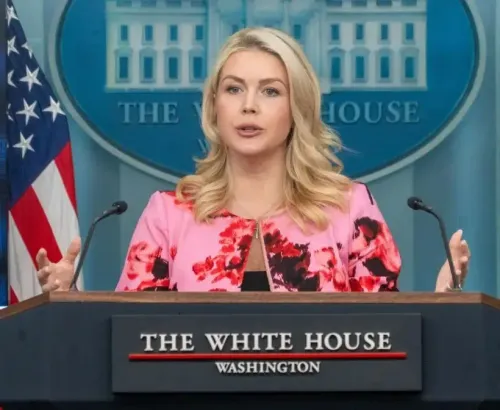
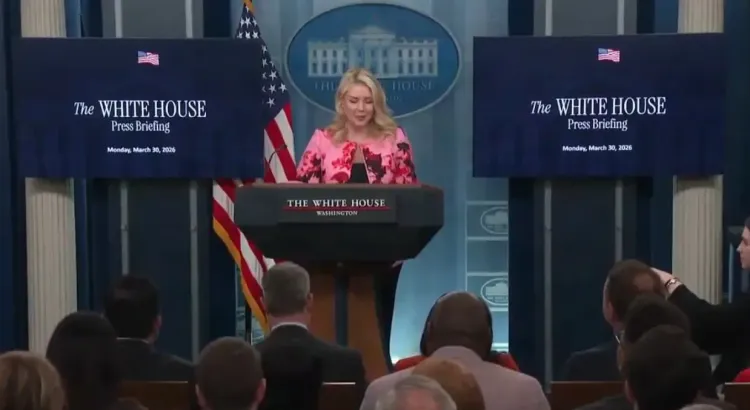
Press Secretary Karoline Leavitt mentioned that the notion of Gulf partners contributing to the costs of war is currently being evaluated, reminiscent of prior agreements during earlier US-led military engagements in the Middle East.
"I believe it's an initiative the President would certainly be interested in pursuing," she stated when questioned about potential contributions from countries like Saudi Arabia, Kuwait, or the UAE.
Leavitt further noted, "I don't want to speculate ahead of him on that, but it’s certainly a concept he is aware of."
These remarks emerge as the United States advances its military agenda in Iran, which the White House claims has significantly impaired Tehran's military strength.
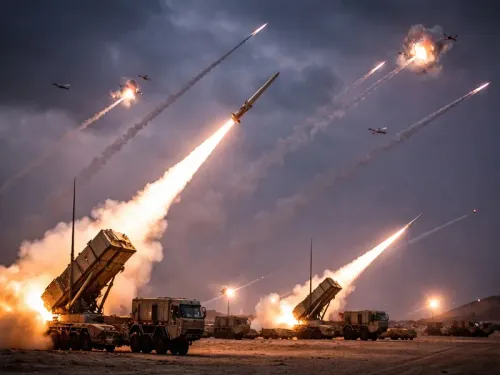
Leavitt reported that over "11,000 enemy targets have been hit to date," and Iran's missile and drone assaults have decreased by approximately 90 percent.
Additionally, she stated that US forces have incapacitated more than "150" Iranian naval vessels, rendering the navy combat ineffective, while also damaging or annihilating nearly 70 percent of its missile, drone, and naval production facilities.
Simultaneously, the administration is engaging in diplomatic talks with Iran, portraying this moment as "a truly once-in-a-generation chance" for Tehran to relinquish its nuclear ambitions.
"Discussions are ongoing and appear to be progressing positively," she said, emphasizing that private conversations seem to be more productive than public declarations.
President Donald Trump has also mandated a "ten-day pause" on strikes targeting Iranian energy assets to create space for diplomatic efforts.
The issue of financing the war arises amid escalating costs linked to prolonged military activities and increased troop deployments in the region. During the 1990–91 Gulf War, a considerable portion of US military expenditures was subsidized by allied Arab countries, including Saudi Arabia and Kuwait.
Point of View
It is crucial to note the implications of the Trump administration's request for Arab support in funding military operations against Iran. This strategy echoes past military engagements and raises questions about regional alliances and financial responsibilities.
NationPress
1 Oct 2026
Frequently Asked Questions
Why is the US seeking financial contributions from Arab nations?
The US aims to alleviate the financial burden of its military operations against Iran, similar to arrangements made during previous conflicts.
What has been achieved in the military campaign against Iran?
The US has reportedly struck over 11,000 enemy targets, significantly reducing Iran's missile and drone capabilities.
What is the current status of diplomatic talks with Iran?
Diplomatic discussions are ongoing, with officials expressing optimism about the prospects for progress.
How did previous US military campaigns in the Gulf get funded?
In past conflicts, such as the 1990-91 Gulf War, a significant portion of military costs was covered by allied Arab states.
What impact do these developments have on US foreign policy?
These developments could reshape US relations in the Middle East, especially concerning military funding and regional alliances.