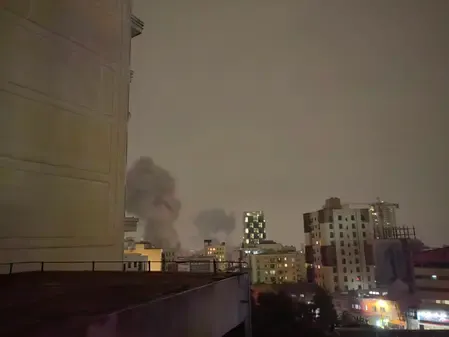
Trump Considers Requesting Arab Nations to Fund US-Israeli Conflict with Iran
Synopsis
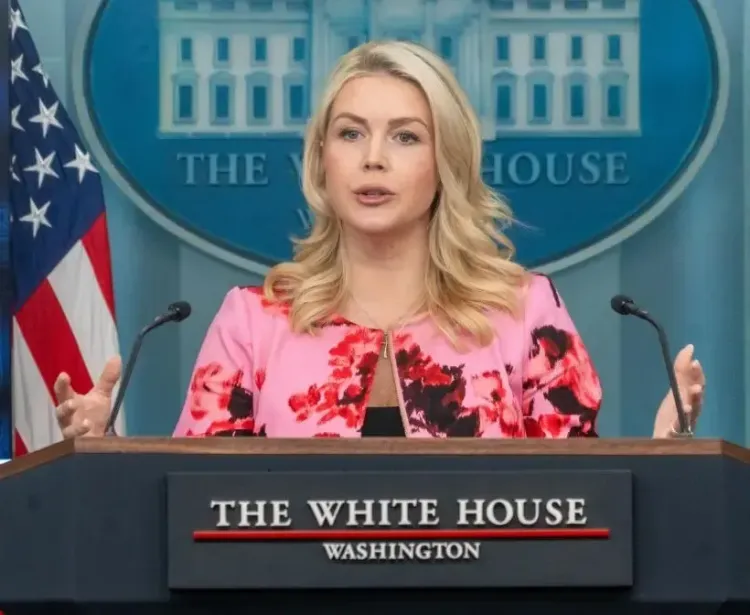
In a recent briefing, White House Press Secretary Karoline Leavitt revealed President Trump is contemplating urging Arab countries to assist in financing the US-Israeli war against Iran, amidst rising military costs and energy prices.
Key Takeaways
Trump's Interest: President Trump is considering asking Arab nations for financial assistance regarding the conflict with Iran.
Military Spending: The US has already spent over $11.3 billion in the initial stages of the war.
Congress Funding Request: The White House is seeking an additional $200 billion from Congress to continue military operations.
Energy Prices: The administration believes short-term price increases will be beneficial in the long run.
Coalition Differences: The current conflict differs from the Gulf War due to lack of international coalition support.
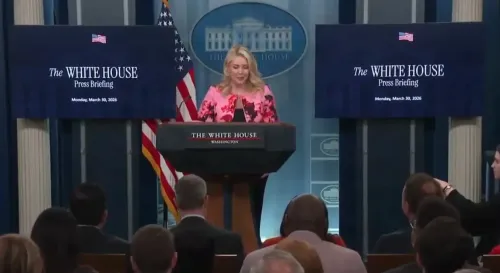
Washington, March 31 (NationPress) President Donald Trump has expressed a strong interest in soliciting financial support from Arab nations to cover the expenses associated with the ongoing US-Israel conflict with Iran, according to White House Press Secretary Karoline Leavitt.
"I won't preempt his (Trump's) thoughts on this," Leavitt stated during a White House press briefing. "However, it is certainly a notion he is considering, and I believe you will hear more about it from him soon."
Pentagon officials informed Congress earlier this month that the Trump administration incurred over $11.3 billion in costs within the first six days of the conflict with Iran, as reported by Xinhua.
This amount does not encompass the damage from battles and replacements for losses, which the Pentagon estimates could range from $1.4 billion to $2.9 billion over the initial three weeks of the conflict, according to a report by the Wall Street Journal. This data comes from Elaine McCusker, a former Pentagon budget official who has been monitoring the financial implications for the American Enterprise Institute.
The White House is aiming to secure at least $200 billion in additional military funding from Congress to support operations in Iran and to restock the Pentagon's ammunition supplies.
Leavitt reiterated the administration's belief that the rise in energy prices will be a minor issue compared to the advantages of diminishing Iran's influence.
“As we have consistently indicated: These are temporary measures and short-lived price changes for the long-term advantage of neutralizing the threat that Iran poses to the United States, our military personnel, and our allies in the region,” she conveyed to reporters.
During the Gulf War, the United States spearheaded a wide-ranging international coalition, operating under UN authorization and at the request of Kuwait and several Arab nations after Iraq's invasion. In contrast, the current situation with Iran sees the US and Israel acting largely independently, without a comparable coalition, formal regional backing, or the same level of international legitimacy.
Point of View
The approach towards this unfolding situation must prioritize objective reporting. The prospect of soliciting funds from Arab nations indicates a shift in strategy, raising questions about the implications for US foreign policy and regional dynamics. The focus should remain on factual reporting of developments without bias.
NationPress
6 Oct 2026
Frequently Asked Questions
What is the current situation between the US and Iran?
The US and Iran are engaged in an ongoing conflict, with significant military expenditures reported by the Trump administration.
How much has the US spent on the conflict with Iran so far?
The Trump administration has reportedly spent over $11.3 billion in just the first six days of the conflict.
What role do Arab countries play in this situation?
President Trump is considering asking Arab nations to help fund the military efforts against Iran.
What are the potential impacts of rising energy prices?
The Trump administration believes that short-term energy price fluctuations will be outweighed by the longer-term benefits of reducing Iran's influence.
How does this conflict compare to the Gulf War?
Unlike the Gulf War, which involved a broad international coalition, the current US-Israeli conflict with Iran lacks similar support and legitimacy.