Trump Administration Addresses Rising Fuel Prices Amid Iran Conflict

Synopsis
As tensions with Iran escalate, the Trump administration acknowledges rising fuel prices but insists they are temporary. Key measures are in place to stabilize the market while a significant military campaign continues. Will diplomacy prevail over conflict?
Key Takeaways
The Trump administration claims rising fuel prices are temporary due to the Iran conflict.
Measures being taken include releasing oil reserves and easing regulations.
Military operations have significantly weakened Iran's capabilities.
Diplomatic negotiations with Iran are currently ongoing.
Ensuring stability in the Strait of Hormuz is a top priority.
Washington, March 31 (NationPress) - The Trump administration acknowledged the surge in fuel prices attributed to the ongoing conflict with Iran, characterizing them as “temporary fluctuations”. Despite this, the administration defended its military operations and broader strategy aimed at stabilizing global energy markets.
Press Secretary Karoline Leavitt stated that the government was “closely monitoring these short-term fluctuations in oil and diesel prices”, taking measures to boost supply and alleviate consumer pressure.
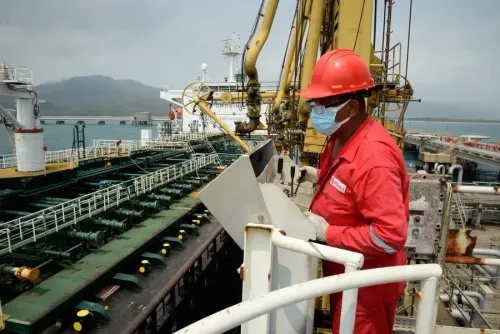
She highlighted initiatives such as releasing “400 million barrels of oil and refined products” and implementing a “60-day waiver of the Jones Act”, alongside other actions to enhance market supply.
“All of these efforts aim to enhance supply and promote market stabilization,” she remarked.
Leavitt acknowledged the repercussions on truck drivers and consumers but emphasized that the price increase was fleeting and linked to the overarching military campaign objective.
“These are short-lived actions and price variations intended for the long-term goal of neutralizing the threat from Iran,” she stated.
The White House directly associated the energy market disruption with the military initiatives in Iran, where U.S. forces are engaged in a significant military operation.
Leavitt noted that more than “11,000 enemy targets have been engaged”, significantly crippling Iran’s military capabilities.
She mentioned that Iran’s missile and drone assaults had “decreased by approximately 90%”, while U.S. forces had dismantled “over 150” naval vessels, rendering its navy “combat ineffective”.
“Our military continues to demolish Iran’s defense industrial base,” she said, adding that “nearly 70%” of Iran’s missile, drone, and naval production facilities had been damaged or obliterated.
U.S. and Israeli forces now “dominate the skies,” having completed more than “11,000 successful combat missions.”
Simultaneously, the administration is engaging in negotiations with Iran.
“Discussions are ongoing and appear to be constructive,” Leavitt mentioned, noting that private negotiations seem more positive than public declarations.
President Donald Trump has called for a “ten-day pause” on strikes targeting Iranian power generation and energy infrastructure, creating space for diplomatic talks.
Leavitt referred to this moment as “a truly once-in-a-generation opportunity” for Iran to “permanently abandon their nuclear ambitions.”
However, she cautioned that if Iran refuses a deal, “the mightiest military in history remains on standby… to ensure this regime faces severe consequences one way or another.”
The administration reaffirmed that maintaining stability in global energy flows is a priority, especially through the critical oil shipping route, the Strait of Hormuz.
Leavitt stressed the objective of ensuring that Iran “can no longer control the world's free energy flow through the Strait of Hormuz.”
Point of View
The ongoing military efforts and fuel price fluctuations highlight the intricate balance between national security interests and economic stability. While the administration emphasizes temporary impacts, the long-term implications of military operations and energy market dynamics warrant close scrutiny.
NationPress
3 Oct 2026
Frequently Asked Questions
What are the main reasons for rising fuel prices?
The rising fuel prices are primarily linked to the ongoing conflict with Iran, which has created instability in global energy markets.
What actions is the Trump administration taking to address fuel prices?
The administration is releasing oil reserves, waiving certain regulations, and increasing supply to help stabilize prices.
How have military operations affected Iran's capabilities?
U.S. forces have struck over 11,000 enemy targets, significantly degrading Iran's military capabilities and reducing missile and drone attacks by approximately 90%.
Is there a diplomatic effort underway with Iran?
Yes, negotiations are ongoing, with indications that private discussions are more constructive than public statements.
What is the significance of the Strait of Hormuz in this context?
The Strait of Hormuz is a critical route for global oil shipments, and maintaining its security is a key objective of U.S. military operations.