Divisive $200 Billion Funding Request for Iran War Stokes US Congressional Tensions

Synopsis
The proposed funding request for the ongoing Iran war, potentially exceeding $200 billion, is causing significant rifts within Congress as both parties demand clarity on strategy and financial implications. The situation raises questions about America's military engagement and its fiscal responsibilities.
Key Takeaways
Proposed funding for the Iran war may exceed $200 billion .
Congress experiences increasing division over the funding request.
Lawmakers demand clarity on strategy and financial implications.
Escalation in the Gulf has impacted global energy markets .
The conflict raises questions about America's military future .
Washington, March 20 (NationPress) The escalating financial burdens of the Iran war are intensifying divisions within Congress, as both Republican and Democratic lawmakers scrutinize a funding proposal that may surpass $200 billion, according to various U.S. media outlets.
The White House is gearing up to request significant new financial support for the conflict, amid rising doubts even from President Donald Trump’s own allies regarding the absence of a defined strategy and timeline, as reported by CNN. Legislators indicate that the administration has not adequately clarified the intended use of these funds or the potential duration of U.S. military involvement.
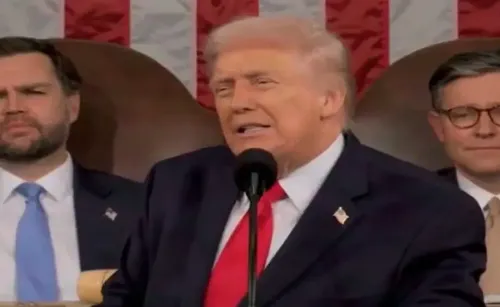
Trump indicated that the funding request could be considerable, asserting that the military requires resources to sustain its strength. “We aim to be in the best shape, the best shape we’ve ever been in,” he remarked, further adding, “It’s a small price to ensure we remain at the top.”
However, this perspective is encountering resistance. Several Republicans have explicitly opposed further expenditures, expressing growing concern over what many label as a potential “endless war.”
“I cannot support this. I have communicated to leadership that I oppose any war supplemental. I’m exhausted from spending money overseas,” Representative Lauren Boebert stated, according to CNN. “People in Colorado are struggling to make ends meet. We need to prioritize America First policies right now.”
Others demand comprehensive explanations before offering their backing. “What is our purpose? We’re discussing boots on the ground and prolonged engagement,” remarked Representative Chip Roy. “They must provide far more briefings and detailed explanations on how we will finance this and what the objectives are.”
Fiscal conservatives are also questioning the possibility of further funding increases. “This raises the question of how long they plan to be involved. What are the objectives? Is this just the initial $200 billion? Will it escalate to a trillion?” Representative Thomas Massie noted, as reported by CNN.
The discussion unfolds as the conflict escalates in the Gulf region. U.S. and allied forces have intensified operations near the Strait of Hormuz, deploying attack aircraft and helicopters to target Iranian naval assets and reestablish vital shipping routes, according to The Wall Street Journal.
“The A-10 Warthog is actively engaged on the southern flank, targeting fast-attack vessels in the Strait of Hormuz,” stated General Dan Caine, adding that Apache helicopters have also joined the fight, according to the Journal.
This escalation has already impacted global energy markets, with oil prices soaring sharply as attacks on regional infrastructure raised concerns over supply disruptions, as reported by The New York Times.
Experts caution that the economic repercussions could worsen if hostilities persist. “Energy warfare has been a tactic from the outset,” remarked Anna Jacobs, according to The Washington Post, emphasizing that disruptions in the Strait of Hormuz affect a crucial global supply route.
Simultaneously, lawmakers from both parties report receiving limited and incomplete cost evaluations, which raises concerns about approving such substantial expenditures. Some Republicans have suggested conditions, such as fiscal offsets or audits of Pentagon spending, prior to supporting any funding legislation.
Senate leadership has signaled that the path forward is still uncertain. “It remains to be seen” whether the funding request will pass, stated Senate Majority Leader John Thune, according to CNN.
On the other hand, Democrats continue to largely oppose funding under the current circumstances, complicating the administration’s attempts to gain congressional support.
The conflict has also instigated broader policy discussions within the administration, including whether relaxing sanctions on Iranian oil could help stabilize global prices, as noted by The Washington Post. Officials assert that such actions could increase market supply, although experts warn it may also financially empower Iran during the conflict.
Point of View
The current discourse surrounding the proposed funding for the Iran war reflects deepening divisions in Congress. Lawmakers are increasingly cautious about the financial implications and strategic clarity needed for continued military engagement. It’s crucial to prioritize national interests while ensuring fiscal responsibility.
NationPress
24 Sept 2026
Frequently Asked Questions
What is the proposed funding amount for the Iran war?
The proposed funding request could exceed $200 billion.
Why are lawmakers divided over this funding?
Lawmakers are questioning the clarity of the military strategy and the intended use of the funds.
What are the implications of continued U.S. military involvement?
Continued involvement raises concerns about the potential for an 'endless war' and financial responsibilities.
How has the conflict affected global energy markets?
The escalation has led to significant increases in oil prices due to fears of supply disruptions.
What conditions are some Republicans proposing for funding approval?
Some Republicans are calling for fiscal offsets or audits of Pentagon finances before supporting the funding.