Is the US Chamber of Commerce Excited About the New Trade Agreement with India?
Synopsis
The US Chamber of Commerce has warmly embraced the newly announced trade deal with India, viewing it as a pivotal step for businesses. With leaders from both nations backing this initiative, the deal promises significant economic benefits. Will this mark the start of a fruitful partnership? Read on for insights.
Key Takeaways
US Chamber of Commerce welcomes the trade deal.
Trade agreement aims to reduce tariffs and enhance cooperation.
Potential of $500 billion in trade between the two nations.
Further negotiations are expected to finalize the deal.
Focus on strengthening the Indo-Pacific economic landscape.
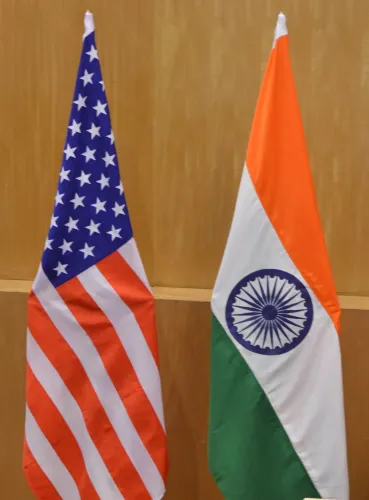
Washington, Feb 3 (NationPress) The US Chamber of Commerce expressed enthusiasm following the announcement of a trade deal between the United States and India, highlighting it as a long-awaited advancement for enterprises in both nations.
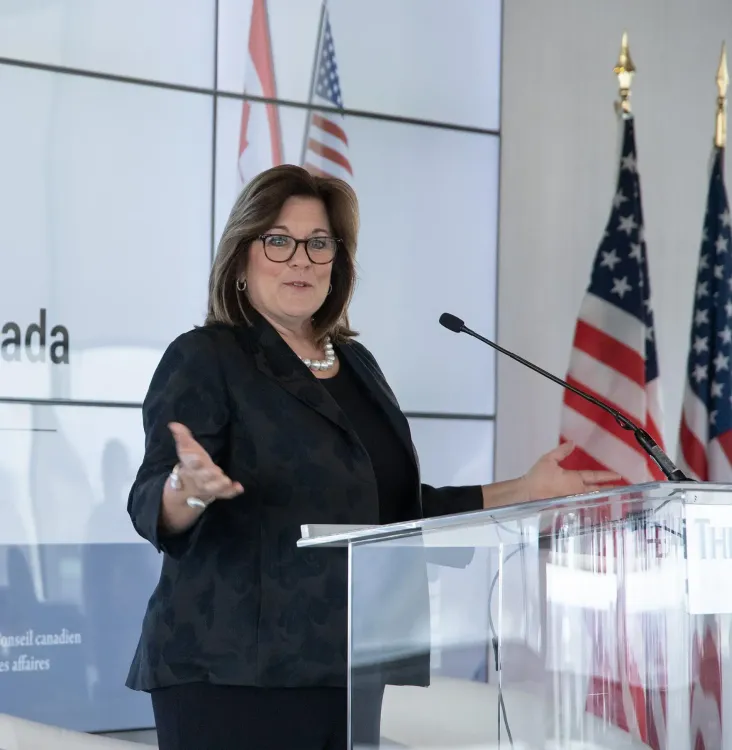
Suzanne P. Clark, president and CEO of the US Chamber of Commerce, stated that this announcement signifies crucial momentum. “We commend the US and Indian administrations for their decision to lower tariffs and non-tariff barriers, which will greatly benefit businesses and workers in both remarkable nations,” Clark remarked.
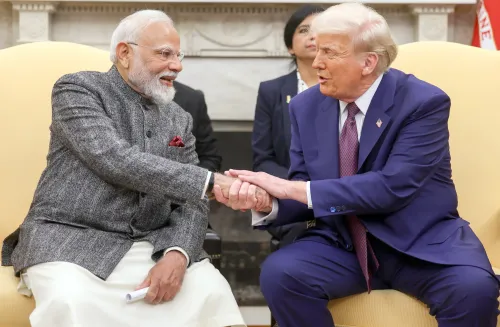
She acknowledged the leadership driving this initiative. “We appreciate the endeavors of President Trump and Prime Minister Modi, as well as their teams, including Ambassadors Vinay Kwatra and Sergio Gor,” she added.
Clark expressed optimism that this step could pave the way for further advancements. “We are hopeful that this is merely the initial phase toward a comprehensive trade agreement that will facilitate greater collaboration within the private sector,” she mentioned, indicating the Chamber's eagerness to assess the specifics.
The Chamber, along with its US-India Business Council, firmly backs this initiative. “The Chamber, our US-India Business Council, and our members are staunch advocates of this initiative,” she stated, expressing anticipation for collaboration between both governments to implement the recent announcement.
Clark visited Delhi and Mumbai last year, engaging with Indian officials and business leaders. She had previously called for a trade agreement, asserting that the US-India economic relationship is among the most significant globally. She emphasized that such a deal would enhance both economies and bolster global security.
Economist Steve Hanke shared a mixed perspective on social media, noting, “In exchange for reduced tariffs, India commits to purchasing $500 billion worth of US energy, technology, agriculture, and more.”
Hanke maintained that tariffs remain a concern, asserting, “US tariffs on India are still excessively high.” He further noted that the United States plans to reduce tariffs on Indian products from 25% to 18%, and that India will cease purchasing Russian oil.
The USISPF issued a statement enthusiastically welcoming President Donald J. Trump’s announcement following his dialogue with Prime Minister Narendra Modi, reiterating their shared commitment to enhance the US–India economic alliance and progress toward a bilateral trade agreement.
The forum characterized the reduction of India's reciprocal tariff from 25% to 18% as “a significant and positive initial step,” while acknowledging that the agreement's specifics are yet to be finalized.
“Although the details of the agreement are pending, today’s announcement illustrates strong political will on both sides to progress towards a comprehensive US–India Bilateral Trade Agreement (BTA), addressing tariffs, market access, non-tariff barriers, and other trade-related matters across a wide spectrum of sectors,” the statement elaborated.
The USISPF noted that a bilateral trade agreement would “bring substantial benefits for businesses, workers, and consumers in both countries,” while also reinforcing supply chains and enhancing overall economic resilience.
The forum underscored that both governments have made it clear that this announcement marks the initiation of a prolonged negotiation process.
“Both governments have clarified that this is merely the start, with further phases and negotiations expected in the coming months,” USISPF noted, expressing encouragement regarding the “productive momentum” generated by the recent announcement.
USISPF reaffirmed its commitment to closely collaborate with both the Government of India and the US Government to achieve the shared objective of expanding bilateral trade towards the $500 billion goal.
“A more robust US–India trade and investment relationship is not only vital for both economies but also essential for fostering a stable, resilient, and rules-based Indo-Pacific,” the statement concluded.
Point of View
I see the US-India trade agreement as a significant step toward strengthening economic ties between two major global players. This deal not only promises to enhance bilateral trade but also fosters a collaborative spirit that could lead to greater stability in the Indo-Pacific region. It reflects a proactive approach to addressing trade barriers and demonstrates a commitment to mutual economic growth.
NationPress
7 Oct 2026
Frequently Asked Questions
What is the significance of the US-India trade deal?
The trade deal aims to reduce tariffs and non-tariff barriers, enhancing economic cooperation and benefiting businesses and workers in both nations.
How will this agreement impact the economies of the US and India?
The agreement is expected to unlock new opportunities for trade, potentially leading to increased economic growth and collaboration between the two countries.
What are the next steps following this announcement?
Both governments will engage in further negotiations to finalize the details and ensure effective implementation of the trade agreement.
Who were the key figures involved in this deal?
The leaders of the US and India, including President Trump and Prime Minister Modi, played crucial roles in facilitating this trade agreement.
What challenges remain regarding tariffs?
While the agreement includes tariff reductions, concerns about existing high tariffs on both sides still need to be addressed in future negotiations.