US-Iran Ceasefire: A Fragile Chance for Peace?
Synopsis
As the US-Iran ceasefire enters its second week, experts underline the complexities and challenges of achieving lasting peace in the region. Will this temporary truce open doors for de-escalation or deepen existing tensions?
Key Takeaways
The US-Iran ceasefire presents a fragile opportunity for de-escalation.
Contrasting security priorities complicate the ceasefire's sustainability.
India must enhance energy security and maintain strategic autonomy.
Regional conflicts have far-reaching global consequences.
Opportunities exist for India to engage constructively in conflict resolution.
New Delhi, April 13 (NationPress) The current two-week ceasefire between the United States and Iran presents a fragile opportunity for de-escalation, although its sustainability remains in question, according to a report released on Monday.
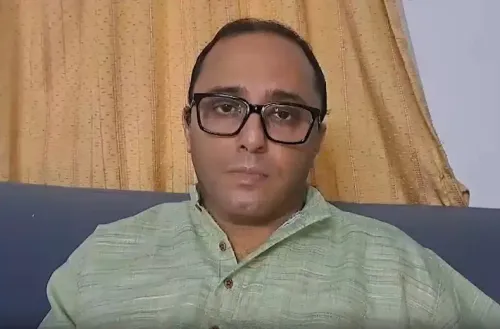
In an article for India Narrative, former Indian diplomat Sanjay Kumar Verma highlighted that the ongoing conflict transcends mere territorial disagreements or immediate responses, revealing a profound struggle regarding the future structure of regional order and the principles that will govern it.
He pointed out that while military outcomes may impact the short-term balance, they are unlikely to resolve the larger contest over the regional order that will persist beyond the ceasefire.
"The ongoing unrest in West Asia has disrupted the stability that has been established in the region for decades. Its intricate ramifications extend well beyond local borders. The conflict has accelerated the shift from a rules-based international order to one characterized by selective military power and managed instability. This raises an important question: Is the principle of 'might is right' once again dictating international relations?" Verma elaborated.
According to the experienced diplomat, the conflicting demands of both parties have complicated the temporary ceasefire between Iran and the United States.
"Iran has stipulated certain preconditions, including a cessation of Israeli military actions in Lebanon, the release of its frozen assets, and, more broadly, the withdrawal of U.S. forces from the region along with recognition of its strategic autonomy, particularly over the Strait of Hormuz. Concurrently, the United States has sought stringent limitations on Iran's nuclear activities, including the removal of enriched uranium, restrictions on its ballistic missile capabilities, an end to support for regional proxy groups, and assurances for free navigation through vital maritime routes," Verma noted.
"These demands reflect fundamentally contrasting security priorities, making a lasting halt to hostilities dependent on challenging and politically delicate compromises," he added.
Verma emphasized that for India, the implications of this conflict are significant. It highlights the necessity of fortifying energy security while diversifying supply sources amid increasing global unpredictability. Additionally, it underscores the importance of maintaining strategic autonomy, allowing India to engage with various players while avoiding regional entanglements.
"Moreover, India has a chance to play a constructive role through humanitarian assistance, multilateral collaboration, and ongoing diplomatic initiatives. A key consideration is whether India can more actively utilize its strategic autonomy to support conflict resolution or if its future interactions require recalibration to foster greater trust among diverse stakeholders," Verma remarked.
"In a broader context, the crisis illustrates how regional conflicts can have global ramifications. In our interconnected world, instability in West Asia inevitably influences economic, political, and security dynamics far beyond the immediate region," he concluded.
Point of View
The ongoing conflict between the US and Iran reflects deeper geopolitical tensions that extend beyond regional boundaries. It emphasizes the need for strategic autonomy and resilient energy security as nations navigate an increasingly unpredictable global landscape.
NationPress
28 Sept 2026
Frequently Asked Questions
What are the current demands from Iran and the US?
Iran demands an end to Israeli military actions, release of frozen assets, and recognition of its strategic autonomy. The US seeks limits on Iran's nuclear program and guarantees for navigation in key maritime routes.
Why is the US-Iran ceasefire significant?
The ceasefire offers a fragile opportunity for de-escalation in a conflict that has broader implications for regional stability and international relations.
What does this conflict mean for India?
The conflict underscores the importance of India's energy security and strategic autonomy, allowing it to engage with various global players while avoiding regional entanglements.
What are the implications of regional conflicts on global stability?
Instability in regions like West Asia can significantly affect economic, political, and security dynamics worldwide due to our interconnected global landscape.
How can India contribute to conflict resolution?
India can play a constructive role through humanitarian assistance, diplomatic outreach, and multilateral engagement to support conflict mitigation.