Expert Warns of Potential US-Iran Conflict Despite Ceasefire
Synopsis
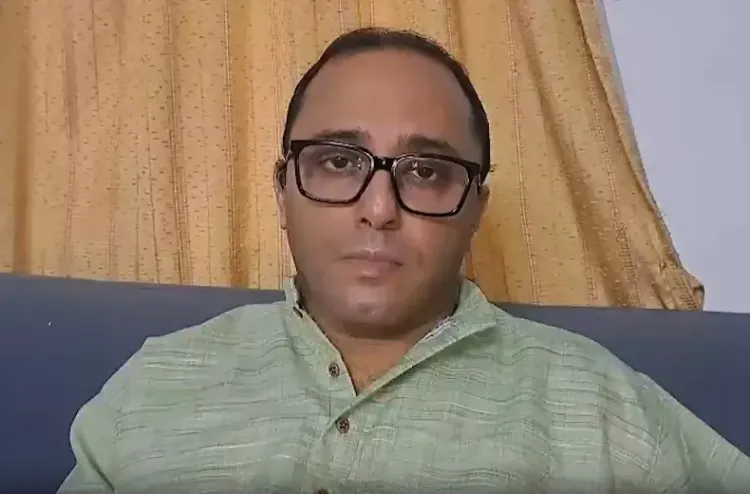
Kolkata expert Kingshuk Chatterjee welcomes the US-Iran ceasefire but warns that further conflict is still a possibility. His insights shed light on the complex geopolitical dynamics in the region.
Key Takeaways
Ceasefire announced between US and Iran Potential for further conflict remains Israel's military strategy includes targeting Hezbollah Historical tensions influence current relations Confidence-building measures are essential for peace
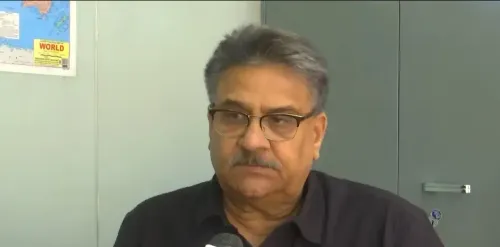
Kolkata, April 8 (NationPress) Foreign affairs analyst Kingshuk Chatterjee expressed cautious optimism regarding the recently declared two-week ceasefire between the United States and Iran on Wednesday. He emphasized that while the nations are currently in a phase of de-escalation, the possibility of further conflict remains.
In an interview with IANS, Chatterjee remarked: "Iran and Israel seem likely to remain on a collision course for a while, but at this moment, all parties need a breather to reorganize and recover."
He pointed out that it has not been the consensus among strategic experts in the U.S. that the nation should engage in this specific conflict.
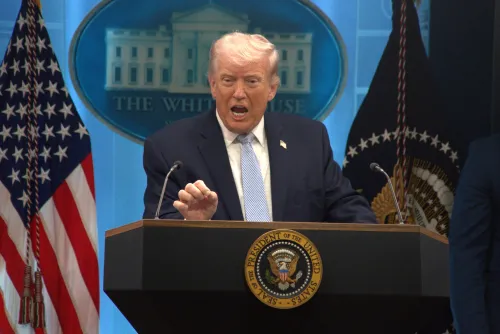
Chatterjee stated, "With President Donald Trump now taking a step back, there is hope that this ceasefire could last longer than anticipated."
Nevertheless, he warned: “While we are navigating an off ramp, further hostilities cannot be dismissed.”
The analyst also noted that the notion of regime change in Iran has been entirely set aside.
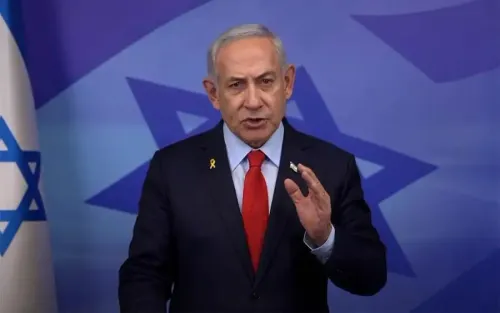
He characterized Israel as a different situation altogether. "Israel is likely to keep its military pressure in Lebanon, seeking to neutralize Hezbollah to a point where it becomes ineffective," he explained.
Additionally, he mentioned, "If Iran starts to regain its strength, Israel will continue its strategy of 'moving the lawn.'"
Reiterating that the conflict may not be resolved entirely, Chatterjee stated, "It appears that America is opting for a hiatus for the time being."
He also reflected on the historical tensions between America and Iran, noting, "There has been a great deal of animosity in their relationship."
“It is improbable that this situation will lead to a new era of optimism in the immediate future. However, if both parties act wisely, there may be a chance for reconciliation,” he suggested.
Chatterjee explained that before any meaningful dialogue can take place, both the U.S. and Iran will need to establish confidence-building measures. “America has a history of entering negotiations only to return to conflict,” he observed.
He added, "Iran must be convinced that the U.S. is genuinely committed to pursuing a peaceful path for now."
“The level of mutual trust between the U.S. and Iran is alarmingly low,” he pointed out.
Furthermore, Chatterjee believes that the U.S. is not equipped to sustain a conflict with a nation like Iran. “Iran is not Venezuela; this will not be an easy victory,” he concluded, indicating that it is unlikely the U.S. would seek immediate military engagement.
Point of View
It's crucial to recognize the nuanced perspectives on the US-Iran ceasefire. While there is a sigh of relief at the announcement, the underlying tensions suggest that this may only be a temporary reprieve. A nation-first approach necessitates monitoring the evolving situation closely, as the repercussions could impact broader international relations.
NationPress
10 Oct 2026
Frequently Asked Questions
What did Kingshuk Chatterjee say about the ceasefire?
Chatterjee welcomed the ceasefire between the US and Iran but cautioned that further conflict is still a possibility.
Why is the US-Iran relationship tense?
The US and Iran have a history of animosity, and past negotiations have often broken down, leading to renewed conflicts.
What does 'moving the lawn' refer to in the context of Israel?
It refers to Israel's strategy to maintain military pressure on Hezbollah to ensure it remains ineffective.
What must happen for US-Iran relations to improve?
Both countries need to establish confidence-building measures to foster a more stable relationship.
Is the US likely to engage in further military conflict with Iran?
Chatterjee believes that the US is not in a position to sustain a conflict with Iran at this time.