Former Ambassador Discusses US-Iran Ceasefire's Ambiguity and Opportunities
Synopsis
Ashok K. Kantha, former Ambassador to China, shares insights on the recent US-Iran ceasefire, labeling it ambiguous yet a potential opportunity. He highlights Iran's strategic positioning around the Strait of Hormuz and questions the US's recent actions.
Key Takeaways
Ceasefire described as ambiguous but hopeful.
Potential for Iran to emerge stronger strategically.
The Strait of Hormuz remains a key geopolitical focus.
US and Iran's conflicting positions complicate the situation.
Negotiations with Oman indicate shifts in management protocols.
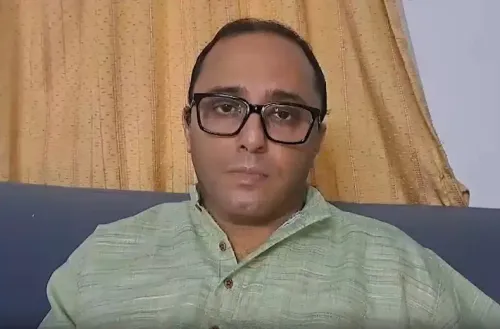
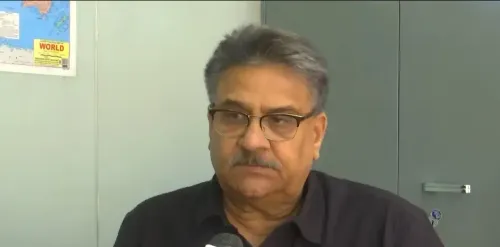
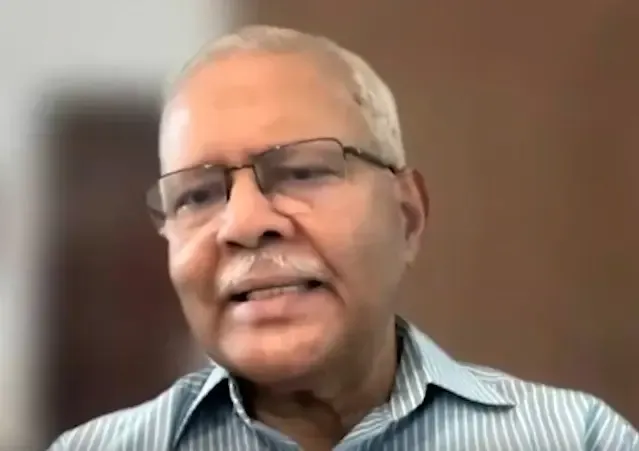
New Delhi, April 8 (NationPress) Ashok K. Kantha, India's former Ambassador to China, described the recent two-week ceasefire agreement between the US and Iran as “ambiguous”, while also noting that it presents a “window of opportunity”.
In an interview with IANS, Kantha warned that this ceasefire does not constitute a comprehensive agreement. “It’s a 14-day de-escalation. Numerous issues remain unresolved. Currently, Israel and the USA are on one side, while Iran is on the other, leading to conflicting claims,” he stated.
Following President Donald Trump's declaration of a conditional two-week halt in planned military actions associated with the reopening of the Strait of Hormuz, the former diplomat highlighted the absence of a joint understanding that has been executed.
“The situation remains ambiguous, yet there is a window of opportunity,” Kantha remarked.
He emphasized that the critical aspect will be to observe the actual developments on the ground.
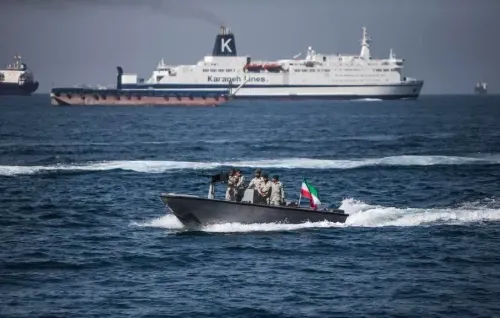
Concerning the agreement related to the management of the Strait of Hormuz, Kantha pointed out that while Iran has consented to resume commercial shipping through the Strait, the “statement issued indicates that it will operate under a sort of military authority from Iran, along with certain technical conditions that have yet to be detailed.”
The former diplomat added, “The USA is particularly retracting from a crisis it initiated with President Donald Trump’s ultimatum threatening that civilization would end if Iran did not open the Strait of Hormuz.”
This comment referenced Trump’s social media warning to Iran that “a whole civilization will die tonight, never to be brought back again.”
Kantha elaborated on how Iran has leveraged the Strait of Hormuz as a strategic advantage, which has allowed it to “emerge stronger.”
“Although Iran has incurred significant damage, with much of its leadership eliminated, and its military and infrastructure compromised, strategically it appears to have maintained its position and perhaps emerged stronger,” he indicated.
“Iran's capability to close the Strait of Hormuz has become its trump card, a strategy not utilized since the drastic decline of US-Iran relations post-1979 hostage crisis. Iran has not relinquished this advantage,” he added.
“Even during this de-escalation, Iran is indicating that reopening the Strait of Hormuz will depend on its significant role in that area.”
Furthermore, Kantha mentioned reports suggesting that Oman and Iran are negotiating a protocol for managing the Strait of Hormuz. “This further illustrates the US’s acceptance of Iran’s role in overseeing this critical chokepoint, contradicting its traditional stance on freedom of navigation, as they are conceding willingly,” he stated.
“Despite facing damages, Iran has demonstrated that a weaker nation can inflict substantial harm on militarily superior adversaries like the USA and Israel, even when they ostensibly control its airspace,” he asserted.
Regarding the US lifting sanctions on Iranian oil, Kantha observed, “Iran’s oil is moving freely, with the world encouraging Iran to sell its oil.”
“At this juncture, it is unclear what the US has accomplished through its misadventure in Iran and the surrounding region,” he concluded.
Point of View
Emphasizing its ambiguous nature while recognizing the potential it holds for future negotiations. His insights reflect the intricate geopolitical landscape and the importance of the Strait of Hormuz, suggesting a shift in traditional power dynamics.
NationPress
13 Oct 2026
Frequently Asked Questions
What is the significance of the US-Iran ceasefire?
The ceasefire is significant as it marks a temporary halt in hostilities, allowing for potential diplomatic negotiations regarding the Strait of Hormuz and broader regional tensions.
What role does the Strait of Hormuz play in global trade?
The Strait of Hormuz is a critical chokepoint for global oil shipments, with a significant percentage of the world's oil passing through it, making its stability essential for international trade.
How has Iran leveraged its position in the Strait of Hormuz?
Iran has strategically used its control over the Strait of Hormuz as a bargaining chip in negotiations and conflicts, asserting its influence in the region despite facing military challenges.
What are the implications of lifting sanctions on Iranian oil?
Lifting sanctions on Iranian oil could enable Iran to increase its oil exports, potentially impacting global oil prices and the geopolitical landscape.
What does the term 'window of opportunity' refer to?
'Window of opportunity' refers to the potential for diplomatic engagement and resolution of conflicts arising from the ceasefire agreement, despite its ambiguous nature.