USCIRF targets Bhagwat's US visit: India's pluralism record tells a different story
Synopsis
USCIRF has called for sanctions on RSS members, urged a visa revocation for Mohan Bhagwat, and renewed its 'Country of Concern' label for India — just weeks before India hosts the BRICS Summit. The move collides with Pew Research data showing 89–91% of Indians across every major faith feel free to practise their religion, and a global ranking that places India first among 110 countries for minority inclusivity.
Key Takeaways
The USCIRF has called for targeted sanctions against RSS members and Indian officials, and urged Washington to consider revoking Mohan Bhagwat's visa.
The commission renewed its recommendation to designate India a 'Country of Particular Concern' on religious freedom.
A Pew Research Center survey of nearly 30,000 Indians found 89–91% of respondents across all major faiths felt very free to practise their religion.
The Global Minority Report ranked India first among 110 countries for inclusivity towards religious minorities, ahead of the US and UK .
India's Muslim population exceeded 170 million in the 2011 Census ; multiple Islamic traditions operate openly alongside Christian, Sikh, Jain, Buddhist, Jewish, and Zoroastrian communities.
The statement comes ahead of the BRICS Leaders' Summit in New Delhi on 12–13 September , prompting questions about timing.
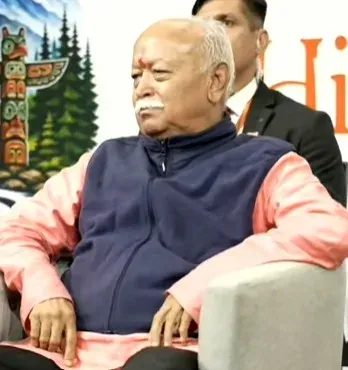
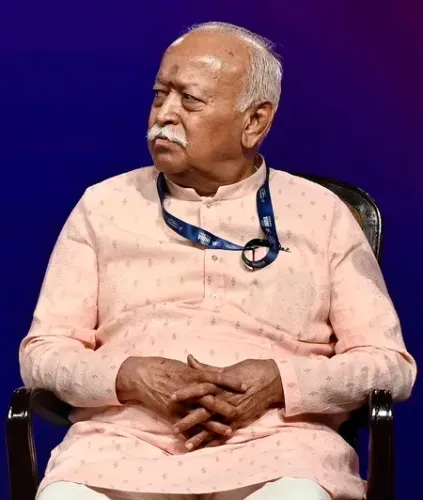
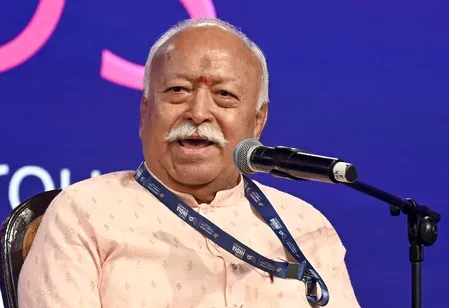
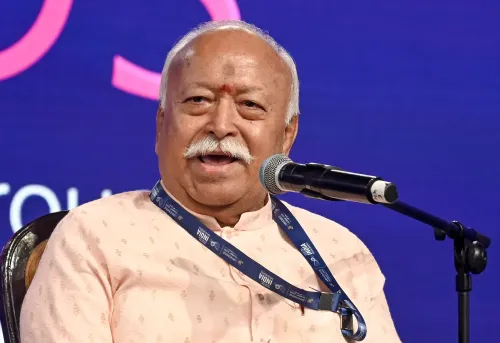
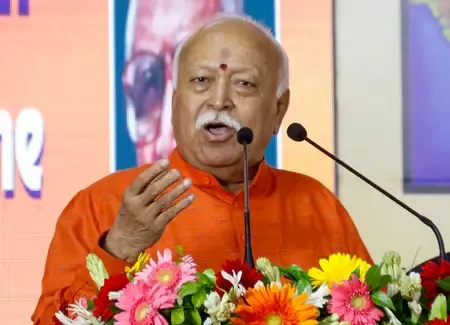
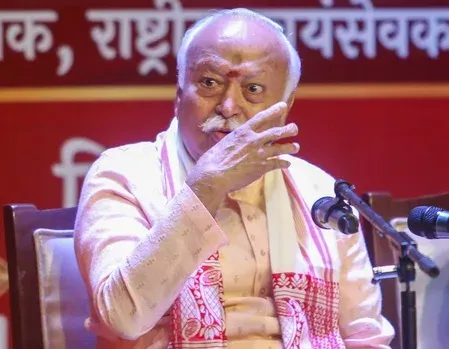
The United States Commission on International Religious Freedom (USCIRF) has issued a statement targeting RSS chief Mohan Bhagwat's visit to the United States, calling for targeted sanctions against RSS members and Indian officials and urging Washington to consider revoking Bhagwat's visa. The commission has also renewed its recommendation that India be designated a 'Country of Particular Concern' — a designation critics argue is both politically motivated and factually at odds with India's lived religious reality.
The statement, which drew sharp reactions in New Delhi, arrives at a conspicuous moment: India is set to host the BRICS Leaders' Summit on 12–13 September in New Delhi, as its diplomatic influence and economic weight across the Global South continue to expand. Observers note that the timing, whatever its intent, is difficult to dismiss without scrutiny.
What the Data Actually Shows
One of the most substantive challenges to the USCIRF's framing comes from the Pew Research Center, which surveyed nearly 30,000 Indian adults across 17 languages. The findings cut against the commission's narrative: 91% of Indians reported feeling very free to practise their religion. Among Muslims, the figure was 89%; among Christians, 89%; Hindus, 91%; Buddhists, 93%; Jains, 85%; and Sikhs, 82%.
Separately, 79% of respondents said people of other religions were very free to practise their faith, and 84% considered respecting all religions very important to being 'truly Indian.' These are not government figures — they are independent survey data from one of the world's most credible research institutions.
A separate ranking by the Global Minority Report, produced by the Centre for Policy Analysis and reported by The Australia Today, placed India first among 110 countries for inclusivity towards religious minorities — ahead of South Korea, Japan, Panama, and the United States. The United Kingdom ranked 54th and the UAE 61st.
India's Constitutional and Civilisational Framework
Article 25 of the Indian Constitution guarantees freedom of conscience and the right to profess, practise, and propagate religion. Article 26 grants religious denominations the right to establish institutions and manage their own affairs. These are not aspirational clauses — they are justiciable rights.
India's Muslim population exceeded 170 million in the 2011 Census, making it one of the largest in the world. Sunni, Shia, Barelvi, Deobandi, Salafi, and Sufi traditions all operate openly alongside Christian, Sikh, Buddhist, Jain, Jewish, and Zoroastrian communities. Just this week, Eid Milad-un-Nabi processions were held across India, with police in cities such as Hyderabad coordinating security arrangements with organisers.
India's history with persecuted minorities further reinforces this record. Jewish communities found refuge on Indian soil centuries ago and have maintained synagogues and institutions to this day. Zoroastrians fleeing persecution in Persia settled in India and went on to shape Indian industry, science, and philanthropy — the Tata family being the most prominent example. This is not the record of a civilisation that demanded minorities surrender their identity.
Questions of Consistency
Critics argue that the USCIRF's approach raises serious questions of selective scrutiny. The commission's own documentation on Pakistan describes severe restrictions on religious freedom, including blasphemy laws disproportionately affecting Ahmadis and cases involving forced conversions of Christians, Hindus, and Sikhs. The contrast with India's pluralistic framework is stark, yet the intensity of focus on India remains disproportionate, according to commentators who track the commission's work.
There is also a legitimate domestic policy debate in India around foreign funding and religious conversion. The government regulates foreign contributions through the Foreign Contribution (Regulation) Act (FCRA), whose stated purpose is to prevent foreign funds from being used for activities detrimental to national interest. Government records have documented complaints concerning foreign-funded organisations and alleged inducement-based conversions. Reasonable people can debate the merits of that regulatory framework — but characterising any such regulation as evidence of the absence of religious freedom is, critics contend, an overreach.
Why the RSS Attracts External Scrutiny
The USCIRF statement's specific targeting of RSS chief Mohan Bhagwat has prompted a broader question: why does the Rashtriya Swayamsevak Sangh (RSS) attract such sustained international attention? Commentators suggest it may be precisely because the organisation represents an indigenous social and political outlook — one that emphasises Indic identity, self-reliance, and resistance to external influence. That perspective, whatever one's view of it, arguably deserves engagement rather than automatic pathologisation.
What Comes Next
The USCIRF statement is unlikely to alter India's diplomatic trajectory. With the BRICS Summit approaching and India's global standing at a post-independence high, the commission's recommendations face an uphill path to policy adoption in Washington. Nevertheless, the episode underscores a recurring tension between Western institutional assessments and the self-understanding of a country whose constitutional, historical, and demographic record presents a more complex picture than any single political statement can capture.
Point of View
Just ahead of India's BRICS hosting, does nothing to dispel that impression. What mainstream coverage tends to miss is the evidentiary gap at the heart of the commission's case: its narrative runs directly counter to Pew Research data, a 110-country minority inclusivity ranking, and India's own constitutional architecture. The harder question is one of consistency — USCIRF's documentation on Pakistan describes blasphemy laws and forced conversions of Christians and Hindus, yet the commission's intensity of focus on India remains disproportionate. If Washington's religious-freedom apparatus is to retain credibility with the Global South, it cannot afford to be seen as a tool of geopolitical pressure against a rising democratic partner.
NationPress
12 Oct 2026
Frequently Asked Questions
What has USCIRF said about India and Mohan Bhagwat's US visit?
The USCIRF issued a statement targeting RSS chief Mohan Bhagwat's visit to the United States, calling for targeted sanctions against RSS members and Indian officials and urging Washington to consider revoking Bhagwat's visa. The commission also renewed its recommendation that India be designated a 'Country of Particular Concern' on religious freedom.
What does Pew Research data say about religious freedom in India?
A Pew Research Center survey of nearly 30,000 Indian adults across 17 languages found that 91% of Hindus, 89% of Muslims, 89% of Christians, 93% of Buddhists, 85% of Jains, and 82% of Sikhs said they felt very free to practise their religion. Additionally, 84% of respondents considered respecting all religions very important to being 'truly Indian.'
How does India rank globally on minority religious inclusivity?
The Global Minority Report, produced by the Centre for Policy Analysis, ranked India first among 110 countries for inclusivity towards religious minorities. South Korea, Japan, Panama, and the United States followed in the rankings, while the United Kingdom placed 54th and the UAE 61st.
Why is the timing of the USCIRF statement significant?
India is scheduled to host the BRICS Leaders' Summit in New Delhi on 12–13 September, at a moment when its diplomatic standing and economic weight are at a post-independence high. Observers note that the proximity of the USCIRF statement to the summit raises questions about whether the timing deserves scrutiny, though no direct causal link has been established.
What is India's constitutional guarantee on religious freedom?
Article 25 of the Indian Constitution guarantees every citizen freedom of conscience and the right to profess, practise, and propagate religion. Article 26 gives religious denominations the right to establish and manage their own institutions and religious affairs — rights that are legally enforceable, not merely aspirational.