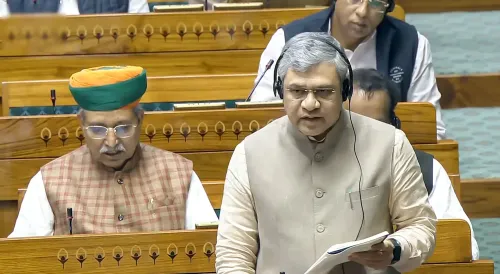
Fair Revenue Sharing Needed for Content Creators, Says Ashwini Vaishnaw
Synopsis
In a recent statement, Union Minister Ashwini Vaishnaw asserted that social media platforms must ensure fair revenue distribution to content creators, including journalists and academics. This call for equity aims to strengthen India's digital content economy amidst tighter regulations.
Key Takeaways
Fair revenue sharing is essential for content creators across various fields.
The government is tightening regulations for social media platforms.
Proposed amendments address the rise of deepfakes and misinformation.
Major platforms must label AI-generated content clearly.
Ensuring fairness will strengthen the digital content economy in India.
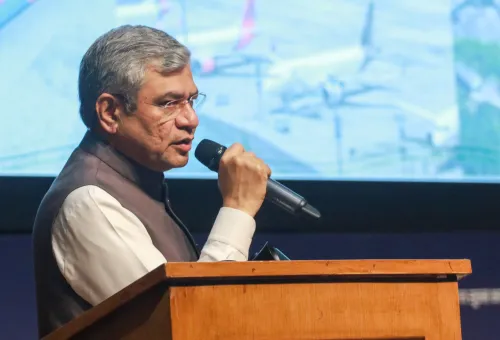
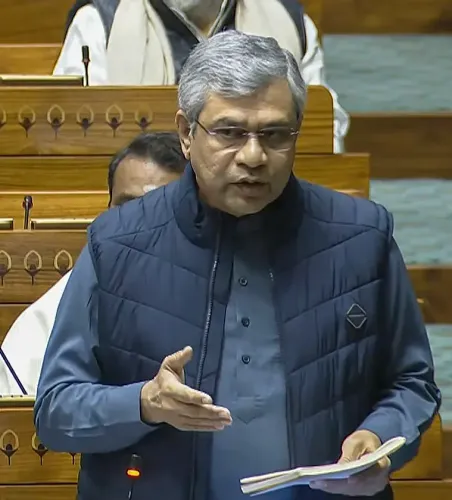
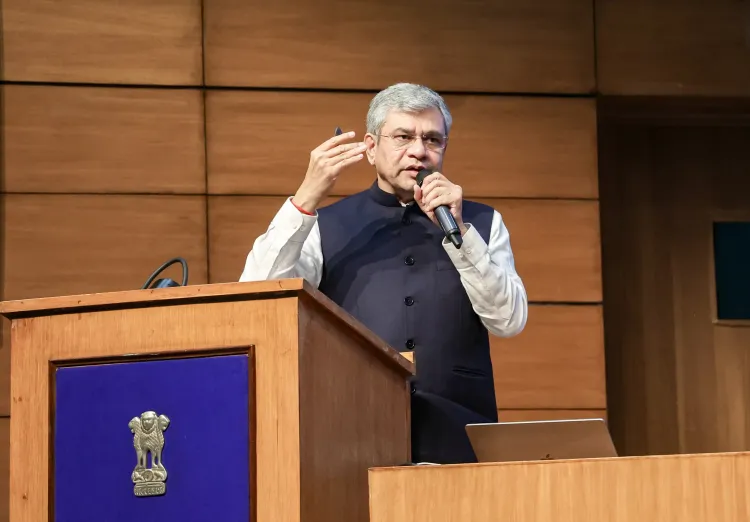
New Delhi, Feb 26 (NationPress) - Union Minister for Information and Broadcasting, Ashwini Vaishnaw, emphasized on Thursday the necessity for social media platforms to fairly distribute revenue among content creators. This group includes journalists, traditional media outlets, influencers, educators, and researchers.
He articulated that all individuals contributing content—be it news professionals, creators from remote locations, or academics sharing their findings—are entitled to an equitable portion of the revenue generated by digital platforms.
Vaishnaw stated that the principle of equitable revenue sharing must be established across the entire ecosystem.
“Social media platforms should ensure that they share revenue appropriately with those who generate content, including news personnel, traditional media, remote creators, influencers, and academics disseminating their work on these platforms,” he remarked.
He underlined that these platforms gain substantially from the content produced by both individuals and organizations, hence creators deserve their rightful earnings.
Moreover, he noted that promoting fairness in revenue allocation will contribute to bolstering the digital content economy in India.
These comments are made as the government is tightening regulations concerning digital platforms to enhance accountability and transparency.
Separately, last year, the Ministry of Electronics and Information Technology (MeitY) proposed new amendments to the IT (Intermediary Guidelines and Digital Media Ethics Code) Rules, 2021, aimed at addressing the rising threats posed by deepfakes and AI-generated misinformation.
The draft regulations mandate that social media platforms distinctly label “synthetically generated content” and include permanent metadata or identifiers within such materials.
Major social media intermediaries (SSMIs)—platforms with over 5 million registered users in India—such as Facebook, YouTube, and Snapchat, will need to ensure that AI-generated content is clearly marked.
The proposed rules specify that the identifier must encompass at least 10 percent of the visual display for videos or images, or cover the first 10 percent of the duration for audio content.
The metadata must remain unaltered, unhidden, and unremovable. If a platform knowingly permits unmarked or misrepresented AI-generated content, it will be regarded as failing to exercise due diligence under the IT Act.
Point of View
Ashwini Vaishnaw's comments highlight a pivotal moment in the digital content arena. The emphasis on fair revenue sharing not only supports creators but also strengthens the integrity of the media landscape, promoting accountability across platforms.
NationPress
20 Sept 2026
Frequently Asked Questions
Why is revenue sharing important for content creators?
Revenue sharing ensures that those who create content receive a fair compensation for their work, which is crucial for sustaining their contributions and fostering a healthy digital content ecosystem.
What actions are being taken to regulate social media platforms?
The government is tightening regulations to enhance accountability and transparency, including proposed amendments to IT rules concerning AI-generated content.
Who does the term 'content creators' include?
Content creators encompass journalists, traditional media houses, influencers, educators, and researchers who generate content for digital platforms.
What are the proposed regulations for AI-generated content?
The proposed regulations require clear labeling of AI-generated content and embedding permanent identifiers to ensure users can identify such material.
How will these changes impact the digital content economy in India?
Implementing fair revenue sharing and stricter regulations is expected to bolster the digital content economy, providing creators with rightful earnings and enhancing content integrity.