West Asia conflict cracks US-led security order, Iran holds firm: Analysis
Synopsis
Former Indian Foreign Secretary Kanwal Sibal argues the US is 'locked in a trap' in West Asia — having eliminated Iran's top leadership without breaking its will, while flip-flopping on the Strait of Hormuz and exposing the limits of American air power. The analysis is a rare, unflinching audit of Washington's strategic incoherence from a senior Indian diplomatic voice.
Key Takeaways
The West Asia conflict has destabilised the US-led regional security architecture, with Iranian strikes exposing gaps in American air defence systems protecting Gulf bases .
Former Foreign Secretary Kanwal Sibal argues the US is 'locked in a trap' — militarily dominant but unable to break Iran's will or secure a political settlement.
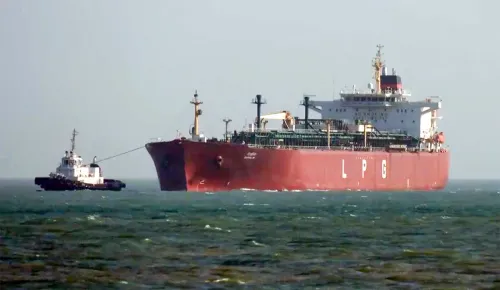
Iran has reportedly blocked the Strait of Hormuz , engaging in asymmetrical warfare that has forced erratic US responses, including appeals to NATO and the UN .
Sibal described President Trump's handling as 'disjointed, contradictory, counterfactual' — managing a global conflict via social media pronouncements.
The analysis notes a central irony: the Trump administration bypassed the UN to launch military action against Iran , then appealed to the same body to resolve the Strait crisis.
Sibal characterised the war as 'clearly illegal' under the UN Charter , while acknowledging 'shared culpability' on both sides.
The ongoing West Asia conflict involving the United States, Israel, and Iran has severely destabilised the region's security architecture, with consequences that analysts describe as far-reaching and difficult to predict. A new analysis warns that the war has exposed critical vulnerabilities in the US-led regional framework — from the limits of American air defence systems to Washington's erratic diplomatic signalling.
US Air Defence Gaps and Gulf Insecurity
For decades, Gulf states anchored their security to the United States, hosting American military bases and spending heavily on US-supplied weaponry. That arrangement is now under strain. Iranian strikes on US-linked bases during the conflict have raised pointed questions about the effectiveness of American air defence systems, which, according to the analysis, have not delivered the protection levels that Gulf partners had anticipated.
This comes amid broader anxieties across the Gulf about whether Washington remains a reliable security guarantor — a doubt that could accelerate regional hedging strategies toward alternative powers.
Sibal: US Is 'Locked in a Trap'
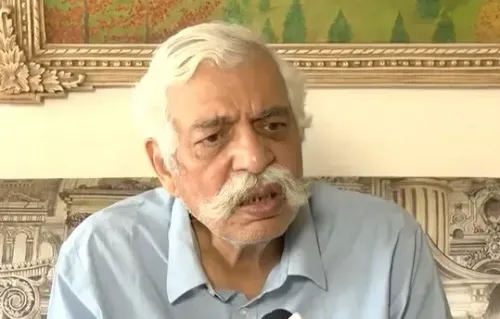
India's former Foreign Secretary Kanwal Sibal, writing in India Narrative, argued that the United States has manoeuvred itself into a strategic dead end. 'The US has locked itself into a trap by unleashing a war on Iran. It has the power to batter Iran militarily, which it has done. Iran's top political and military leadership has been physically eliminated. But this has not broken Iran's will and compelled it to accept US terms for ending the war,' Sibal wrote.
He noted that Washington has relied on air power and coercive signalling, but neither has proven sufficient for a decisive outcome. Crucially, the US is reportedly reluctant to commit ground forces — a move that would cost American lives and carry steep political consequences for President Donald Trump, particularly given divisions within his own MAGA base over the war.
Legality, Culpability, and Global Consequences
Sibal did not spare either side of the conflict from scrutiny. 'This war is clearly illegal. It violates the UN Charter. This is not to say that US and Israeli grievances against Iran's policies and actions in the region have no basis at all, but the rights and wrongs in this regard have a long history, and there is shared culpability,' the former diplomat wrote.
He added: 'This war is causing severe stress in the region and well beyond. It is difficult to comprehend why the US did not anticipate the regional and global consequences of this war.' The observation underscores a recurring criticism — that Washington entered the conflict without a credible exit strategy or a full accounting of second-order effects.
Trump's Contradictions on the Strait of Hormuz
Among the sharpest sections of the analysis is Sibal's documentation of President Trump's shifting positions on the Strait of Hormuz, which Iran has reportedly blocked as part of what the analyst terms 'asymmetrical warfare' against US power.
Sibal catalogued the sequence: 'Trump has wavered on a US response, claiming at first that the US was not affected by this step and those affected should act to open the Strait. He then asked for NATO's help and later said he did not need it and subsequently chided NATO for not showing solidarity. He then announced a US blockade of the Strait, attempted to use naval force to open it, retreated in the face of Iranian resistance, and, to cap it all, appealed to the UN to pressure Iran into opening it as the closure was hurting the international community.'
Sibal also criticised Trump's use of social media to manage a conflict of this magnitude, describing his pronouncements as 'disjointed, contradictory, counterfactual, overstated, menacing, lacking civility, and even outlandish.'
The UN Contradiction
Sibal highlighted what he called a striking irony: the Trump administration has repeatedly bypassed the United Nations while conducting military operations — including two separate actions against Iran — while simultaneously reducing US financial contributions to the body and, in his words, 'generally trashing the utility of the UN.' Appealing to that same institution to resolve the Strait crisis, Sibal argued, underscores the incoherence at the heart of Washington's West Asia strategy.
How the conflict evolves from here — and whether the US can recover its credibility as a regional security anchor — will shape the Gulf's strategic alignments for years to come.
Point of View
A pattern that echoes Iraq and Afghanistan. The Strait of Hormuz flip-flops are not just embarrassing; they signal to Gulf states that American security guarantees are conditional and personality-driven. India, which imports heavily through the Strait and has carefully maintained ties with both Washington and Tehran, faces a compounding dilemma — and the silence from New Delhi on the war's legality speaks as loudly as Sibal's words.
NationPress
28 Sept 2026
Frequently Asked Questions
What is the West Asia conflict involving the US, Israel, and Iran?
The conflict refers to an active military confrontation in which the United States and Israel have conducted operations against Iran, resulting in the elimination of Iran's top political and military leadership. Iran has retaliated by striking US-linked bases in the Gulf and reportedly blocking the Strait of Hormuz, triggering a wider regional security crisis.
What did former Foreign Secretary Kanwal Sibal say about the US strategy?
Sibal, writing in India Narrative, argued that the US is 'locked in a trap' — it has battered Iran militarily but failed to break its will or compel it to accept American terms. He said Washington's reliance on air power and intimidation has not proved adequate for victory, and that avoiding ground operations limits its options further.
Why is the Strait of Hormuz closure significant?
The Strait of Hormuz is a critical global oil and trade chokepoint. Iran's reported blockade disrupts maritime traffic for Gulf exporters and importers worldwide, including India. Sibal described it as Iran's primary tool of asymmetrical warfare against the US, and Trump's shifting responses — from dismissal to naval action to UN appeals — have drawn sharp criticism.
Is the West Asia war considered legal under international law?
Sibal characterised the war as 'clearly illegal' and a violation of the UN Charter. He acknowledged that US and Israeli grievances against Iran's regional conduct have some basis, but argued there is 'shared culpability' and a long history on both sides that complicates any simple legal or moral framing.
How has President Trump handled the conflict, according to the analysis?
Sibal criticised Trump's management as contradictory and incoherent, noting he used social media posts and press conferences to make pronouncements described as 'disjointed, contradictory, counterfactual, overstated, menacing, lacking civility, and even outlandish.' Trump's positions on the Strait of Hormuz shifted multiple times within a short period, undermining US credibility.