Iran Gains Ground While US Faces Stalemate: Insights from Major Gen G.D. Bakshi
Synopsis
In an exclusive interview, Major General G.D. Bakshi discusses the ongoing conflict in West Asia, highlighting the precarious position of the US and Iran's strategic resurgence. As the war continues, the global economy hangs in the balance, particularly impacting nations like India and Japan.
Key Takeaways
The US is currently facing significant challenges in the West Asia conflict.
Iran has effectively turned its initial disadvantages into strategic advantages.
The closure of the Strait of Hormuz is causing a global economic crisis.
Military engagement by the US could lead to dramatic increases in oil prices.
Iran's missile capabilities remain intact and pose a significant threat to US interests.
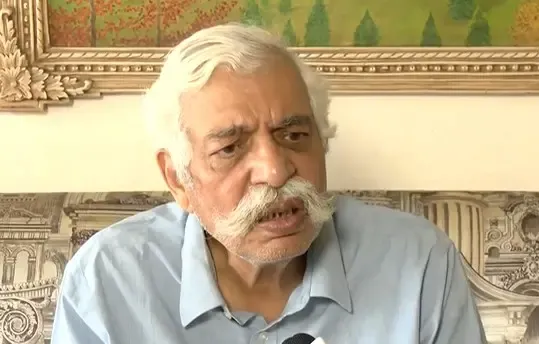
New Delhi, March 26 (NationPress) As the conflict in West Asia stretches into its fourth week, Major General G.D. Bakshi (retd.) stated on Thursday that the United States finds itself "significantly hindered", while Iran, once perceived to have a "disadvantaged position", is now "strategically maneuvering well".
Following Iran's dismissal of Washington's 15-point proposal, Major Gen Bakshi informed IANS that "the US is in a precarious situation", and the ongoing closure of the Strait of Hormuz due to the conflict will perpetuate a global "economic downturn".
Here are some key highlights from the interview:
IANS: Given the current wartime context, the USA has called for a five-day ceasefire and proposed a 15-point plan to Iran via Pakistan, which was also turned down. What is your assessment of the USA's current standing?
GD Bakshi: The US is "in a difficult position" right now. They sought a way out, but their efforts were futile. Iran asserts, "You may be at your end, but I am not." Iran claims that the conflict initiated by America was entirely unwarranted, especially after the assassination of their Supreme Leader Ayatollah Ali Khamenei, which they deem as an act of aggression.
It has been 27 days since the conflict commenced. US President Donald Trump's strategy appears to be to attack following any ceasefire announcement. If American forces are stationed too far away and require time to mobilize, he resorts to dialogue during the ceasefire, only to betray that trust by striking during negotiations.
This tactic was evident last June and at the start of the current year. Iran has learned to recognize these patterns.
Pakistan seems to assume a role in facilitating Trump's deception plan to mislead Iran into a vulnerable position. However, Iran has grown wise to these tactics, recognizing the lack of genuine intent for peace.
Consequently, the US remains in a bind. Iran has outlined five conditions of its own.
Unlike the war in Ukraine, which has not significantly affected the global economy, this conflict is having a profound impact. The nations most affected will include India, Japan, South Korea, and various Asian and European countries. Even in the USA, we are witnessing a rise in petrol and food prices.
IANS: There are rumors of preparations for US 'boots on the ground' in Iran. In light of the events in Afghanistan, would such a move be wise?
GD Bakshi: This is a consequence of their lack of alternatives. I would still advise the US to pursue dialogue to maintain its global standing. Should they proceed with military intervention, oil prices could surge to $200 per barrel.
The US is currently attempting to lower oil prices and stabilize the stock market through this 'deceptive strategy'. However, how long can they continue to mislead?
In terms of military action, what can they realistically achieve?
To secure the Strait of Hormuz, they must confront not just Iran's Navy but also its arsenal of ballistic missiles, cruise missiles, anti-ship missiles, and drones. A handful of drones could easily incapacitate an oil tanker.
To reopen the Strait of Hormuz, the US would have to neutralize missile threats along Iran's northern coastline. Do they expect to seize control of that coast without any Iranian retaliation? With an army of 600,000 personnel, including 200,000 Revolutionary Guards, Iran would undoubtedly retaliate. Thus, the chances of success appear virtually nonexistent.
Regarding the US's ambitions to secure highly enriched uranium from Iran, this is not a trivial matter. The likelihood of success in such an endeavor is negligible, and the US could face substantial losses of defense equipment.
The US military is also hesitant to engage in discussions, possibly due to apprehensions surrounding Trump. They have identified this operation as high-risk with potential high rewards, yet Trump has chosen to overlook their counsel.
His desperation could lead to significant blunders.
It is essential for people to recognize that within India, there exists a faction that supports Trump's agenda.
Moreover, two of the largest US aircraft carriers, the Nimitz-class nuclear-powered USS Abraham Lincoln and the Gerald Ford, have sustained damage and been removed from active duty.
The narrative that the Gerald Ford suffered a laundry fire is misleading; Iranian missile strikes have left it severely damaged, as evidenced by satellite imagery.
The US's alternative plan appears to involve capturing Kharg Island, which would necessitate deploying helicopters.
Despite the bombardments, Iran's missile capabilities remain intact, as they are sheltered in subterranean facilities.
Iran has effectively demonstrated its resilience in combat.
IANS: Iran has assured countries such as India, China, and Pakistan that their vessels will be permitted passage through the Strait of Hormuz, contributing to over 80% of their energy needs. What are your thoughts on this development?
GD Bakshi: This is a commendable initiative. Iran is indicating that it will not obstruct only its adversaries' ships while allowing others to pass. Japan has also repositioned its vessels, and Pakistan has utilized Yuan to facilitate its ships' movement. Although Iran once held a weak hand, it is now deploying its resources adeptly.
It's clear: as long as the Strait of Hormuz is closed, the global economy will continue to suffer.
Point of View
Major General G.D. Bakshi provides a candid assessment of the US's challenging position and Iran's effective strategy. The implications of this conflict extend beyond regional tensions, affecting global economic stability.
NationPress
20 Sept 2026
Frequently Asked Questions
What is the current situation in West Asia?
The conflict has entered its fourth week, with Iran taking a stronger stance while the US faces significant challenges.
Why did Iran reject the US's peace proposal?
Iran deemed the 15-point plan as insincere and indicative of America's deceptive tactics.
What are the potential economic impacts of this conflict?
Countries like India, Japan, and South Korea are likely to face economic repercussions due to the ongoing tensions.
Is the US considering military action in Iran?
There are discussions about 'boots on the ground,' but experts suggest this could escalate tensions dramatically.
How is Iran positioning itself in the energy market?
Iran has assured several countries that their vessels will be allowed passage through the Strait of Hormuz, ensuring energy supplies.