Trump Issues Urgent Warning as Iran Unveils 5-Point Proposal
Synopsis
In a tense standoff over the Strait of Hormuz, President Trump urges Iran to expedite negotiations while Tehran counters with its own five-point plan. The stakes are high as global energy flows hang in the balance. What will come next in this escalating diplomatic saga?
Key Takeaways
Trump emphasizes urgency for Iran to negotiate a deal.
Iran's five-point plan counters the U.S. peace proposal.
The Strait of Hormuz is vital for global oil supply.
Israel's military actions escalate tensions further.
Negotiations involve high stakes for international energy security.
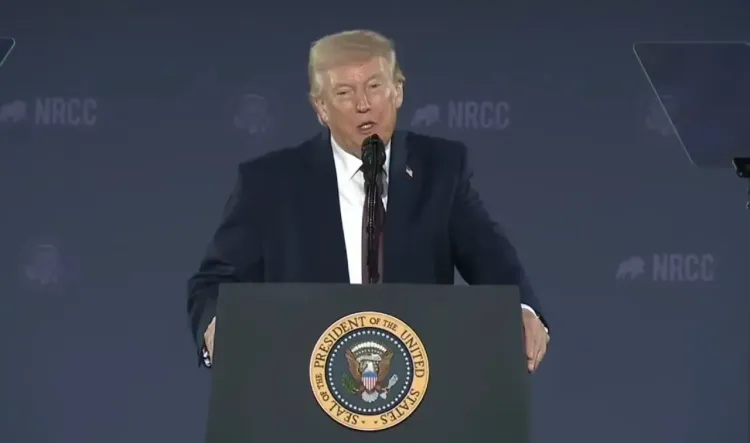
New York, March 26 (NationPress) Amid a global energy crisis triggered by the partial blockage of the Strait of Hormuz, President Donald Trump cautioned on Thursday that there is little time left for Tehran to "take negotiations seriously" regarding a potential agreement.
In response to the United States' 15-point peace initiative, Iran proposed a five-point plan, as reported by the Iranian news agency Tasnim.
Trump expressed on Truth Social that Iran "needs to act quickly, before it becomes too late, as once that point is reached, there will be no return and the consequences will be severe."
He characterized the Iranian representatives as "peculiar and unusual," alleging that they were "pleading" for a deal while publicly contemplating the U.S. proposals.
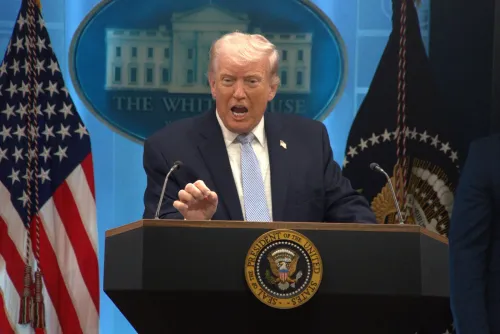
During a cabinet meeting, he mentioned, "We will see if we can reach a beneficial agreement, and if they do the same, then the strait can be reopened."
Keeping the Strait open, which is crucial for 20% of the world's fossil fuel supply, has become a primary concern for the U.S. and numerous nations affected by the closure.
Trump remarked, "Even now, we remain uncertain if mines are present in the area."
Israel reported that it had eliminated a senior officer from the Islamic Revolutionary Guards Corps navy. Alireza Tangsiri, the naval commander, was reportedly killed in an airstrike on Thursday, according to Israeli sources.
Tasnim cited "informed sources" indicating that Tehran conveyed its formal five-point response to the U.S. proposal via intermediaries.
As per Tasnim, Iran seeks acknowledgment of its "sovereignty over the Strait of Hormuz" as a legal right, along with guarantees that any agreement will prevent further conflicts. They also demand an end to the targeted killings of its leaders, the inclusion of "resistance groups" in the peace accord, and reparations for damages incurred.
Reports suggest that the 15-point U.S. plan included provisions for reopening the Strait of Hormuz, halting the nuclear program which involves the surrender of uranium stockpiles, and dismantling the ballistic missile capabilities.
Tasnim quoted sources casting doubt on the authenticity of the U.S. negotiation offer, viewing it as a tactic to maintain low oil prices and to "prepare for a new aggressive action."
Trump stated that Vice President JD Vance and Secretary of State Marco Rubio would be joining his envoy, Steve Witkoff, along with his son-in-law, Jared Kushner, in the discussions.
He did not disclose the identities of the Iranian negotiators, only asserting, "We are engaging with a man I consider to be the most esteemed and the leader."
Trump cautioned that revealing the negotiators' identities could lead to their assassination by either Iranian or Israeli forces.
Point of View
The ongoing negotiations between the U.S. and Iran over the Strait of Hormuz are critical. The urgency expressed by President Trump reflects the significant geopolitical stakes involved, especially considering the strategic importance of the Strait in global energy supply. The potential for escalation requires careful attention from all parties involved.
NationPress
24 Sept 2026
Frequently Asked Questions
What is the significance of the Strait of Hormuz?
The Strait of Hormuz is a pivotal maritime passage through which approximately 20% of the world's oil supply flows, making it crucial for global energy security.
What did Trump warn Iran about?
Trump warned Iran that they need to take negotiations seriously and act quickly, or it may become too late to reach an agreement.
What does Iran's five-point plan include?
Iran's five-point plan demands recognition of its sovereignty over the Strait, an end to targeted assassinations of its leaders, inclusion of resistance groups in negotiations, and reparations for damages.
What was included in the U.S. 15-point peace proposal?
The U.S. proposal included measures for reopening the Strait, ending Iran's nuclear program, and dismantling its ballistic missile capabilities.
Why did Trump refrain from naming Iranian negotiators?
Trump avoided identifying Iranian negotiators to prevent the risk of retaliation or assassination by Iranian or Israeli forces.