Stable Iran-US ties could boost India's multi-aligned diplomacy: Report
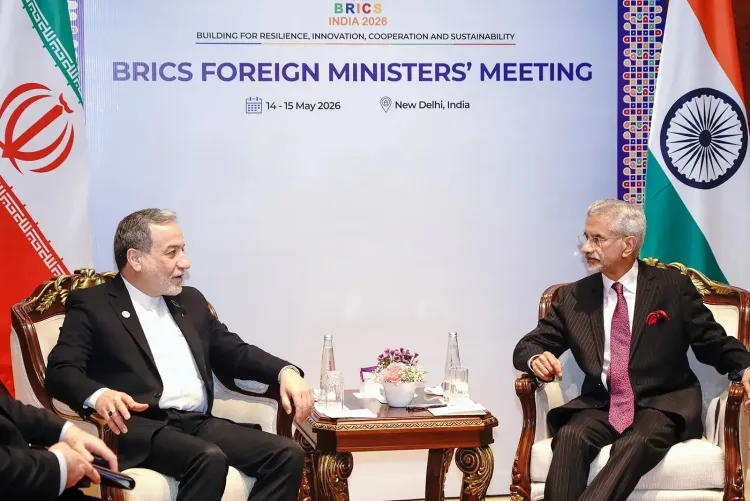
Synopsis
The 2026 Hormuz War may not have crowned a military victor, but it has quietly reshuffled West Asia's diplomatic deck — and India, with ties spanning Washington, Tel Aviv, Gulf capitals, and Tehran, is arguably best placed to benefit. Former diplomat Sanjay Kumar Verma argues that a less isolated Iran doesn't complicate India's strategy; it could actually deepen it.
Key Takeaways
Former diplomat Sanjay Kumar Verma argues a stable Iran-US relationship could expand India's multi-aligned diplomatic space.
The 2026 Hormuz War has reportedly shifted Iran's diplomatic status from isolated actor to indispensable regional participant.
India maintains active ties with the US , Israel , Gulf nations, and Iran simultaneously — a rare geopolitical position.
A less isolated Iran could accelerate progress on connectivity projects such as the Chabahar port initiative.
Verma's core argument: durable regional orders cannot be built by excluding significant actors, however uncomfortable their presence.
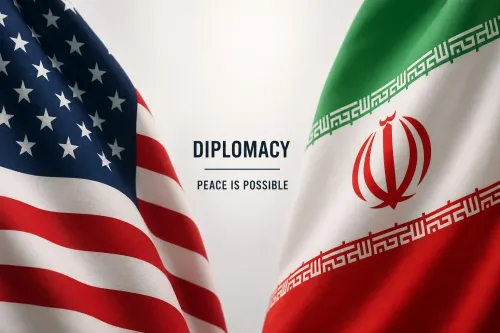
A more stable relationship between Tehran and Washington could meaningfully expand the diplomatic room available to India as it pursues its multi-aligned foreign policy, according to an analysis published in India Narrative. The assessment, written by former Indian diplomat Sanjay Kumar Verma, argues that the geopolitical fallout of the 2026 Hormuz War has fundamentally altered Iran's standing in global diplomacy — with direct consequences for New Delhi.
India's Strategic Position
New Delhi maintains robust ties with the United States, Israel, and Gulf nations while simultaneously preserving active channels of engagement with Iran. Rather than compelling India to pick sides, a more stable Tehran-Washington dynamic could, according to Verma, widen the space for India's multi-aligned approach rather than constrain it.
'The most consequential outcome of the 2026 Hormuz War may ultimately be found not on the battlefield but at the negotiating table,' Verma wrote. He noted that while Iran has not emerged as an undisputed military victor, it may have secured something more durable: a transformation in its diplomatic status. 'After four decades of sanctions, isolation and containment, Tehran is once again being treated as an indispensable participant in discussions on regional security, energy stability and the future order of West Asia,' he added.
What the Hormuz Conflict Revealed
Verma drew on a broader principle of diplomatic practice to contextualise the shift: 'Diplomats learn early in their careers that countries are rarely as isolated as political rhetoric suggests. Governments may be sanctioned, condemned or excluded from particular forums. Yet when geography, resources and security interests converge, yesterday's outcast often reappears at today's negotiating table.'
The most revealing aspect of the ceasefire and ensuing negotiations, he argued, lies not in what Iran may ultimately concede but in what the United States has already been forced to acknowledge — that 'a country long viewed primarily as a problem to be managed has become a counterpart that must be engaged.'
Direct Implications for India
Verma highlighted that a substantial share of India's energy imports transits through the Gulf, while millions of Indian citizens live and work across West Asia. Any prolonged disruption in the region immediately affects energy security, remittances, and economic stability.
At the same time, he noted, a less isolated Iran could open new opportunities. Connectivity initiatives such as the Chabahar port project 'may become easier to advance in a more stable diplomatic environment.' The larger lesson for India, Verma stressed, is 'strategic rather than commercial.'
The Broader Lesson: Durable Orders Require Inclusion
Verma was careful to note that the takeaway from 2026 is neither that Iran has embraced the West nor that decades of differences have suddenly vanished. The lesson, he argued, is more pragmatic: 'durable regional orders are rarely built by ignoring significant actors, however uncomfortable their presence may be.'
In his assessment, history may record that Iran won no decisive military victory in 2026, yet achieved something potentially more enduring — persuading even its adversaries to acknowledge that 'no stable order in West Asia can be constructed without Iran having a place in the conversation.' For India, navigating that emerging order from a position of broad engagement rather than forced alignment may prove to be a lasting strategic advantage.
Point of View
That shift is net positive: a less sanctioned Iran means fewer complications around Chabahar, easier energy diversification, and reduced pressure to choose between Gulf partners and Iranian connectivity. What mainstream coverage misses is that India's advantage here is structural, not accidental — it has deliberately kept every channel open precisely for moments like this. The real risk is complacency: assuming multi-alignment is self-sustaining rather than something that must be actively managed as each of these bilateral relationships evolves independently.
NationPress
22 Sept 2026
Frequently Asked Questions
What is India's multi-aligned foreign policy approach?
India's multi-aligned approach refers to its strategy of maintaining productive diplomatic and economic ties with multiple, often competing, global powers simultaneously — including the United States, Israel, Gulf nations, and Iran. This allows New Delhi to avoid being drawn into bloc-based alignments while maximising strategic flexibility.
How does the 2026 Hormuz War affect India?
The 2026 Hormuz War has direct implications for India because a substantial share of its energy imports transit through the Gulf and millions of Indian citizens live and work across West Asia. Any prolonged regional disruption affects India's energy security, remittances, and economic stability, according to former diplomat Sanjay Kumar Verma.
What is the Chabahar port and why does it matter to India?
Chabahar is an Iranian port that India has invested in as a key connectivity gateway to Afghanistan and Central Asia, bypassing Pakistan. A less isolated Iran in the wake of the 2026 Hormuz conflict could, according to Verma, make it easier for India to advance this strategic infrastructure initiative.
What has changed in Iran's diplomatic standing after the Hormuz conflict?
According to Verma's analysis, Iran has shifted from being treated as a problem to be managed to a counterpart that must be engaged, even by its adversaries. After four decades of sanctions and isolation, Tehran is reportedly being included in discussions on regional security, energy stability, and the future order of West Asia.
Who is Sanjay Kumar Verma and what did he write?
Sanjay Kumar Verma is a former Indian diplomat whose analysis was published in India Narrative. He argues that the most consequential outcome of the 2026 Hormuz War may be Iran's transformation in diplomatic status, and that this shift creates strategic opportunities rather than complications for India's multi-aligned foreign policy.