Jaishankar: India's West Asia policy shaped by deep ties with US, Iran, Israel, Gulf
Synopsis
Jaishankar's West Asia remarks are a quiet but pointed repudiation of non-alignment. With 10 million Indians in the Gulf, Iran as a historic energy partner, Israel as a security ally, and the US as a strategic pillar, India no longer has the luxury — or the desire — to pick a side. It must manage all four simultaneously, and Jaishankar is saying so out loud.
Key Takeaways
EAM S Jaishankar outlined India's four-stakeholder West Asia framework : the US, Iran, Israel, and the Gulf states, in an interview on 9 June .
India has 10 million citizens living in Gulf countries, which also serve as its primary energy source and a key trade partner.
Jaishankar described Israel as a 'very strong security and technology partner' and acknowledged Iran as a historically significant energy partner despite sanctions.
He rejected comparisons with India's 1950s–60s non-aligned posture, saying India's stakes today are fundamentally deeper across all four accounts.
India's approach post- February 28 is driven by 'sharp practical interests,' not diplomatic middle-ground positioning, according to Jaishankar.
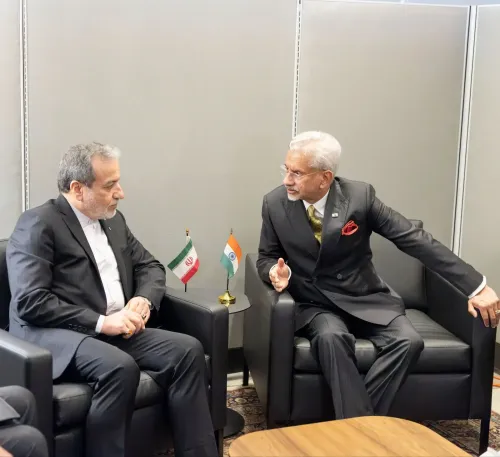
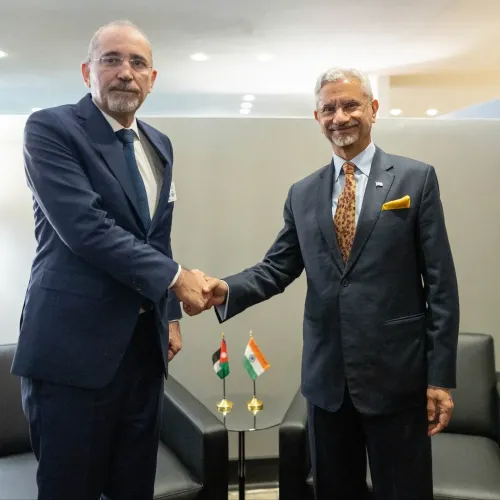
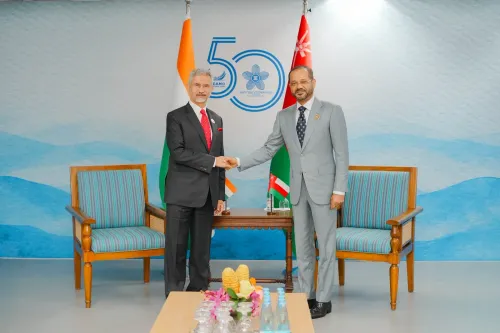
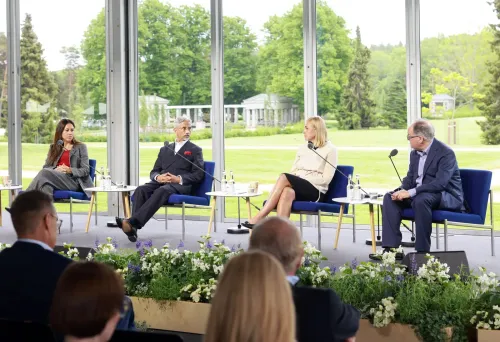
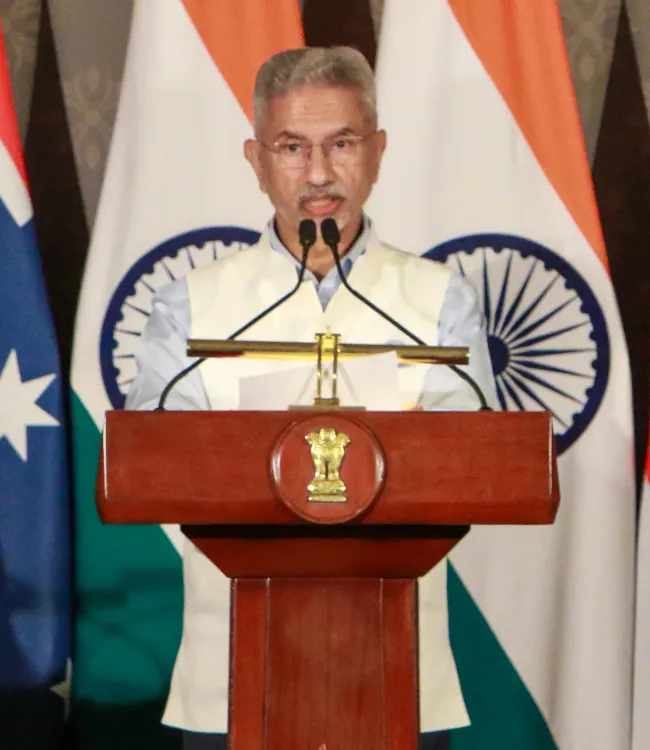
External Affairs Minister S Jaishankar on Tuesday, 9 June said India's approach to West Asia is anchored in its distinct and deep relationships with all four key stakeholders in the region — the United States, Iran, Israel, and the Gulf countries — and cannot be reduced to a simple diplomatic middle ground. Speaking in an interview with DD News, Jaishankar argued that India's expanding national interests demand a fundamentally different foreign policy calculus than the one New Delhi applied in the 1950s and 60s.
The Four-Stakeholder Framework
'Our interests are much bigger and much more spread out than in the earlier eras. So, when your interests are much deeper, then naturally our engagement, our behaviour, and our attitude reflect that,' Jaishankar said. He outlined four distinct parties in the West Asia equation — the US, Iran, Israel, and the Gulf states — acknowledging he was 'simplifying it a bit' by treating the Gulf as a single bloc.
He placed the Gulf at the top of India's priority ladder. With 10 million Indian citizens living in Gulf nations, the region serving as India's primary energy source, and its status as a key trade partner, Jaishankar described India's stakes there as 'tremendous.'
Iran, Israel and the US: Distinct but Equally Weighted
On Iran, Jaishankar acknowledged its historical role as a significant energy partner, noting that sanctions had curtailed Tehran's effective presence in the market. He described an 'intersection of interest' between the two countries that extends beyond energy, pointing to areas where India and Iran have demonstrated shared ground.
Regarding Israel, the minister described it as 'a very strong security partner and technology partner in very critical areas, which has stood by us at very important times.' He was equally direct about the United States, saying its importance to India required no elaboration.
Why This Is Not the Era of Non-Alignment
Jaishankar explicitly pushed back against comparisons between India's current West Asia posture and its approach during the 1950s and 60s. 'In the 50s and 60s, you did not have this kind of major stake in each of these accounts,' he said, adding that the country today — 'India, as Bharat' — must weigh each of these four relationships simultaneously when navigating the region's conflicts.
He clarified that dealing with the complex situation in West Asia after February 28 was 'not a case of coming to a diplomatic conference and reconciling differences by taking a middle position.' Instead, India holds sharp practical interests with each party, requiring active prioritisation rather than passive neutrality.
Broader Context: Modi-Era Foreign Policy
The remarks come as part of a broader articulation of how Prime Minister Narendra Modi's government has repositioned India's foreign policy — from a reactive, non-aligned posture to a proactive, multi-engagement framework. Jaishankar noted that New Delhi's interests today are 'far broader and more extensive' than in any previous era, and that India's diplomatic conduct naturally mirrors those expanding stakes. The interview underscores India's effort to sustain relationships across geopolitical fault lines at a time when West Asia remains deeply fractured.
Point of View
Israel, Iran, and the Gulf, and it no longer pretends otherwise. This is a clean break from the studied ambiguity of earlier decades. The risk, however, is that as West Asia's fault lines deepen — particularly between Iran and Israel — India's ability to remain credible to all four parties simultaneously will be tested in ways that a DD News interview cannot fully anticipate. The 10-million-citizens figure is a powerful anchor for the Gulf relationship, but it also exposes India to political pressure from Gulf governments on issues like Kashmir or trade. The real question Jaishankar left unanswered is how India will act — not just speak — when two of its four partners are in direct conflict.
NationPress
24 Oct 2026
Frequently Asked Questions
What did EAM Jaishankar say about India's West Asia policy?
Jaishankar said India's West Asia approach is shaped by deep and distinct ties with all four key stakeholders — the US, Iran, Israel, and the Gulf states — and cannot be reduced to a middle-ground diplomatic position. He made the remarks in a DD News interview on 9 June.
Why does India prioritise the Gulf in its West Asia policy?
India has 10 million citizens living in Gulf countries, which also serve as its primary energy source and a major trade partner. Jaishankar described India's stakes in the Gulf as 'tremendous' and placed it at the top of the country's West Asia priority order.
How does India view its relationship with Israel?
Jaishankar described Israel as 'a very strong security partner and technology partner in very critical areas' that has 'stood by us at very important times.' India treats the relationship as a distinct and important bilateral partnership, separate from its positions on the broader West Asia conflict.
What is India's current stance on Iran?
Jaishankar acknowledged Iran as a historically significant energy partner whose effective market presence has been curtailed by sanctions. He noted a 'significant intersection of interest' between India and Iran that extends beyond energy.
How is India's current West Asia approach different from the non-alignment era?
Jaishankar argued that in the 1950s and 60s, India did not have major stakes across all four West Asia accounts simultaneously. Today, with deep interests in the Gulf, Iran, Israel, and the US, India must actively prioritise and manage each relationship rather than seek a neutral diplomatic position.