Jaishankar backs early US-Iran deal, calls world 'frustrated observer'
Synopsis
At the Kultaranta Talks in Helsinki, EAM Jaishankar framed India as one of the few nations with credible ties to all four parties in the West Asia crisis — the US, Israel, Iran, and the Gulf — and called for an early US-Iran deal. His candid 'frustrated observer' framing captures the bind facing most of the world, while India quietly positions itself as an indispensable back-channel.
Key Takeaways
Jaishankar expressed hope for an early breakthrough in US-Iran negotiations at the Kultaranta Talks in Helsinki on 12 June .
Jaishankar described most of the world as being in the position of a 'frustrated observer' amid the continuing conflict.
India maintains 'good and substantial relations' with Iran , while also holding strong ties with the US , Israel , and Gulf states .
Ten million Indians live in the Gulf; Gulf nations are India's primary energy suppliers and among its top 10 trading partners .
Jaishankar acknowledged the four bilateral relationships differ in depth, citing the UAE 's unique mix of community, trade, energy, and defence ties with India.
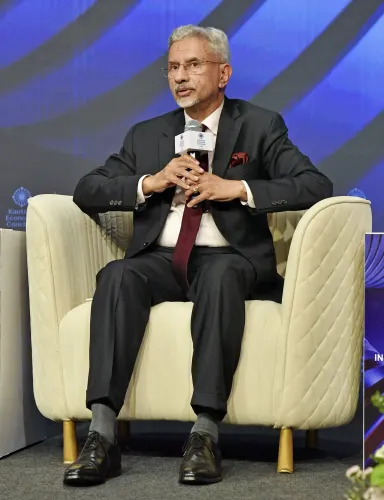
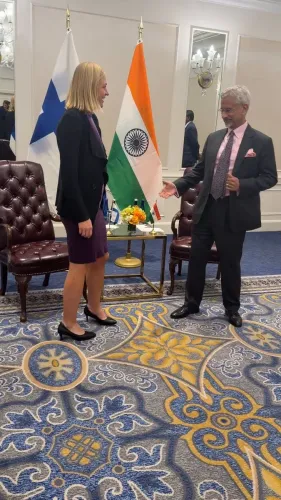
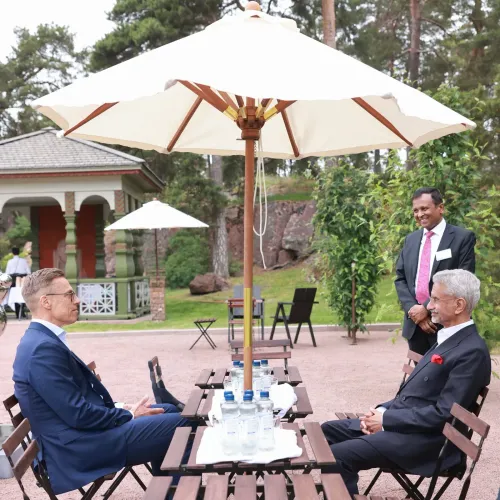
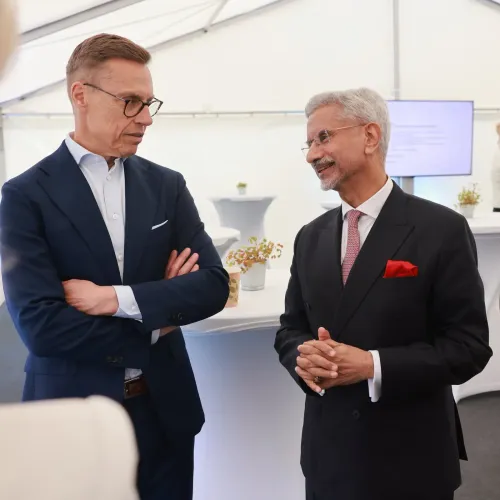
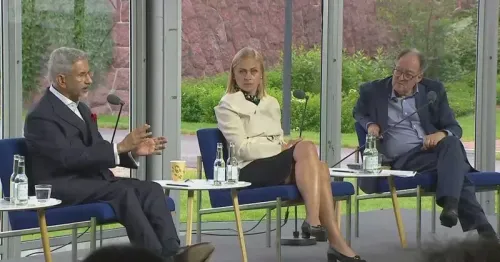
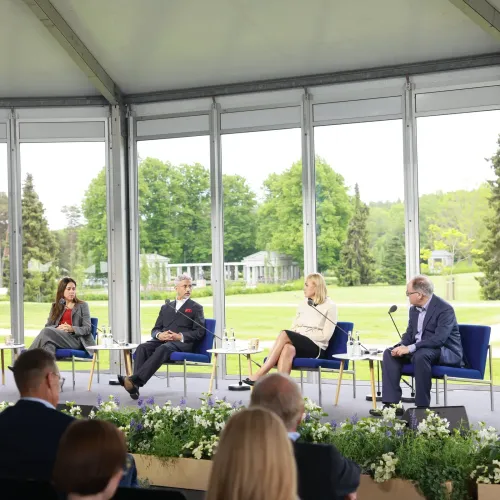
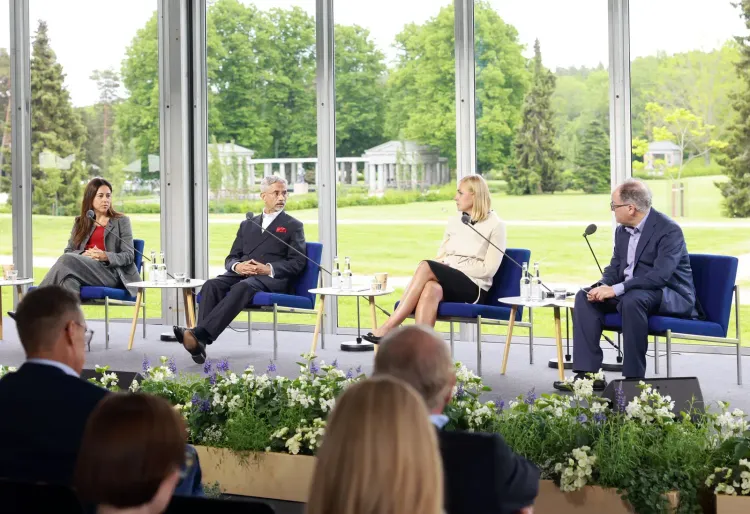
External Affairs Minister S. Jaishankar on 12 June expressed strong hope that ongoing US-Iran negotiations would produce an early breakthrough, warning that the continuing conflict is generating widespread hardship and leaving most of the world in the role of a 'frustrated observer.' Jaishankar made the remarks during a panel discussion at the Kultaranta Talks in Helsinki, alongside Finnish Foreign Minister Elina Valtonen and UAE Assistant Foreign Minister Lana Nusseibeh.
India's Position on the Conflict
Speaking on the panel theme 'Emerging Powers and the New Geopolitical Competition,' Jaishankar acknowledged that while much of the international community feels helpless, several nations — including India — are actively working to contribute to de-escalation. 'It's not for want of trying,' he said, noting that India has 'reasoned with the countries' and 'been in touch with them.'
He underscored that India is among the few nations that maintains credible diplomatic standing with all key parties: the United States, Israel, Iran, and the Gulf states. 'There are not that many countries that would have decent relations with all the parties involved,' he said, framing India's multi-directional diplomacy as a potential asset in the crisis.
On India-Iran Ties
When asked directly whether India's balanced assessment extended to Tehran, Jaishankar confirmed that New Delhi maintains 'good and substantial relations' with Iran, while clarifying that the four bilateral relationships are not of identical depth or character. He was careful to draw distinctions rather than suggest equivalence across the board.
The Gulf Equation
Jaishankar offered a detailed picture of India's stakes in the Gulf, noting that ten million Indians live in the region, with the UAE alone hosting the largest concentration of Indian nationals outside India. Gulf nations serve as India's primary energy suppliers and figure among its top 10 trading partners. He also highlighted a 'close defense and security relationship' with the UAE, underscoring why the conflict's trajectory carries acute consequences for New Delhi.
'The challenge is in a quadrilateral situation where you have equities, arguably of a different order in each account, how do you manage them while addressing this conflict,' he said.
Russia-Ukraine and the Broader Geopolitical Bind
Asked how India navigates the twin pressures of the Russia-Ukraine war and the West Asia crisis, Jaishankar offered a candid observation: 'Mostly countries are committed to wars they fight and are equivocal about ones that they observe as a general proposition.' He implied that India's consistent call for dialogue — rather than alignment — reflects a principled, if sometimes uncomfortable, strategic posture. This comes amid growing international pressure on major powers to pick sides in both conflicts.
What Comes Next
Jaishankar did not outline any specific Indian diplomatic initiative, but his remarks signal that New Delhi sees its unique multi-party access as a diplomatic resource it intends to deploy. With US-Iran talks still at a delicate stage, India's back-channel engagement — and its economic exposure to Gulf stability — means the outcome of those negotiations will have direct consequences for Indian foreign policy and energy security.
Point of View
Primary energy supply, top trading partners — mean it cannot afford neutrality to become passivity. If the US-Iran talks collapse, New Delhi's carefully balanced posture will face its stiffest test yet.
NationPress
26 Oct 2026
Frequently Asked Questions
What did EAM Jaishankar say about US-Iran negotiations?
Jaishankar expressed hope that US-Iran negotiations would yield an early breakthrough, stating that the continuation of the conflict is 'creating problems' and leaving much of the world as a 'frustrated observer.' He made the remarks at the Kultaranta Talks in Helsinki on 12 June.
Does India have good relations with Iran?
Yes. Jaishankar confirmed that India maintains 'good and substantial relations' with Iran, while noting that New Delhi's ties with Iran, the US, Israel, and the Gulf states are not identical in nature or depth.
Why does the West Asia conflict matter so much to India?
India has ten million nationals living in the Gulf, relies on Gulf countries as its primary energy suppliers, and counts several Gulf states among its top 10 trading partners. A prolonged conflict threatens energy security, remittances, and bilateral trade — making the stakes acutely high for New Delhi.
Where did Jaishankar make these remarks?
Jaishankar spoke during a panel discussion titled 'Emerging Powers and the New Geopolitical Competition' at the Kultaranta Talks in Helsinki, Finland, alongside Finnish Foreign Minister Elina Valtonen and UAE Assistant Foreign Minister Lana Nusseibeh.
How is India trying to help de-escalate tensions in West Asia?
According to Jaishankar, India has 'reasoned with the countries' involved and maintained active contact with all key parties. He said India's unique position — holding credible ties with the US, Israel, Iran, and the Gulf simultaneously — gives it a role that few other nations can play.