Uttarakhand Women Empowered: SHGs Craft Herbal Colors for Holi
Synopsis
Discover how women's Self-Help Groups in Uttarakhand's Rudraprayag are making waves by producing herbal colors for the Holi festival. This eco-friendly initiative has garnered local support and created job opportunities, changing the way people celebrate the festival of colors.
Key Takeaways
Empowerment: Women in Rudraprayag are economically empowered through SHGs.
Sustainability: Herbal colors promote eco-friendly celebrations.
Health Focus: Chemical-free options protect skin health.
Community Support: Local support boosts the initiative's success.
Job Creation: The initiative has led to new employment opportunities.
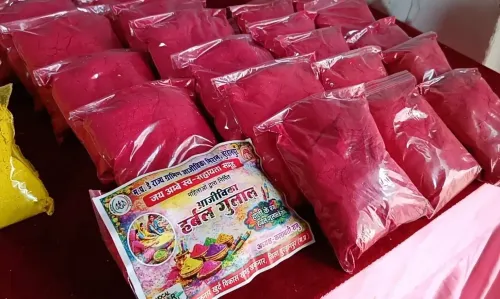
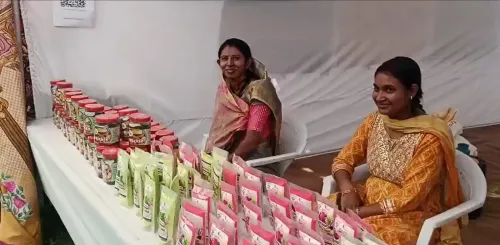
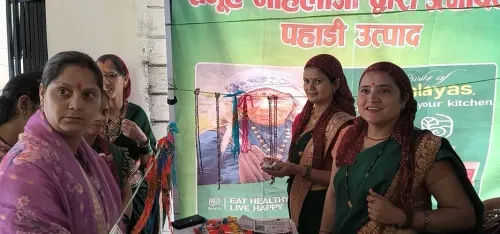
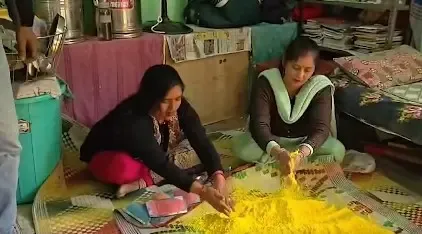
Dehradun, March 1 (NationPress) A women's Self-Help Group (SHG) in Rudraprayag, Uttarakhand, is gaining attention for their production of herbal colors for the Holi festival. This eco-friendly initiative, which they adopted some time ago, has received significant support from local communities in their village and nearby areas.
The chemical-free colors are experiencing a surge in market demand, prompting SHGs to meet the rising orders.
This growth has not only boosted their businesses but has also led to the creation of new job opportunities.
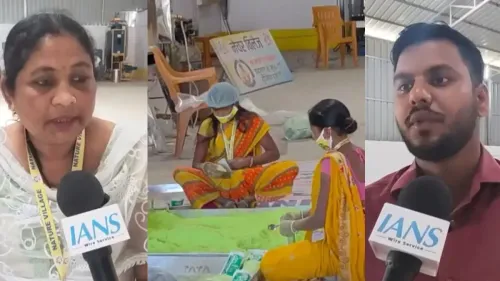
Women from villages such as Jawadi, Kumoli, Maikoti, Medanpur, and Ukhimath in Rudraprayag are actively involved in the production of these natural dyes.
Sangita Kapravan, a member of the SHG, expressed, "We have developed herbal dyes using all-natural ingredients, priced at Rs 25 per packet."
She emphasized that individuals are increasingly steering clear of chemical dyes due to concerns about skin health.
"People should opt for these herbal dyes, as they pose no harmful effects," she added.
Monica Kapravan, another member, stated, "We have created organic dyes right at home."
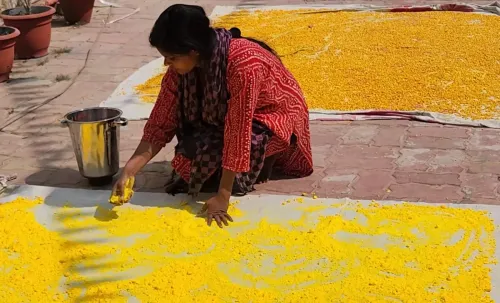
She noted that these colors are in high demand, made from locally-sourced flowers and materials.
It is crucial to acknowledge that the National Rural Livelihood Mission and the Rural Training Institute have provided essential training to women in producing these natural colors.
Since then, they have begun crafting these colors within their communities.
The women create green hues from spinach, yellow from turmeric, pink and red from beetroot, and saffron from marigold flowers.
These products aim to promote the message of avoiding chemical-based colors.
The Director and Trainer of the Rural Self-Employment Institute stated that the sales of these colors during the upcoming Holi festival will bolster women's livelihoods.
They have also encouraged the local populace to choose indigenous and natural colors.
Bhupendra Rawat, a Trainer at the Rural Self-Employment Training Institute, highlighted that in recent years, they have trained women to make herbal colors, which are in high demand during festive seasons. "People prefer to avoid chemicals. Herbal dyes will be sold through various stalls this year as well," he said.
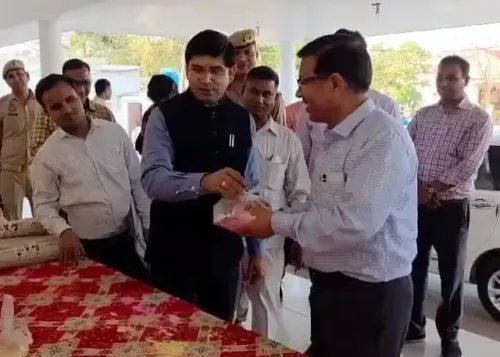
Anoop Kumar, Director of the Rural Self-Employment Training Institute, remarked, "I want everyone to know that our institute offers training in diverse self-employment sectors. Special products are crafted for festivals."
Point of View
This initiative by women's Self-Help Groups in Rudraprayag underscores the importance of local entrepreneurship and sustainability. The move towards herbal colors not only promotes health and wellness but also fosters economic development in rural areas, aligning with the broader goals of empowering women and preserving the environment.
NationPress
2 Oct 2026
Frequently Asked Questions
What are herbal colors?
Herbal colors are chemical-free dyes made from natural ingredients like flowers, vegetables, and spices, making them safe for use during festivals.
How are these colors made?
These colors are produced by local women using home-grown flowers and other natural materials, such as spinach for green and turmeric for yellow.
Why are herbal colors preferred over chemical ones?
Herbal colors are preferred because they are non-toxic and do not harm the skin, unlike chemical dyes that can cause irritation.
Who trained the women to make herbal colors?
The National Rural Livelihood Mission and the Rural Training Institute provided training to help women learn how to produce these natural colors.
Where can I buy these herbal colors?
These herbal colors will be available for purchase at various stalls during the Holi festival in Rudraprayag.