YSRCP urges Centre to halt mining near Panchadharla heritage sites in Visakhapatnam

Synopsis
A YSRCP delegation has taken the fight over Panchadharla's threatened heritage to the Centre, warning that quarrying dangerously close to a 1st Century CE Buddhist site and a 10th Century temple could cause irreversible damage. With the ASI's protected zone apparently at risk, the Centre's next move will signal how seriously India's federal government treats heritage conservation against extraction interests.
Key Takeaways
YSRCP leaders met Union Minister G.
Kishan Reddy on 11 August to demand a halt to quarrying near Panchadharla, Visakhapatnam .
The Dhanadibbalu Buddhist site dates to the 1st Century CE (Satavahana period); the Sri Dharmalingeswara Swamy Temple dates to the 10th Century CE — both are ASI-protected .
The delegation warned that blasting and deep excavation could damage sub-surface archaeological remains and destabilise the ancient temple.
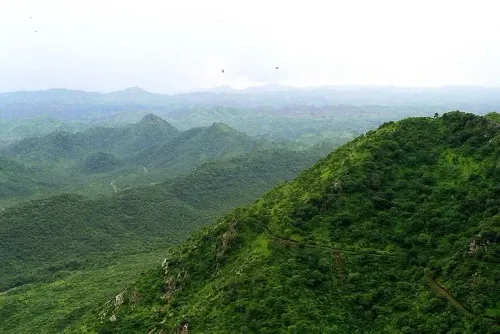
YSRCP also flagged risks to groundwater , natural drainage , and the geological stability of Panchadharla Hill .
The party demanded an expert inspection team and action against those responsible if mining violations are confirmed.
The YSR Congress Party (YSRCP) on Tuesday, 11 August urged the Union government to immediately suspend alleged illegal and unauthorised gravel quarrying around Panchadharla in Visakhapatnam district, Andhra Pradesh, warning that the excavation threatens two protected heritage sites of national significance. A party delegation met Union Minister of Coal and Mines G. Kishan Reddy in New Delhi to press for central intervention.
The Heritage Sites at Risk
At the heart of the dispute are two Archaeological Survey of India (ASI)-protected monuments. The Dhanadibbalu Buddhist archaeological site, dating to the Satavahana period of the 1st Century CE, and the Sri Dharmalingeswara Swamy Temple, which traces its origins to the 10th Century CE, both lie in the direct vicinity of ongoing quarrying operations. The delegation told the Union Minister that excavation and blasting have advanced alarmingly close to these protected precincts.
What the YSRCP Delegation Flagged
According to the delegation, indiscriminate quarrying and large-scale excavation are not only threatening the archaeological landscape but also undermining the sanctity of the heritage corridor. The party cautioned that deep blasting could damage sub-surface Buddhist remains and destabilise the centuries-old temple structure. Beyond the cultural damage, the delegation warned of broader environmental consequences — including disruption to the geological stability of Panchadharla Hill, adverse effects on groundwater, and damage to natural drainage systems in the area.
Key Demands Placed Before the Union Minister
Beyond an immediate suspension of quarrying, the YSRCP delegation called on the Centre to constitute a multi-disciplinary expert team to inspect the site, verify the legal status of the mining operations, and determine whether extraction has exceeded sanctioned boundaries, permitted depth, or authorised quantity. The party also sought appropriate punitive action against those found responsible if violations are established.
Who Was in the Delegation
The YSRCP team comprised Members of Parliament Golla Baburao, Meda Raghunadha Reddy, Gumma Thanuja Rani, and Maddila Gurumoorthy, along with former minister Gudivada Amarnath and party leader Karanam Dharmasri.
What Happens Next
No formal response from the Union Ministry of Coal and Mines has been reported as yet. The matter is likely to draw scrutiny from the ASI and state-level heritage bodies. With both sites carrying deep historical and religious significance for the region, the Centre's response — or lack thereof — is expected to become a flashpoint in Andhra Pradesh's ongoing political discourse around heritage protection and mining governance.
Point of View
Given the party's opposition status in Andhra Pradesh, but the underlying conservation concern is legitimate and warrants independent scrutiny. The Centre's decision on whether to constitute an expert panel will be a test of how robustly the ASI's protected-site framework holds up against commercial mining pressure.
NationPress
26 Sept 2026
Frequently Asked Questions
Why is YSRCP demanding a halt to mining near Panchadharla?
The YSRCP says gravel quarrying is advancing dangerously close to two ASI-protected heritage sites — the 1st Century CE Dhanadibbalu Buddhist site and the 10th Century Sri Dharmalingeswara Swamy Temple — in Visakhapatnam district. The party warns that blasting and excavation could irreversibly damage archaeological remains and destabilise the ancient temple.
What are the Dhanadibbalu Buddhist site and Sri Dharmalingeswara Swamy Temple?
The Dhanadibbalu Buddhist site dates to the Satavahana period of the 1st Century CE and is protected by the Archaeological Survey of India. The Sri Dharmalingeswara Swamy Temple traces its origins to the 10th Century CE. Both are considered of immense historical and religious significance in Andhra Pradesh.
Who did the YSRCP delegation meet, and what did they demand?
The delegation met Union Minister of Coal and Mines G. Kishan Reddy in New Delhi on 11 August. They demanded immediate suspension of quarrying, constitution of a multi-disciplinary expert inspection team, verification of mining legality, and punitive action if violations are found.
What environmental risks has YSRCP flagged alongside the heritage threat?
Beyond damage to archaeological and temple structures, the YSRCP warned that quarrying could disrupt the geological stability of Panchadharla Hill, adversely affect groundwater levels, and damage natural drainage systems in the surrounding area.
Has the Centre responded to the YSRCP's demands?
No formal response from the Union Ministry of Coal and Mines has been reported following the meeting on 11 August. The matter is expected to draw further attention from the ASI and state heritage authorities in the coming days.