Are Yunus administration's decisions and appointments before Bangladesh polls raising concerns?
Synopsis
As Bangladesh approaches its elections, the interim government's recent actions raise critical questions about their motivations. With a series of controversial decisions and contracts, observers are left wondering whether these moves prioritize public welfare or serve hidden interests. This unfolding situation warrants close attention as it could have lasting implications for the future government and the citizens of Bangladesh.
Key Takeaways
Formation of the 9th Pay Commission could impose financial burdens.
Luxury housing plans for ministers raise ethical questions.
Urgent need for transparency and accountability.
Public welfare must remain a priority in governance.
Next elected government may face discontent due to these decisions.
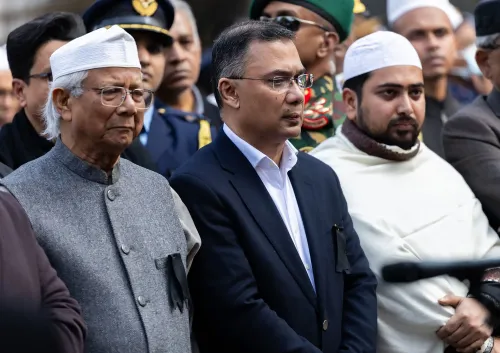
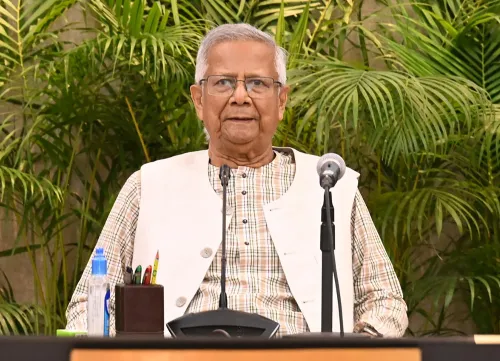
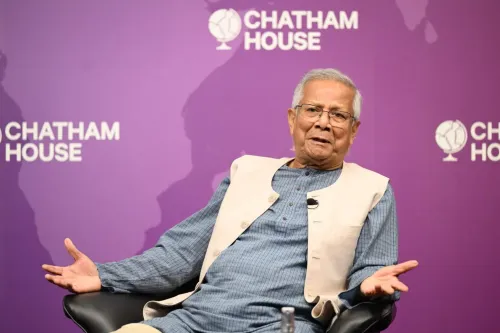
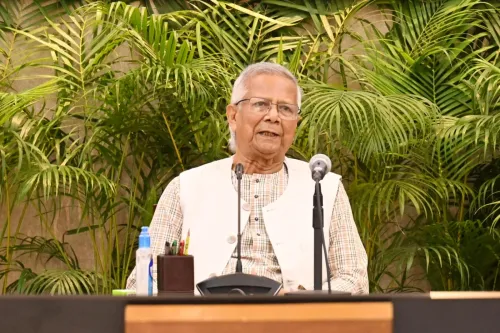
Dhaka, Feb 1 (NationPress) With the elections in Bangladesh scheduled for February 12, the interim government, under the leadership of chief adviser Muhammad Yunus, is effectively functioning as an election-focused administration. Many observers argue that its role should be limited to election preparations and routine tasks. However, a range of recent decisions, actions, appointments, and contracts have sparked considerable controversy, according to a report.
These include the establishment of the 9th Pay Commission for government workers, expedited hiring of primary school teachers, ambitious plans to construct luxurious apartments for ministers and high-ranking bureaucrats, agreements related to the Chattogram port, the declaration of an arms zone in the Mirsarai Economic Zone, and the procurement of 163 vehicles for the Rapid Action Battalion (RAB), as highlighted in an opinion piece by Bangladeshi daily Prothom Alo.
The piece raises a critical question: Are these swift decisions and initiatives shaped more by the interests of domestic and foreign entities than by the welfare of the public? Notably, some of these actions entail significant long-term economic implications and sensitive national security matters. The burden of these choices will ultimately rest on the shoulders of the next elected government and the citizens for years to come.
In a statement made on Tuesday, the Ganatantrik Odhikar Committee (Democratic Rights Committee) warned that such contracts and initiatives deemed “harmful” to Bangladesh could jeopardize the forthcoming government as well. The interim administration has also resolved to erect three new structures in the ministers’ enclave in Dhaka, which will house 72 flats, each spanning between 8,500 and 9,030 square feet, as reported by Prothom Alo.
A budget of Tk 200 million has been earmarked for acquiring furniture, including curtains. The report notes that upper-middle-class families in Dhaka typically reside in flats measuring around 1,500–1,600 square feet, while lower-tier government employees occupy flats of around 650–700 square feet.
Currently, there are 13 bungalows in the ministers’ enclave, along with the Ministers’ Apartments on Bailey Road, and a total of 71 residences for ministers spread across Dhanmondi and Gulshan. Setting aside the opulent features of the bungalows, the existing ministerial flats are already approximately 5,500 square feet. The question arises: What activities will ministers engage in within 9,000-square-foot flats—football or cricket? If such a proposition were put forth by bureaucrats under a political government, one might at least find some rationale behind it.
However, why are bureaucrats advancing such initiatives under an interim government that was established following an anti-discrimination movement and a mass uprising of students and citizens? Are they attempting to curry favor with the future ministers by pushing through these projects? In a country where over 40 million individuals struggle to secure two meals a day, can anyone with a sense of proportion even consider such wasteful and extravagant plans?
The 9th Pay Commission has proposed increases in salaries and allowances for government personnel, with the current regime stating that the responsibility for implementing this decision will fall on the next government. According to reports, the salaries at the lower levels of public service do not reflect present market realities.
However, the pressing question remains: Will the state be capable of funding the Tk 1.06 trillion required to raise salaries across all levels by 100–147 percent? Revenue collection in recent years has not exceeded Tk 4 trillion, despite rising prices for electricity, fertilizer, and fuel, along with an increasing indirect tax burden.
Investment and employment opportunities in Bangladesh have stagnated, while inflation has remained steady for the past three years. The private sector, which serves as the primary driver of the economy, is currently in a precarious position. What, then, is the true motive behind imposing such a substantial burden on an already fragile economy? The pay commission’s recommendations may prove to be a significant source of pressure and anxiety for the next political administration, which might encounter dissatisfaction among public servants. Kamal Ahmed, head of the Media Reform Commission, has labeled this situation as a form of 'advance blackmail'.
Point of View
I believe the current situation is a pivotal moment for Bangladesh. The interim government's decisions could significantly impact the nation's future. There is a pressing need for transparency and accountability in governance as we approach the elections. The well-being of the public must remain the priority in every decision made during this critical period.
NationPress
7 Sept 2026
Frequently Asked Questions
What are the recent decisions made by the interim government of Bangladesh?
The interim government has made several controversial decisions, including the formation of the 9th Pay Commission, plans for luxurious apartments for ministers, and agreements related to the Chattogram port.
How might these decisions impact the next elected government?
These decisions could impose significant financial burdens and long-term economic risks on the next elected government, potentially leading to public discontent.
What is the public opinion regarding these initiatives?
Public opinion is largely critical, with concerns that these initiatives prioritize the interests of a select few over the welfare of the broader population.
What are the implications of the 9th Pay Commission's recommendations?
The recommendations could create financial strain on the state and lead to dissatisfaction among public servants if implemented without adequate funding.
What actions have been taken to address public concerns?
While the interim government has made significant decisions, the public is calling for transparency and accountability in these actions.